 1
Beaches
Jericoacoara Beach
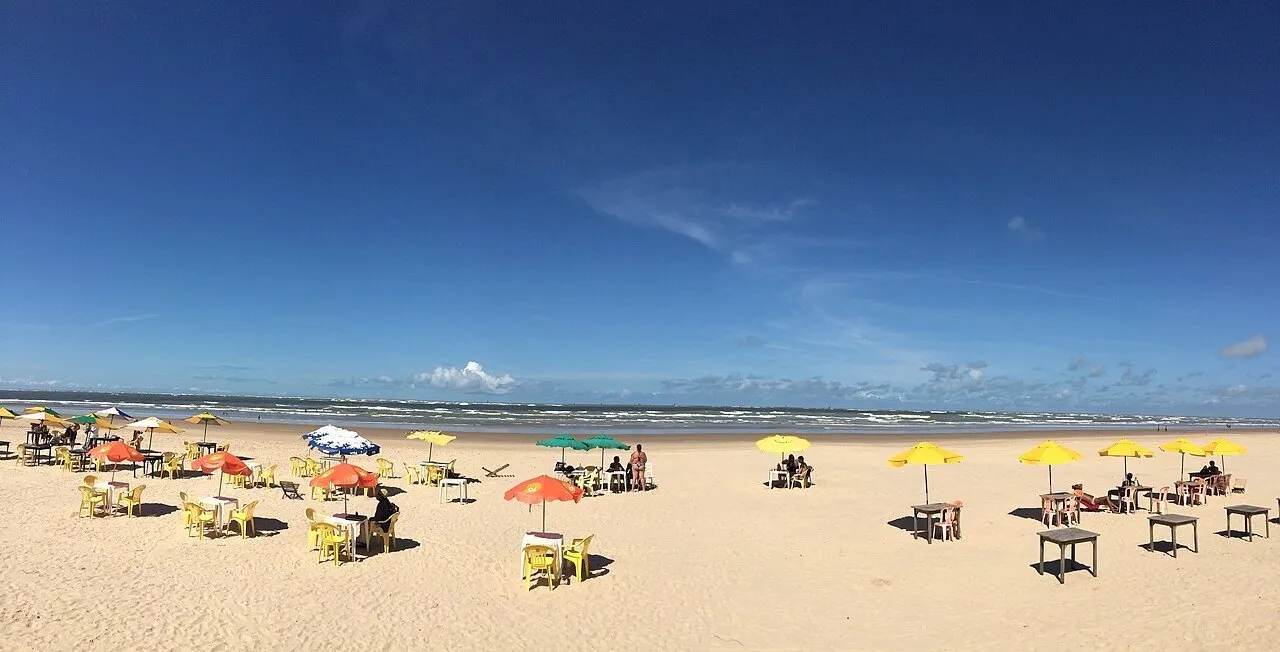
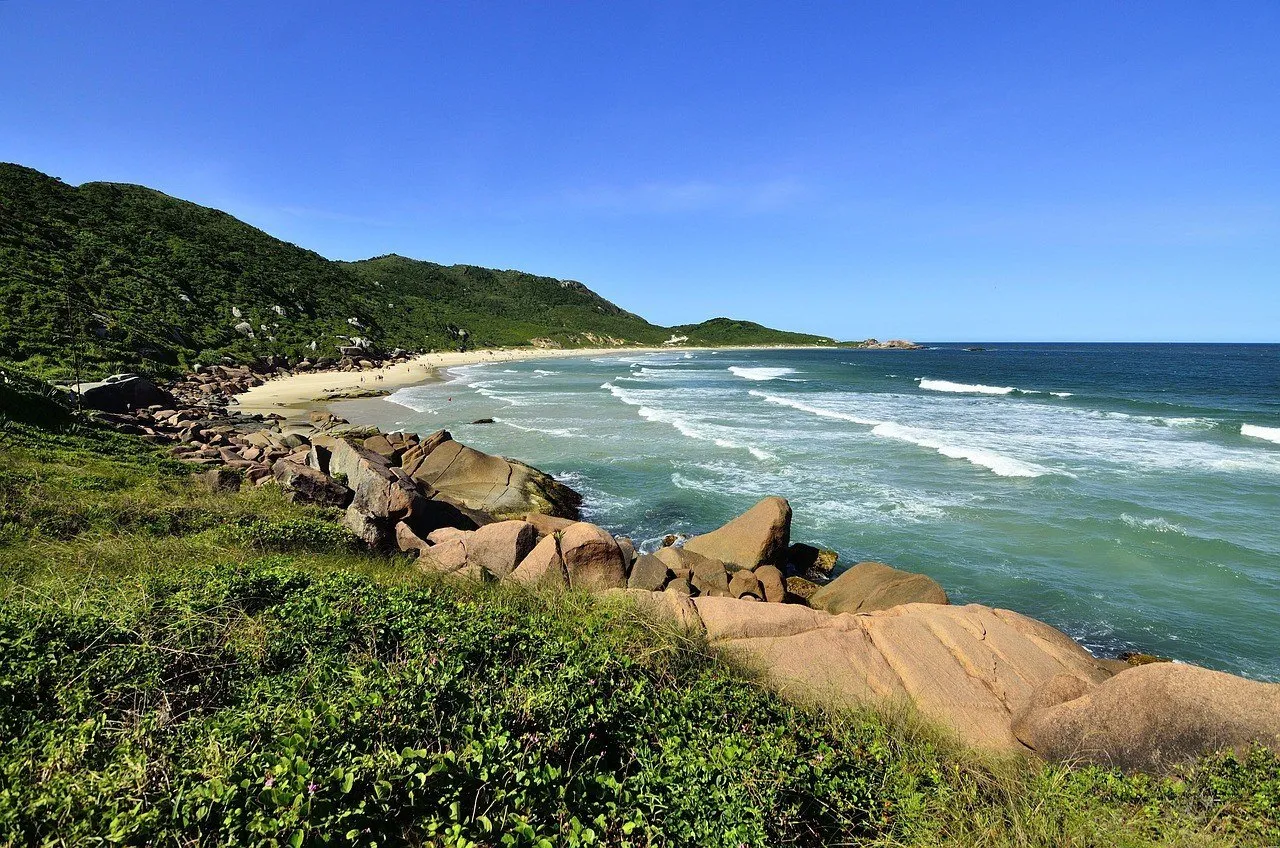
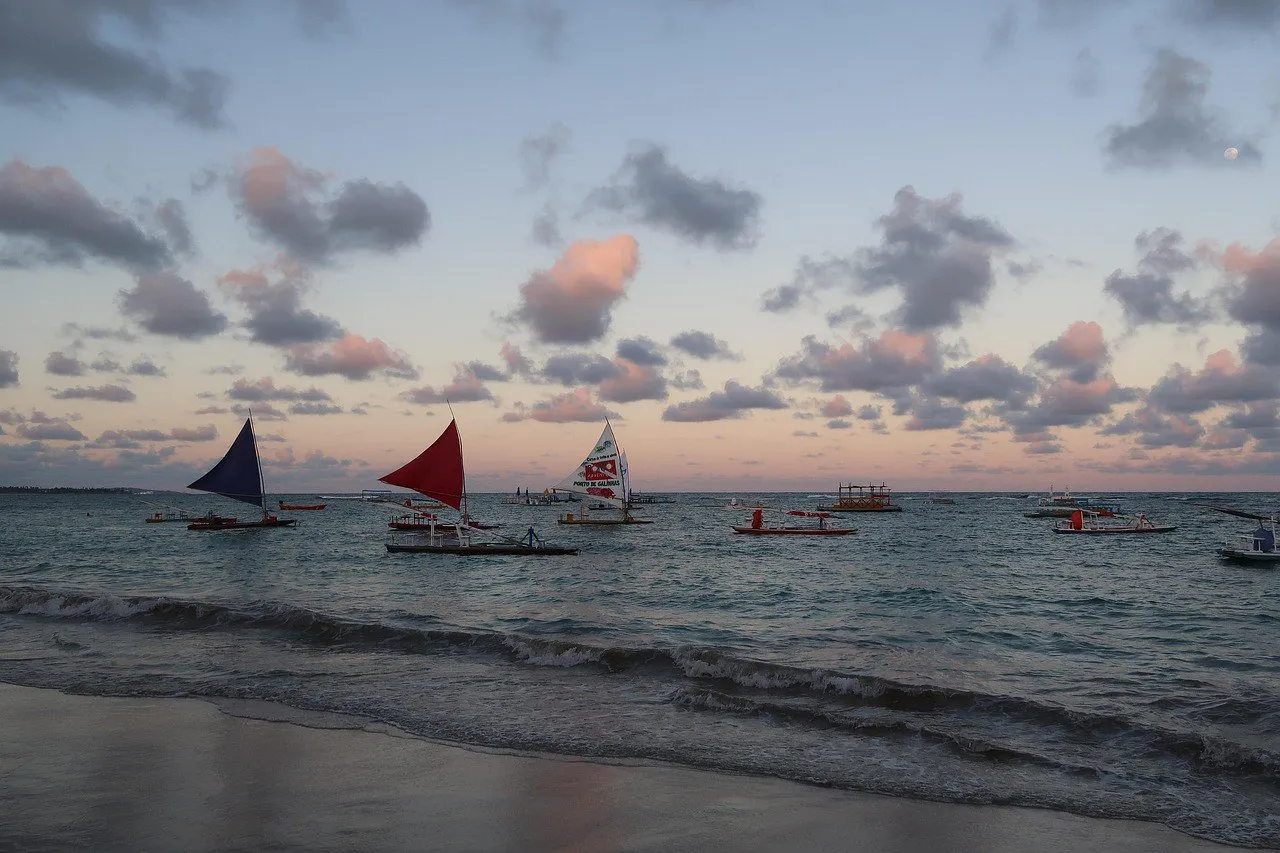
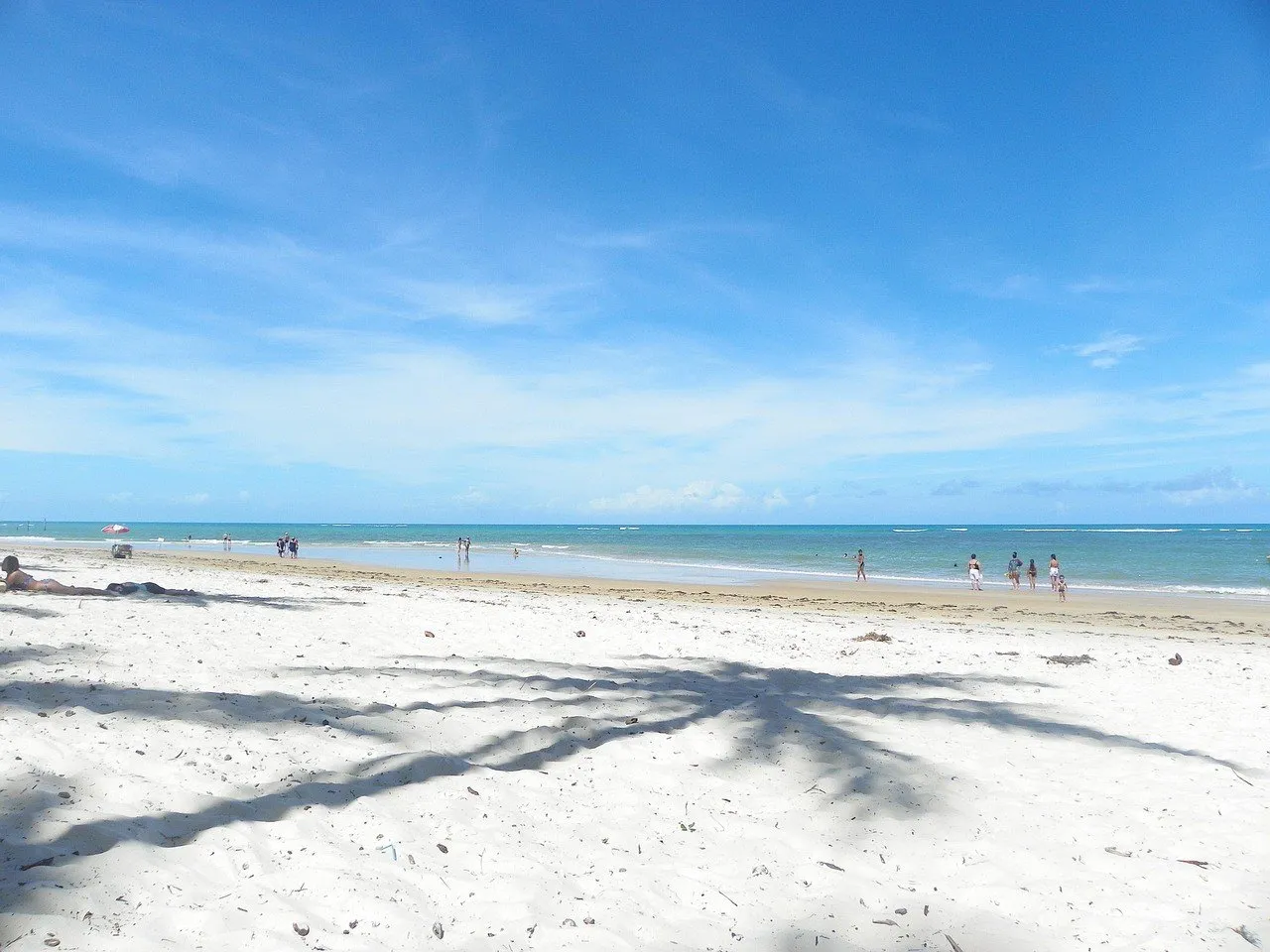
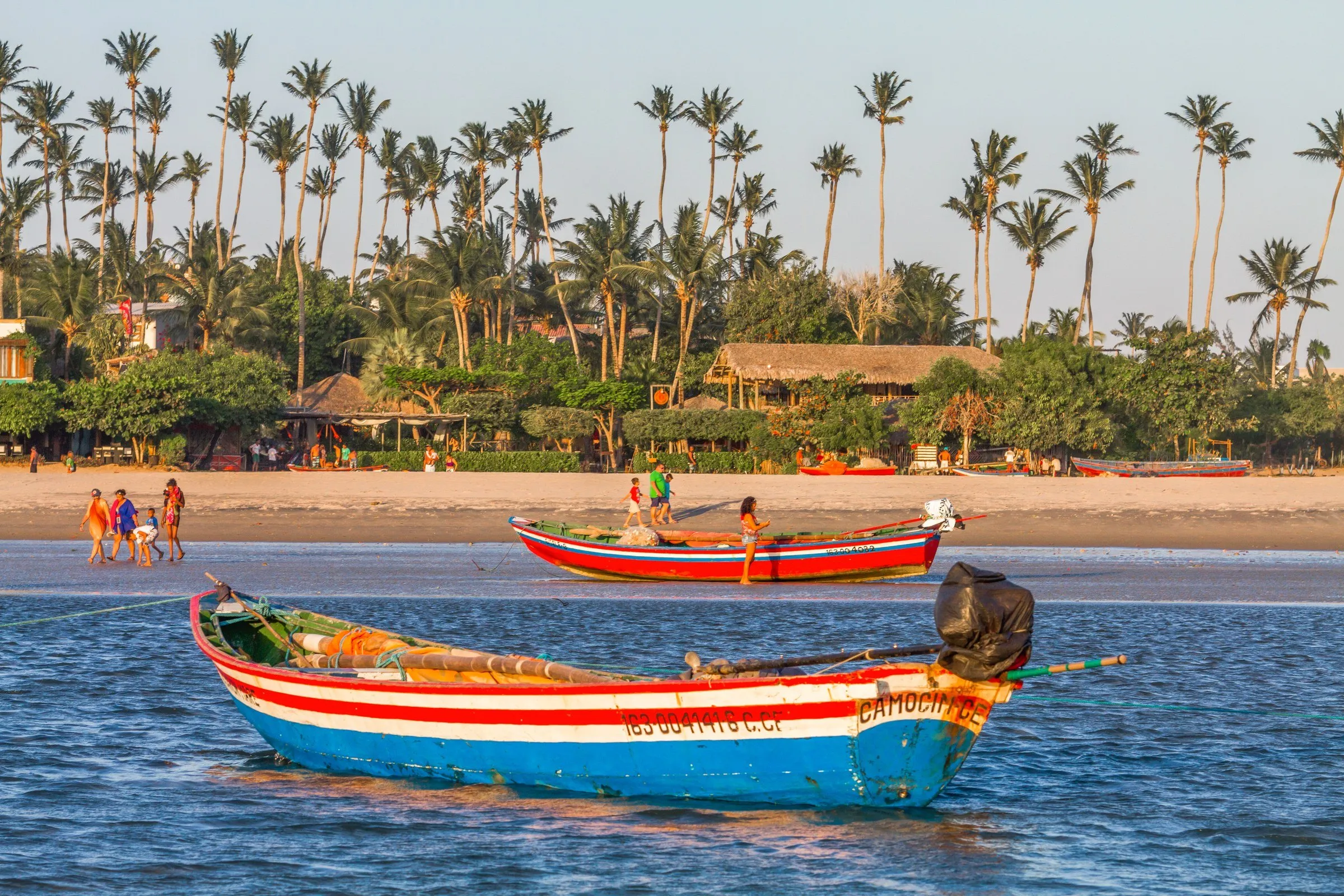
The beach in front of the village, with beach huts, inns facing the sea and sand rising toward the dune: it is where the day in Jeri begins and, almost always, ends.
View details for Jericoacoara Beach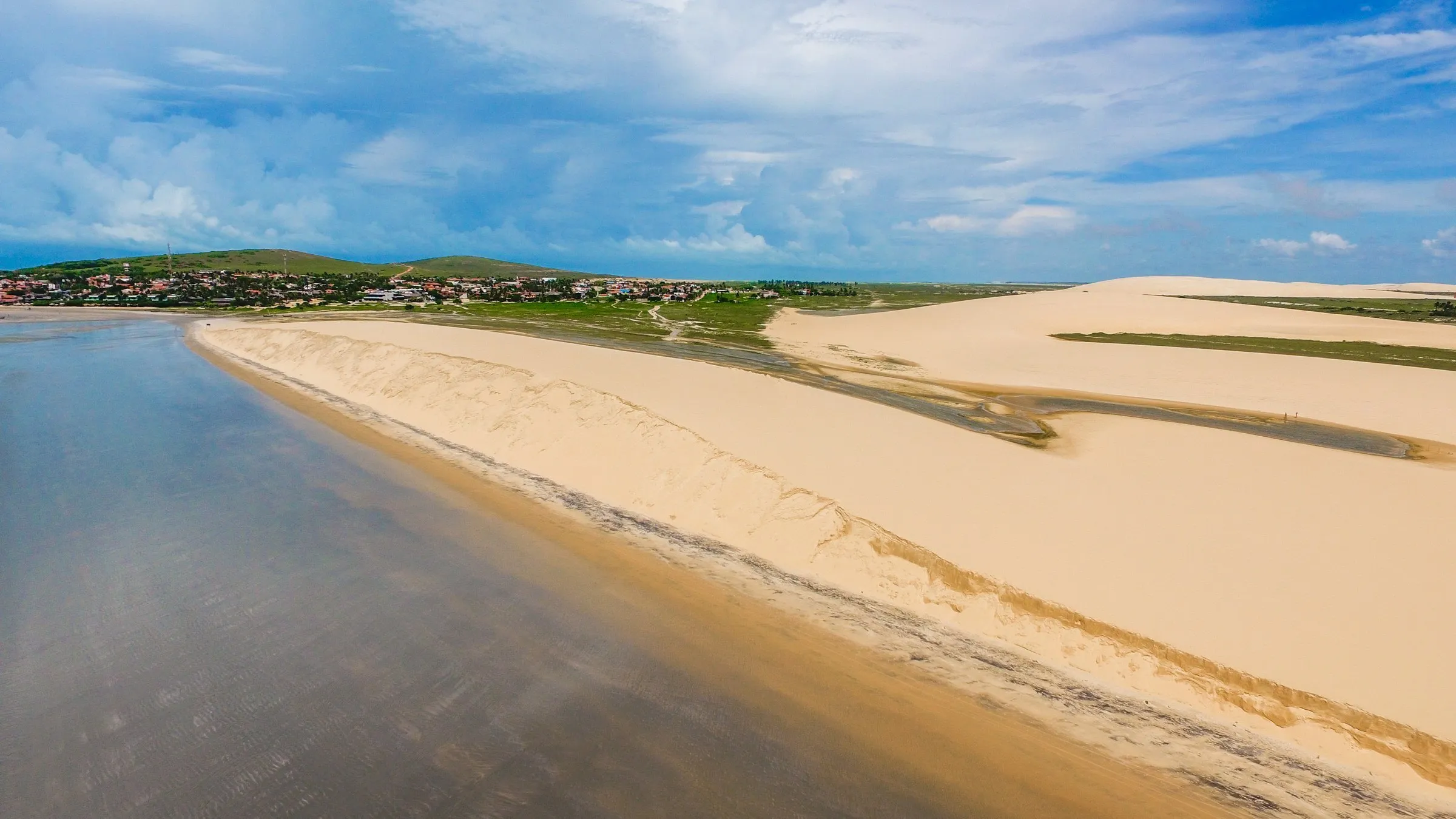
Brazil
In Jericoacoara, the streets are sand, your shoes stay at the inn, and around five in the afternoon the whole village walks to the same dune to watch the sun drop straight into the sea.
The first thing Jericoacoara asks is that you forget your shoes. The village streets are sand by law, tourist cars stay outside, and the last few kilometers to your inn are covered by 4x4 or open-air truck, bouncing between the dunes. In the morning, the beach out front belongs to early risers; in the late afternoon, everyone seems to have agreed to meet on top of the same dune. Until the mid-1980s, only fishermen lived here.
Today the village is a district of Jijoca de Jericoacoara, surrounded by the national park you cross to get here. This guide uses Jeri as a base and includes the surroundings that belong on any trip here: Blue Lagoon, in Jijoca, Preá Beach, in Cruz, and Mangue Seco, on the Guriú River, all visited on half-day or full-day buggy or 4x4 tours, returning to sleep in the village.
The itinerary has three days from Jeri and a two-day extension to Lençóis Maranhenses, already in Maranhão, with a long transfer and an overnight stay in Barreirinhas. To get around the dunes, hire a local driver: the sand tracks have no signs, and your phone map does not know when the tide comes in.
The name Jericoacoara comes from Tupi and is usually translated as den of the sea turtles.
Electricity only reached the village in 1998, through underground cables: utility poles have no place in Jeri's landscape.
Pedra Furada is made of quartzite, a rock estimated to be between 600 and 850 million years old, according to a geotourism guide from the Brazilian Geological Survey produced with ICMBio.
The village is not part of the national park, even though the park surrounds it. That is why a federal court banned charging an entrance fee from people who just want to reach the village.
1The beach in front of the village, with beach huts, inns facing the sea and sand rising toward the dune: it is where the day in Jeri begins and, almost always, ends.
View details for Jericoacoara Beach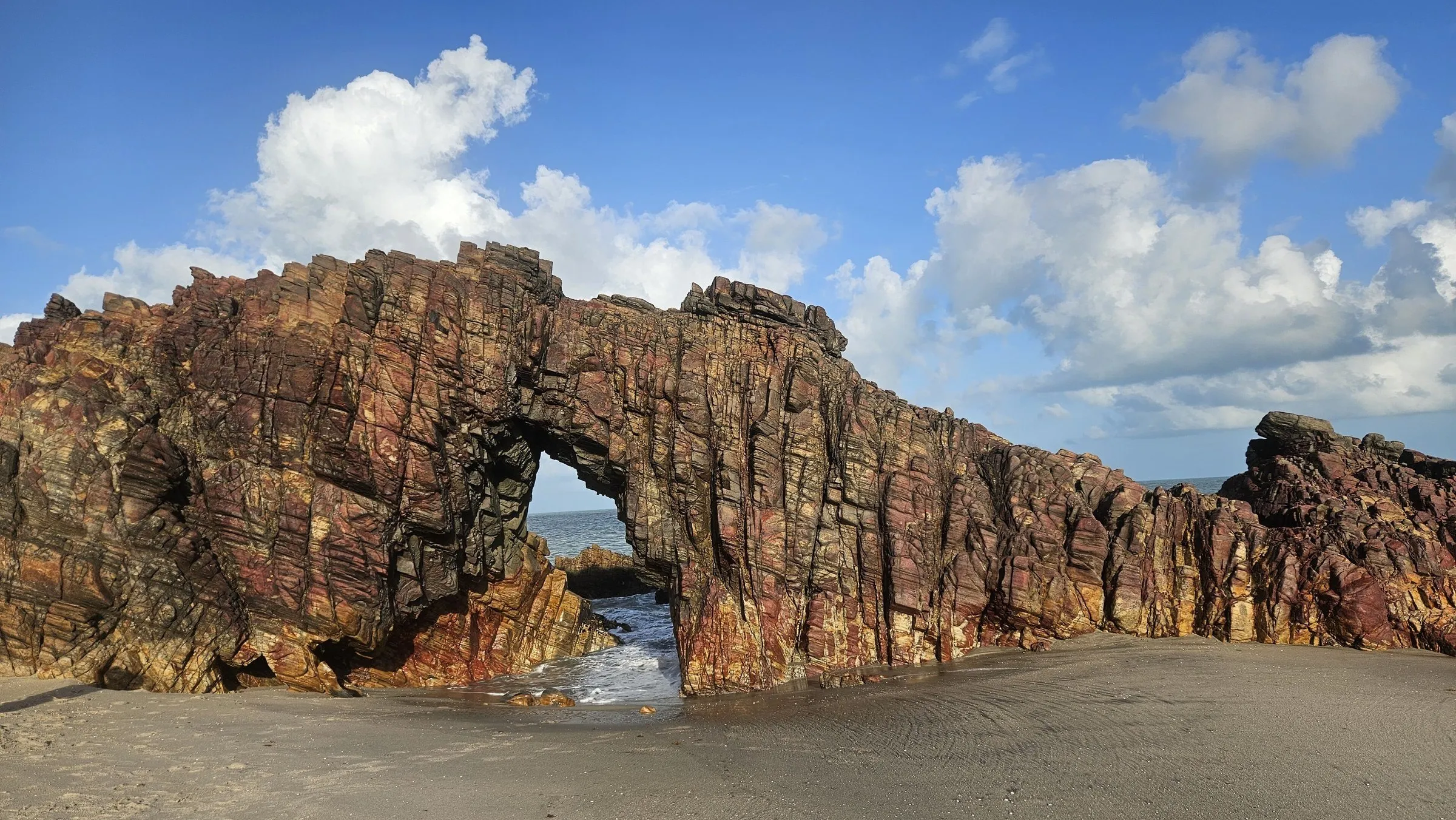 2
A rock arch carved by waves in the national park, a walk from the village; between mid-July and mid-August, the sun sets lined up with the hole.
View details for Pedra Furada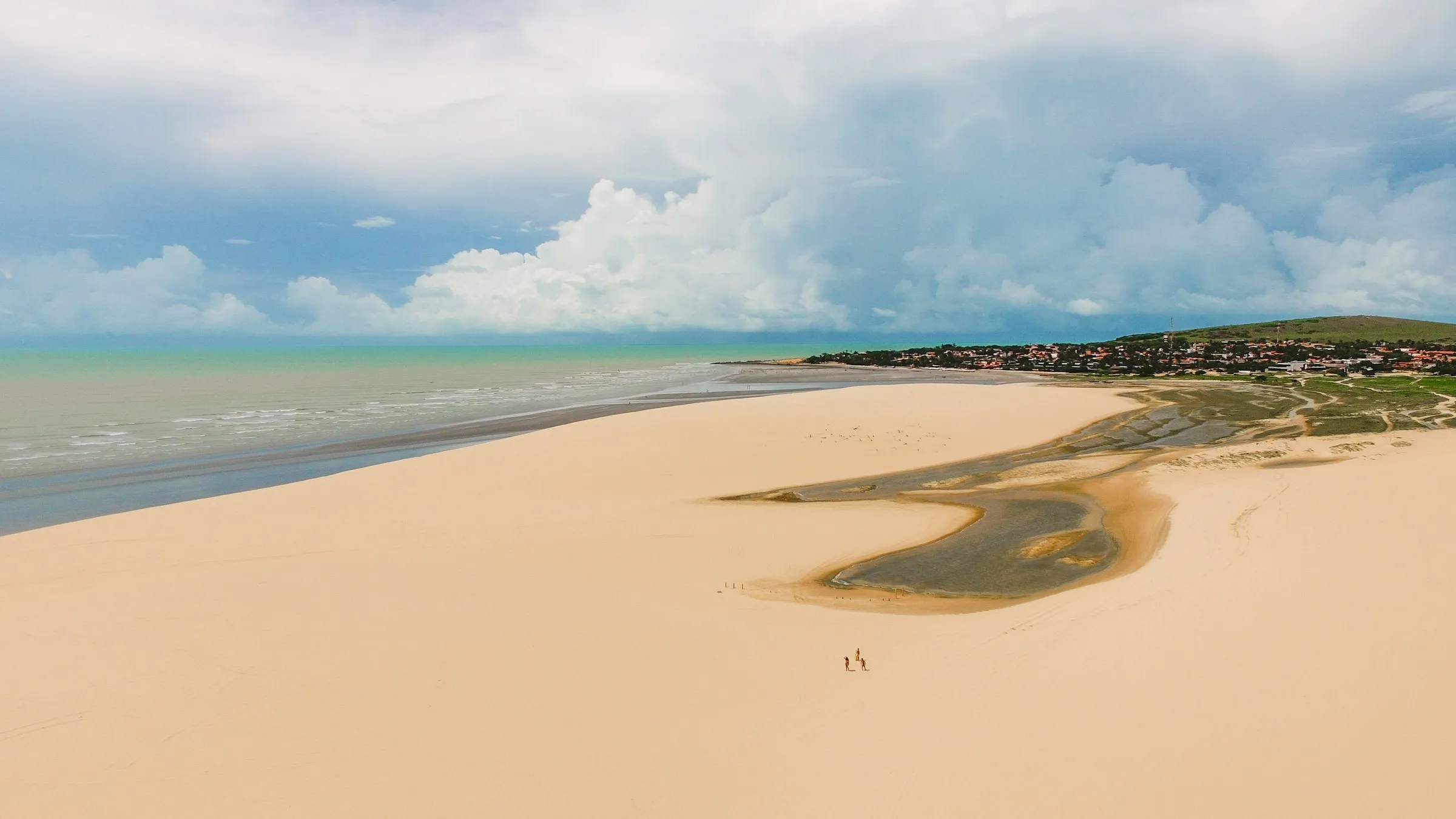 3
The dune where the village gathers in the late afternoon to watch the sun sink into the sea. It has shrunk a lot in recent decades, so use the marked paths to climb.
View details for Sunset Dune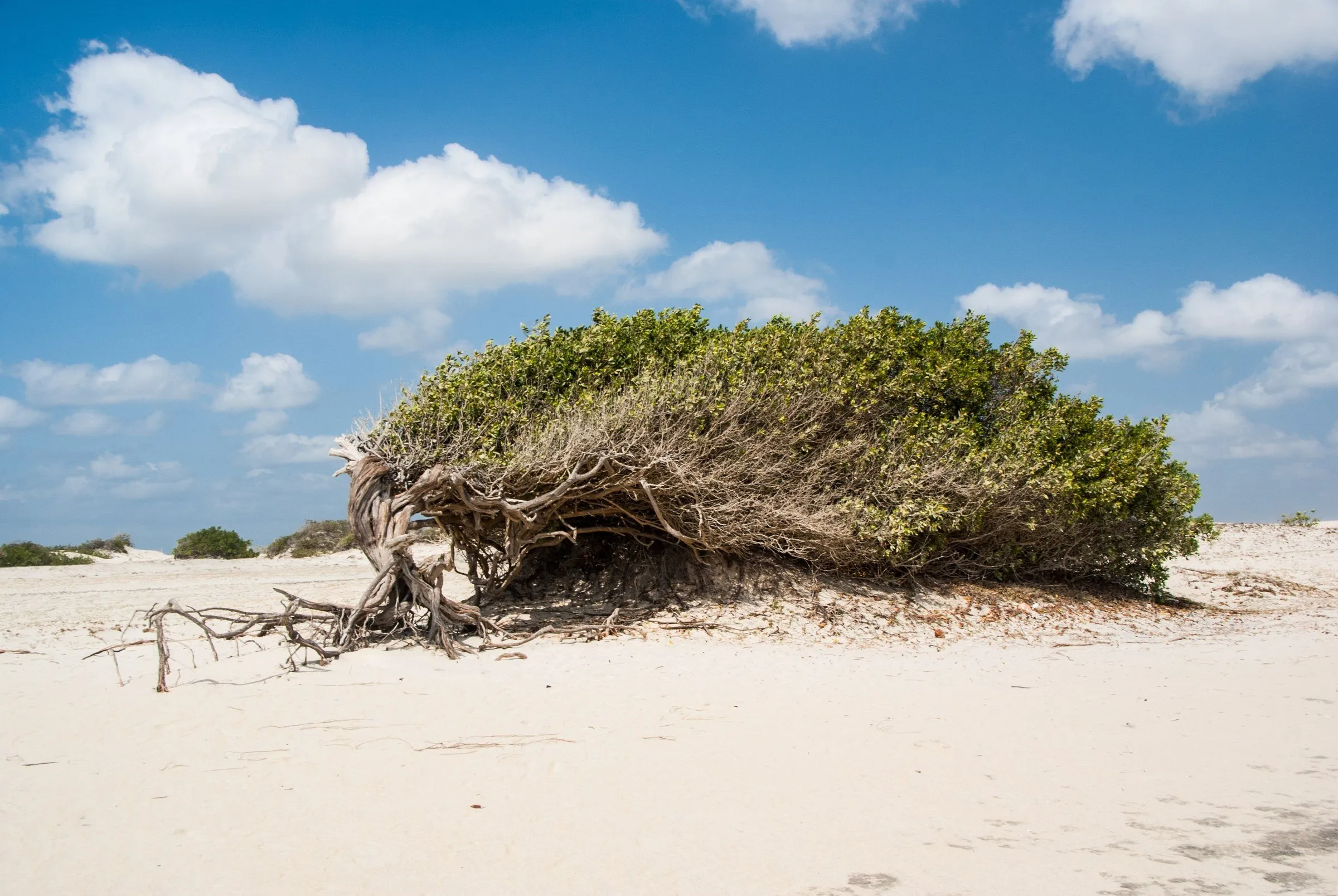 4
A buttonwood mangrove shaped by the wind, leaning over the sand on the way between the village and Preá: a quick, much-photographed stop on the east-side tour.
View details for Sloth Tree (Árvore da Preguiça)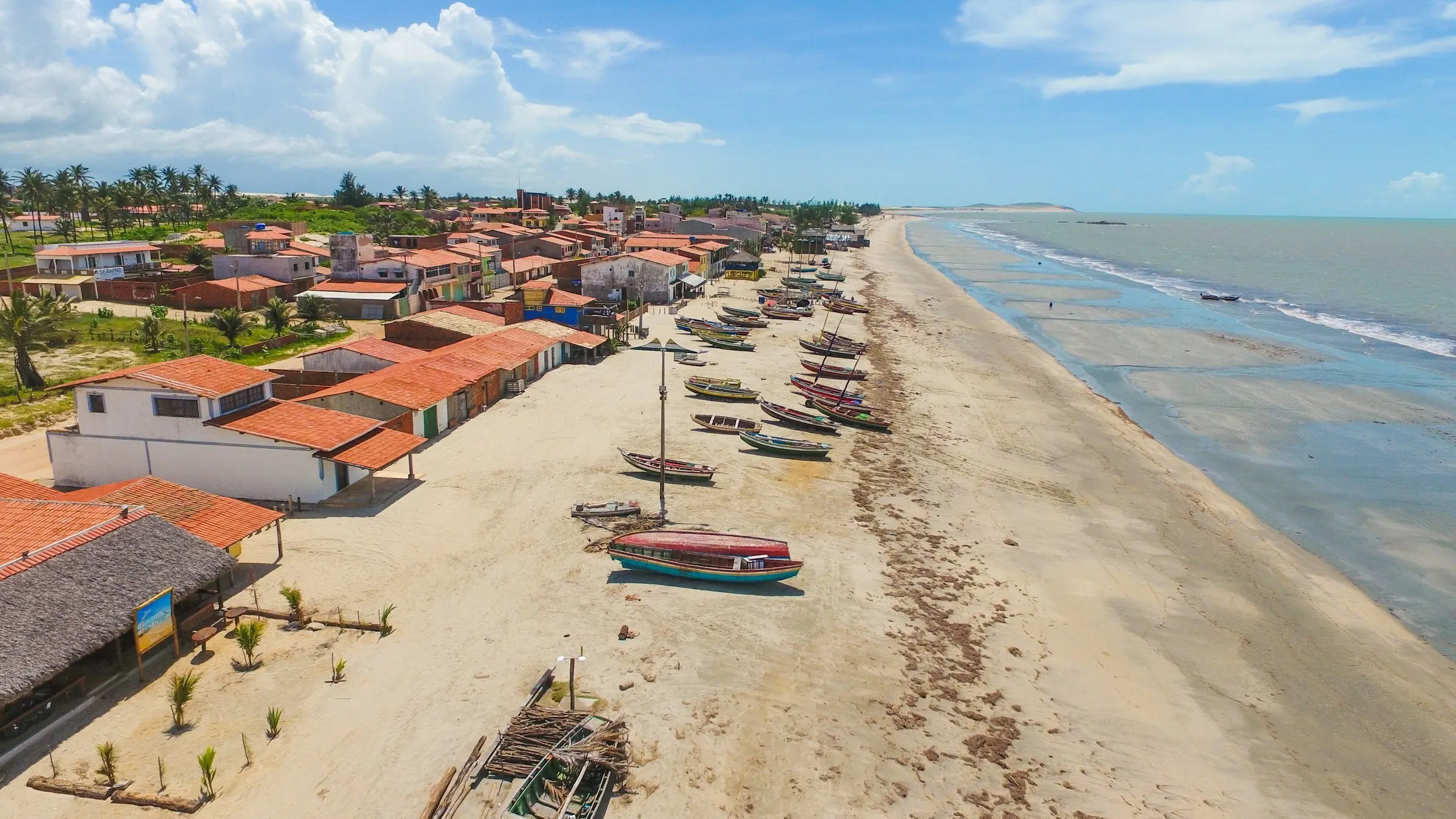 5
Outside Jeri, in the municipality of Cruz and about 11 km from the village along a sand road, Preá is the kitesurfing beach, with inns and a seafront promenade.
View details for Preá Beach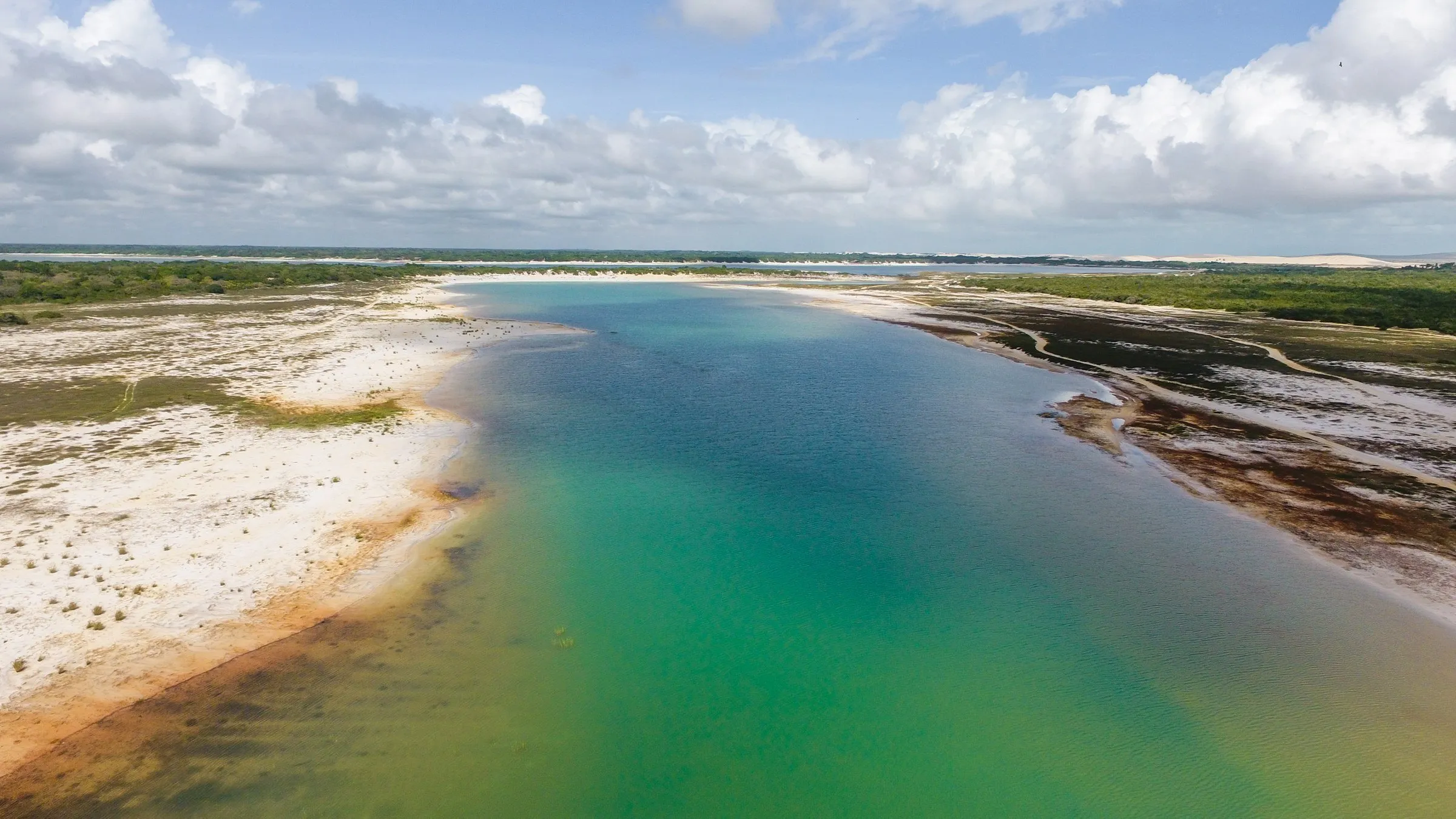 6
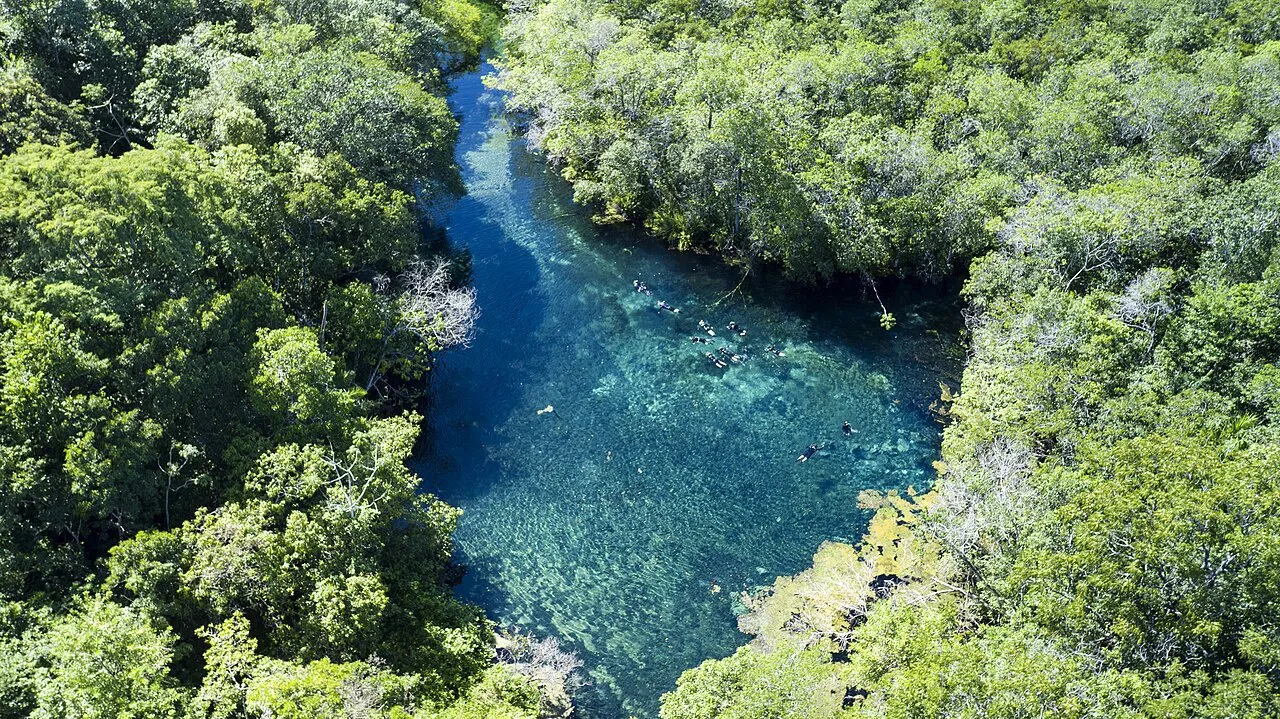
A stretch of the large Jijoca Lagoon, outside the village, reached by sailing raft: calm water, no waves, with tables and hammocks in the water and a color that changes with the weather.
View details for Blue Lagoon (Lagoa Azul)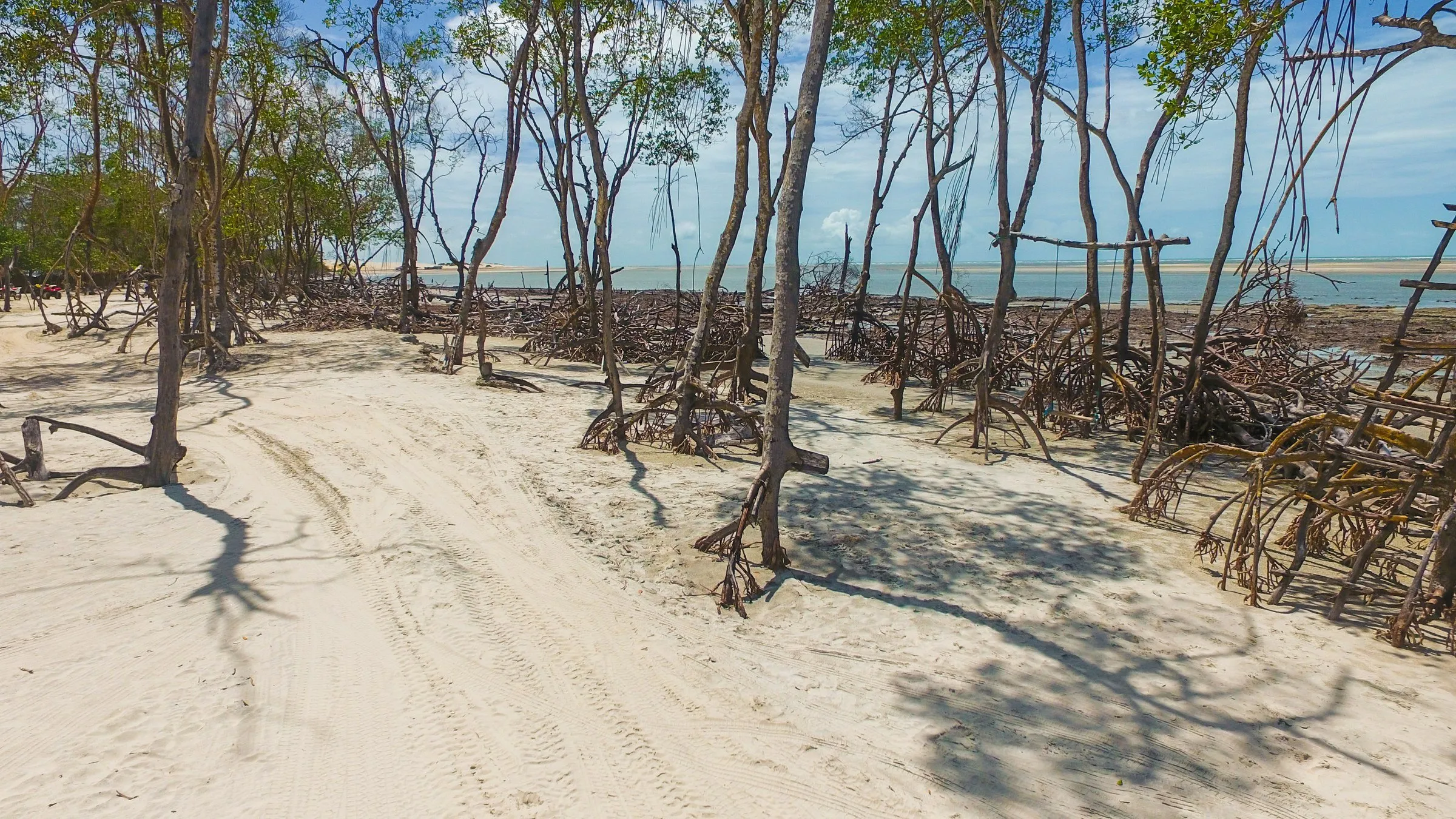 7
Outside the village, on the western edge of the national park: dry mangrove trunks, canoe rides on the Guriú River, a hand-operated ferry and seahorses seen with authorized guides.
View details for Mangue Seco and Guriú River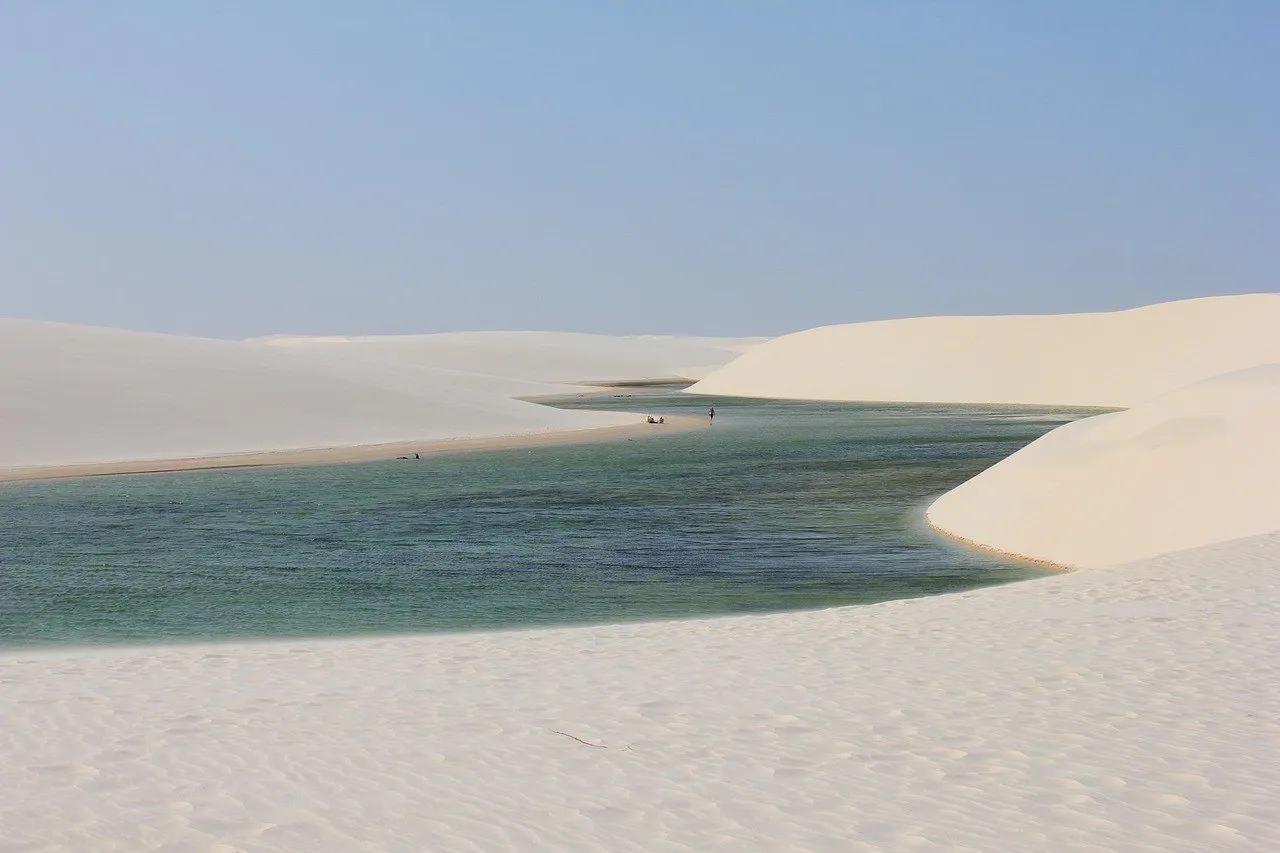 8
A trip extension, already in Maranhão: white dunes and rain-fed lagoons in a national park that has been a World Heritage Site since 2024. It requires a long transfer and an overnight stay in Barreirinhas.
View details for Lençóis Maranhenses1Leave your inn, follow any sand street toward the sound of the sea and in a few minutes you are there. Jericoacoara Beach works as the village's backyard: beach huts with chairs, inns looking out at the water and, on one side, the sand climbing toward the Sunset Dune. The stretch of sea out front is also part of the national park.
It is one of the most popular windsurfing spots in Brazil, so do not be surprised by colorful sails cutting across the water when the wind picks up. For swimming, go in the morning, with the sand still cool and the tide checked at the front desk.
2The waves worked slowly on the fractures in the rock until they opened this hole, and the result became the symbol of Jeri. Pedra Furada sits inside the national park, east of the village, and is made of quartzite, one of the oldest rocks in the whole region.
At low tide, the shortest route is along the sand, a 20 to 30 minute walk; at high tide, the trail goes over the hill that separates the rock from the village. Between July 15 and August 15, the sun sets framed by the arch, and the fight for a spot for the photo grows in proportion. Climbing the rock is prohibited, so the classic picture is taken with both feet on the sand.
3Around five in the afternoon, the village seems to move as one current, everyone walking in the same direction. The Sunset Dune sits right against the beach, and Jeri's position, on a point of land facing the ocean, makes the sun go straight down into the water, with an audience seated on the sand.
The dune is shrinking. According to research cited by the newspaper Diário do Nordeste, it was about 60 meters high in the 1970s and close to 10 meters in 2023. Part of that is natural; part comes from the village itself, which blocks the sand carried by the wind, and from constant trampling. Climb through the marked areas and leave the sandboarding for other dunes.
4Nobody left this tree crooked on purpose: it was the constant wind of the Ceará coast that shaped it this way, with its whole crown lying to one side, like someone stretching at the end of a Sunday. It is a buttonwood, Conocarpus erectus, alone in the middle of the sand, a few meters from the sea.
It stands between the village and Preá Beach, in an area looked after by ICMBio, and is part of the east-side buggy or 4x4 tour. You can walk there, but the route is in open sun with almost no shade. Rangers can fine anyone who climbs the branches, and the tree is grateful.
5You see the sails before you see the beach. Preá is in the neighboring municipality of Cruz, east of Jericoacoara, and has become a meeting point for kitesurfers, drawn by the strong wind for much of the year. On the sand, plenty of small white shells; on the promenade, gourd lamps and wooden restaurants.
You get there over the sand, by buggy or 4x4, as a stop on the east-side itinerary. It is also where many transfers join the track to Jeri, after letting air out of the tires. Some people prefer to stay in Preá, where inns tend to cost less, and visit the village only to walk around and have dinner.
6The crossing is already half the fun: the buggy parks on the sand and a sailing raft takes you to the beach huts on the other side. Blue Lagoon is a stretch of the large Jijoca Lagoon, in the municipality of Jijoca de Jericoacoara, outside the village and on the way of the east-side tour.
The water is usually calm, without waves, which suits anyone traveling with children. The name, however, is a promise that depends on the weather: there are reports of greenish water and low levels in certain seasons. Ask your driver how it looks before setting out; with the lagoon full, the hammocks in the water and lunch at a beach hut sort out the afternoon.
7At high tide, the dead mangrove trees stand with their feet in the water and the scene looks staged for a photo. Mangue Seco sits by the Guriú River, whose mouth marks the western limit of the national park, about 10 km from the village. The river is crossed by ferry, with the car on board, in a manual process worth watching.
In the mangrove, fishermen take groups out by canoe to watch seahorses, a threatened species. ICMBio requires licensed guides, and the practice of taking the animal out of the water in jars is criticized by conservationists. Prefer to watch without removing them, never touch the animals, and skip the sunscreen if you are going into the water.
8This is not a day trip, and do not even try. Lençóis Maranhenses National Park is in another state, in the municipalities of Barreirinhas, Primeira Cruz and Santo Amaro do Maranhão, and the 4x4 transfer from Jeri takes six to seven hours, according to operators. The route follows the Rota das Emoções, which links Jericoacoara, the Parnaíba Delta and the Lençóis.
The lagoons depend on rain, concentrated from January to July; in the dry season, from August to December, the level drops until some of them dry out. Barreirinhas is the main base, with tours to the lagoons and boat rides on the Preguiças River. To head home, São Luís is about 272 km away by road. In 2024, UNESCO inscribed the park as a Natural World Heritage Site.
Jericoacoara airport (JJD) is in Cruz, about 30 km from the village, and the 4x4 transfer takes around 40 to 50 minutes. From Fortaleza, it is about 300 km: by transfer, around five hours; by bus to Jijoca, switching to an open-air truck, longer. Tourist cars do not enter the village and stay in a parking lot at the entrance.
The Jijoca city government charges a Sustainable Tourism Fee for stays of up to 10 days, which can be paid in advance on the official website, with exemptions for some groups. Reaching the village does not require a ticket; attractions in the national park may have their own charge from the concession operator. Check the rules close to your trip.
The sand tracks have no signs, and driving on dunes takes experience, especially at night. For tours, hire a buggy or 4x4 with a local driver and compare itineraries, stop times and what is included, such as ferry and canoe.
The tide determines the walking route to Pedra Furada and the stretches that buggies drive along the beach. The wind kicks up sand all day: sunglasses, light clothing that covers your arms and sunscreen matter more than any new swimsuit.
On the tours, canoe, ferry and some beach huts accept Pix (Brazil's instant payment system), but the internet signal drops out. Bring cash. Bank branches are in Jijoca, about 25 km from the village.
Climbing Pedra Furada and taking rocks or sand from the park are prohibited, and vehicle traffic on the dunes is restricted. At the Sunset Dune, use the marked paths; in the mangrove, watch the seahorses without touching them.
In Jeri, seafood shows up on almost every menu, from Ceará-style fish stew to shrimp with mango, and northeastern cooking shares the street with pasta, pizza and chef-driven restaurants. On the east-side tour, lunch is usually at a lagoon beach hut, with your feet in the water; at night, the village fills the tables on the main street again, and the most sought-after dessert is artisanal ice cream, including tapioca with coconut. After a day of wind and sand, nobody orders salad as a main course.
Fish simmered in a broth with vegetables, a classic of the Ceará coast that calls for pirão (a manioc flour porridge) on the side.
Fish and shrimp in the same stew, a dish to share at night after a whole day on the buggy.
Cassava starch crepe filled with dried beef, pumpkin and coalho cheese, good for breakfast or an afternoon snack.
A flavor from the village's artisanal ice cream shops that turns tapioca into a frozen dessert.