 1
Modern architecture
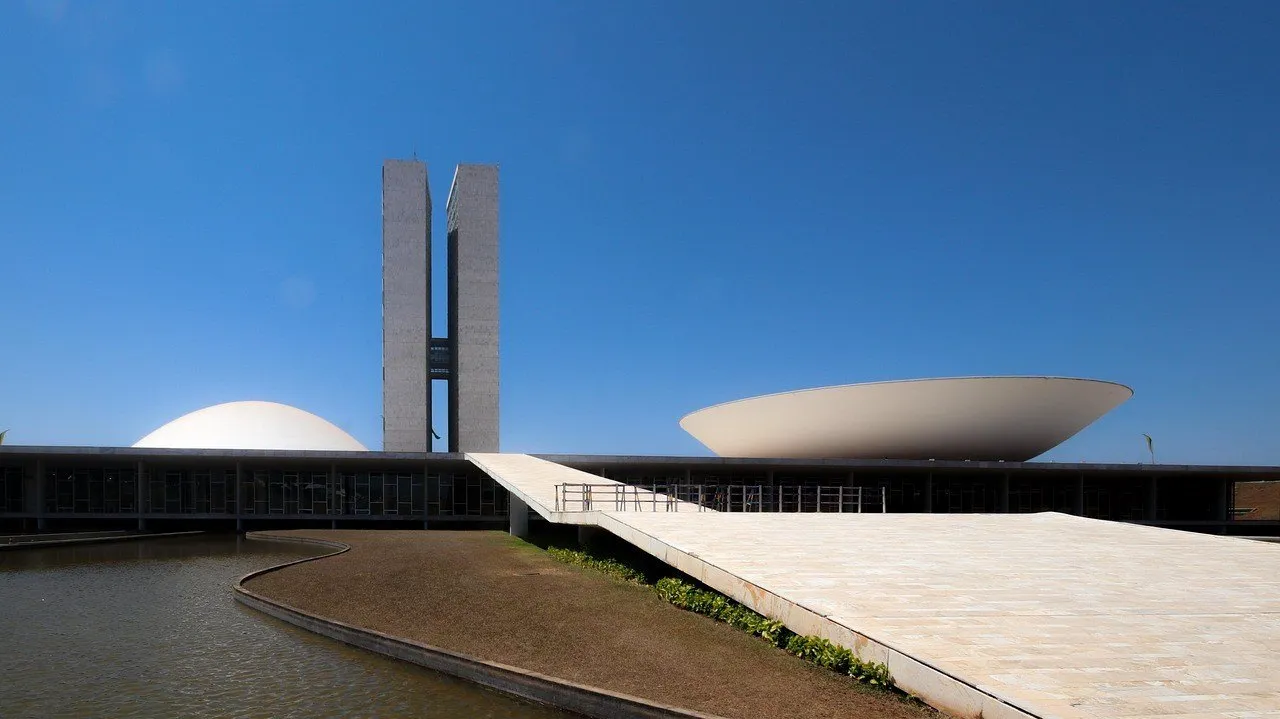
Congresso Nacional
The domes of the Câmara and the Senado shape the seat of the legislative branch. Inside, the tour adds works of art to the façade you know from the news.
View details for Congresso Nacional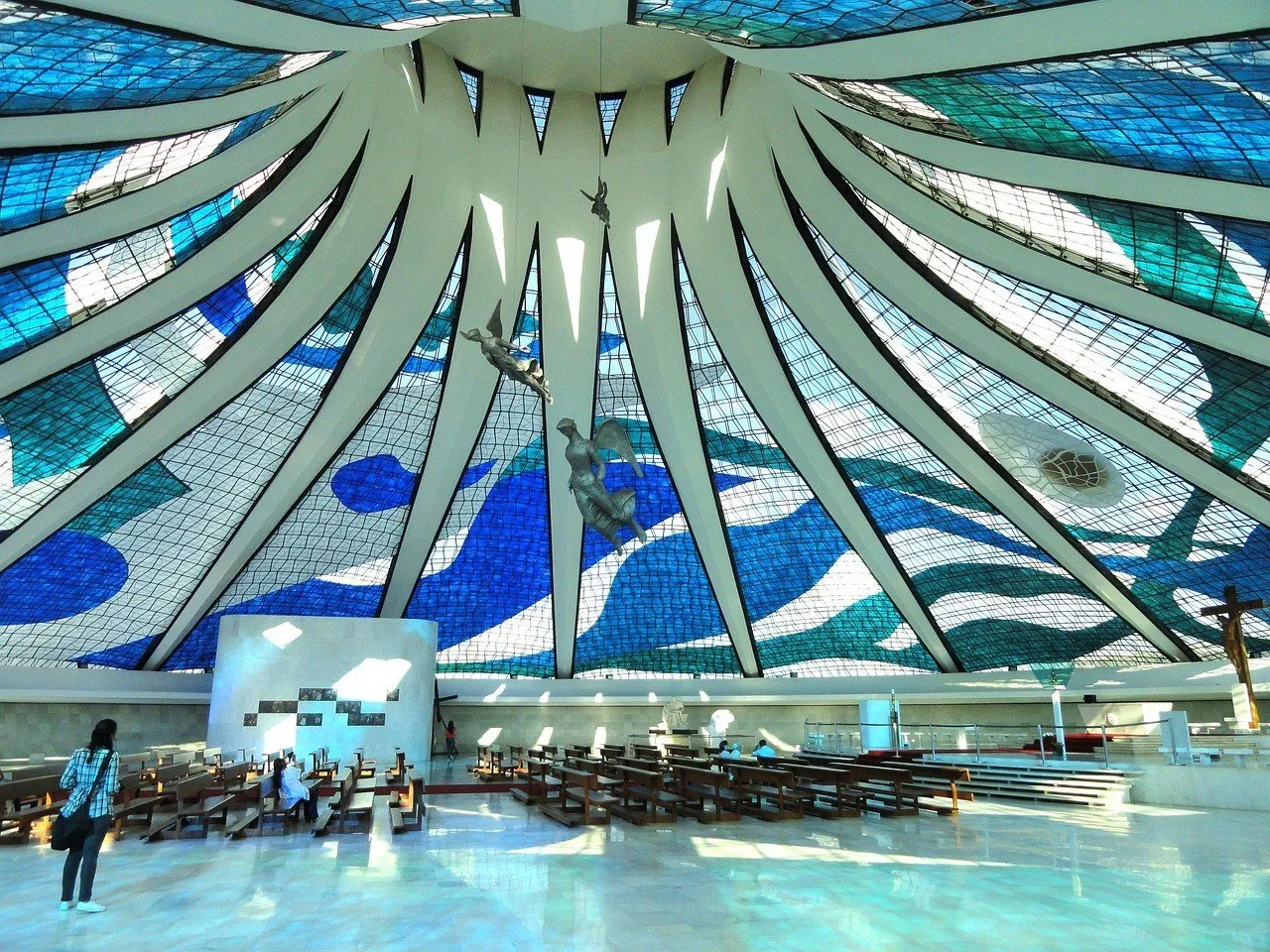
Brazil
You walk down a dark passage and find angels hanging beneath the light of the Catedral's stained glass. In Brasília, even the church entrance changes how you look at the sky.
The sky enters Brasília's architecture: it appears between the columns of the Catedral, behind the domes of the Congresso and in the reflection of the arches of the Itamaraty. You recognize the buildings before you arrive, but the surprise is the scale. What looked close in the photo turns into a respectable walk under the sun. Plan your moves by region and save your legs for looking at the buildings, rather than spending them crossing all the space between them.
Lucio Costa's urban plan and Oscar Niemeyer's architecture help explain why Brasília's ensemble received UNESCO recognition. But the city also works away from the official façades: there are people cycling in the Parque da Cidade, lunch in the commerce of the quadras and strolls along the Lago Paranoá. In three days, combine visits to public buildings, art and time outdoors. The palaces' schedules need to be checked in advance; the sky needs no reservation.
The Torre de TV is a project by Lucio Costa, the urbanist of the Plano Piloto. It is worth remembering the name: attributing every building in the city to Niemeyer is a shortcut that doesn't work here.
Juscelino Kubitschek's personal library was taken from his apartment in Rio de Janeiro to the Memorial JK, preserving its organization.
The Parque da Cidade appears in Eduardo e Mônica, by Legião Urbana. A break in the green also fits into a trip devoted to architecture.
1The domes of the Câmara and the Senado shape the seat of the legislative branch. Inside, the tour adds works of art to the façade you know from the news.
View details for Congresso Nacional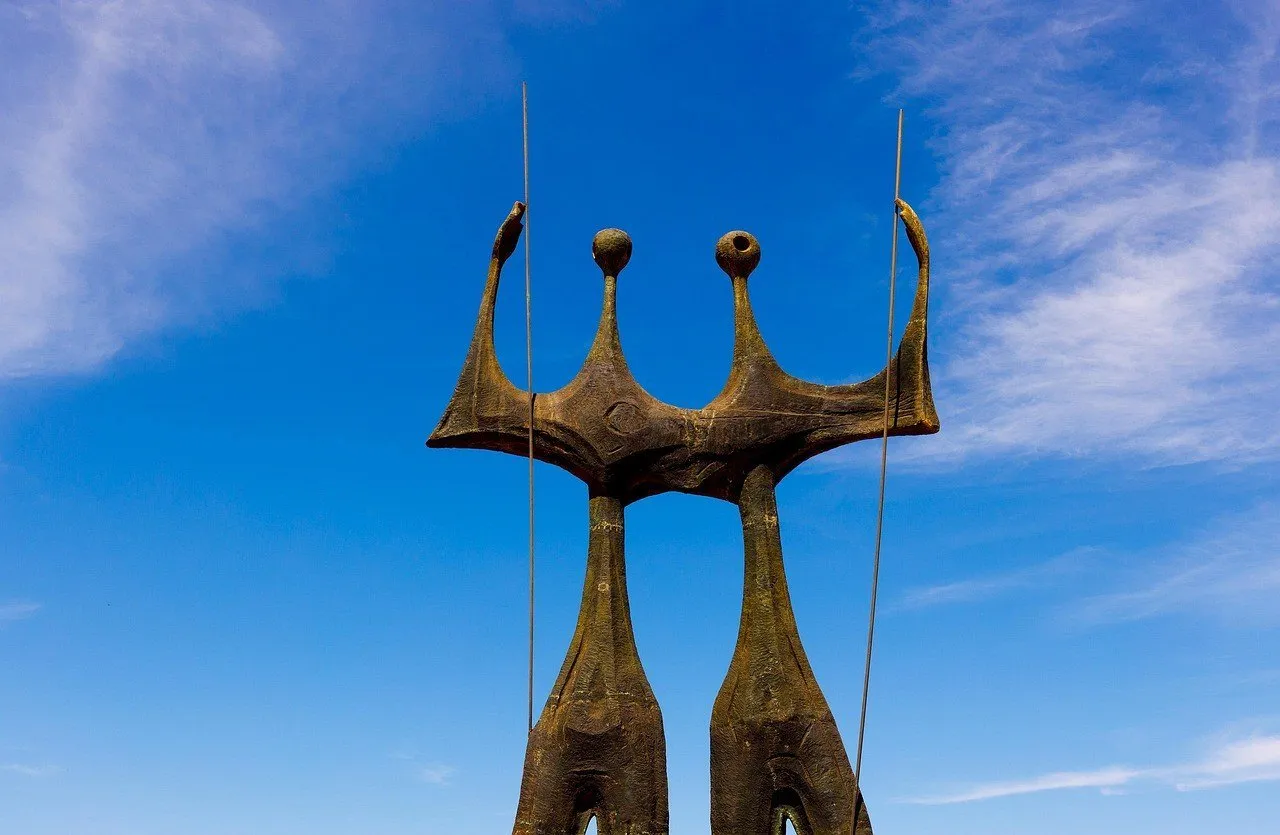 2
The Planalto, the Supremo Tribunal Federal and the Congresso surround the square that brings together the powers of the Republic; sculptures add other voices to the official landscape.
View details for Praça dos Três Poderes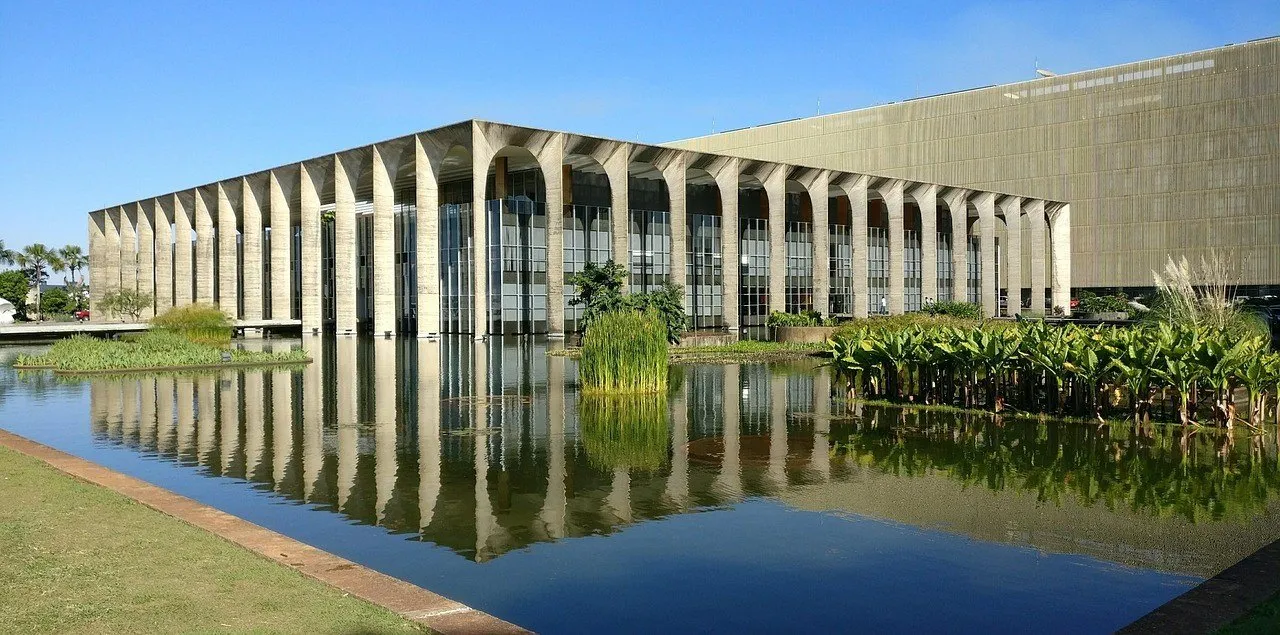 3
Concrete arches reflected in the water announce the seat of Brazilian diplomacy. The visit brings you closer to the gardens, the architecture and the art collection.
View details for Palácio Itamaraty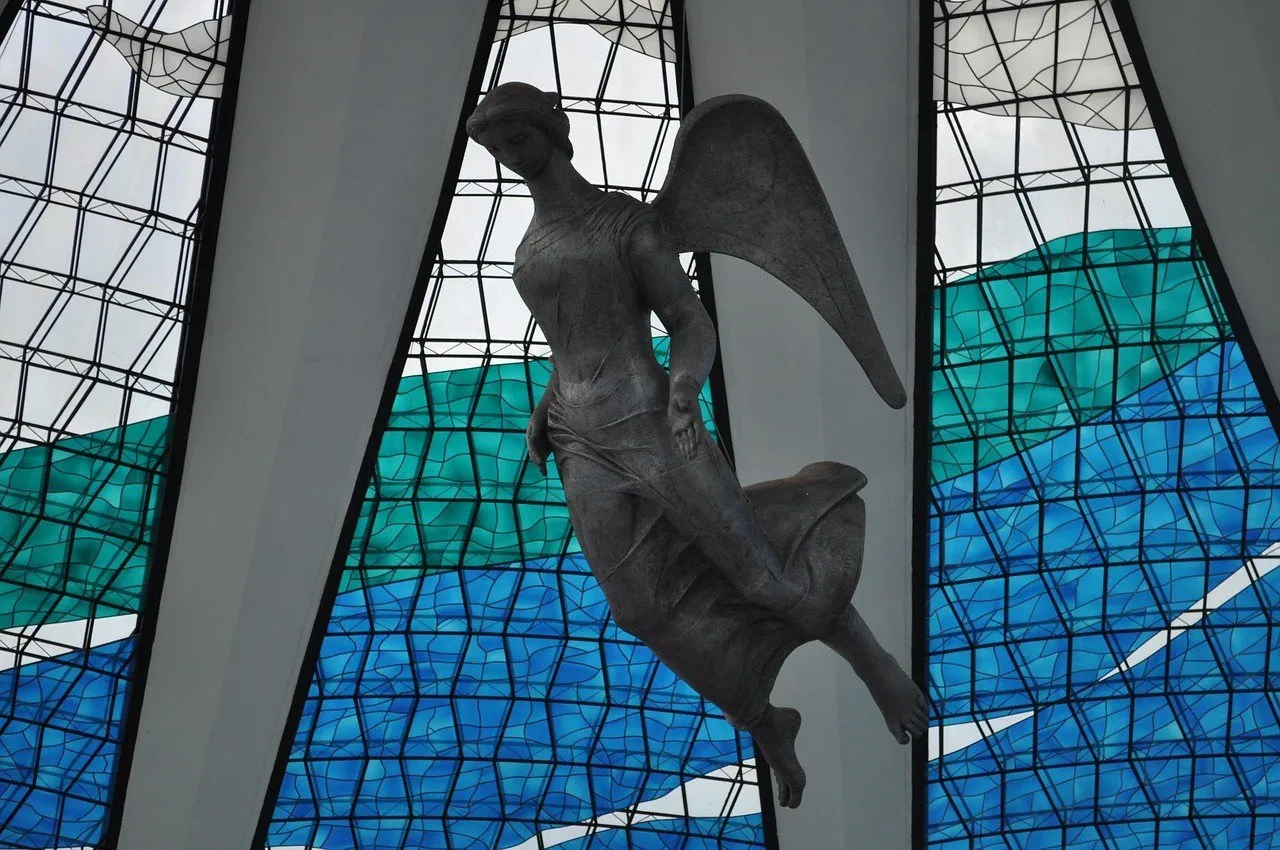 4
The dark passage opens into a nave lit by stained glass, with hanging angels. Niemeyer's Catedral saves its big change of scene for the interior.
View details for Catedral Metropolitana Nossa Senhora Aparecida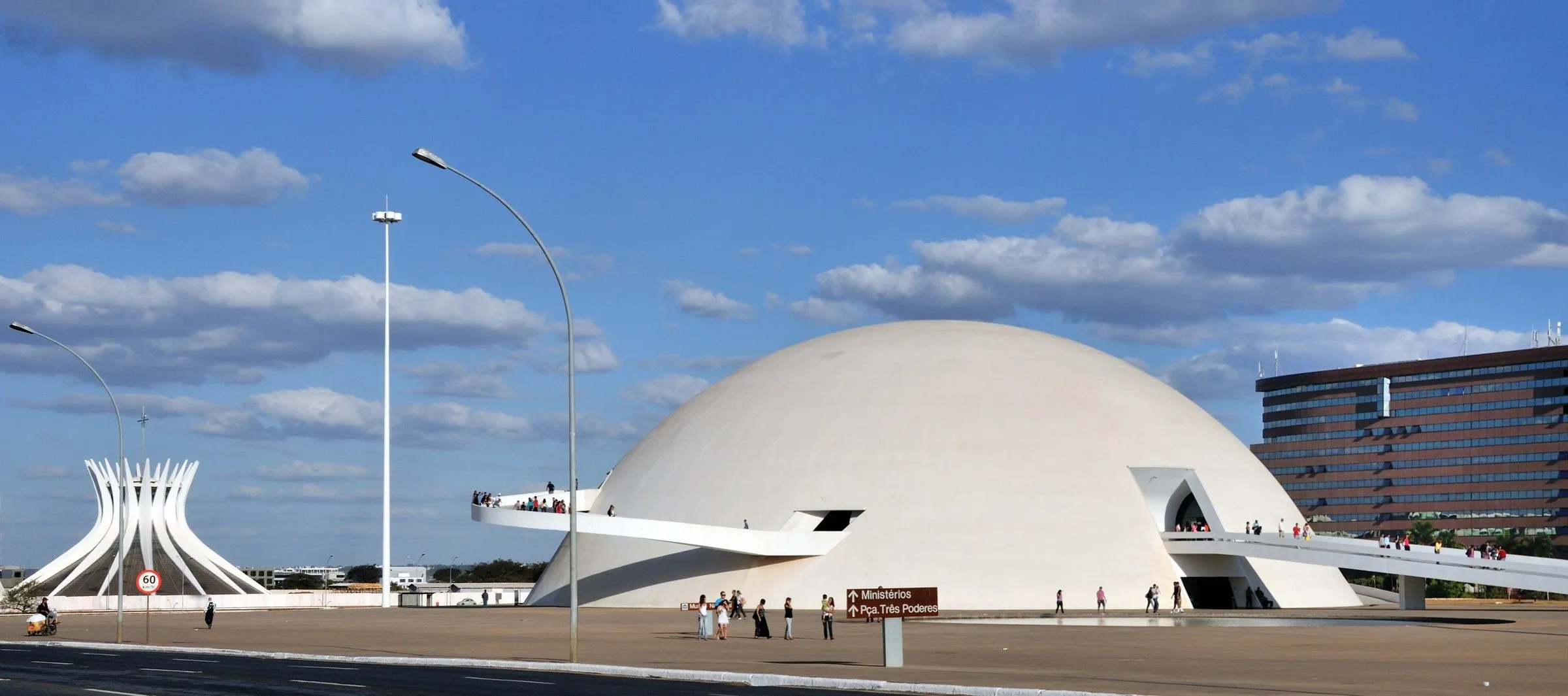 5
The white dome and the curved ramp share the spotlight with the visual arts exhibitions. The Museu Nacional is part of the Conjunto Cultural da República.
View details for Museu Nacional da República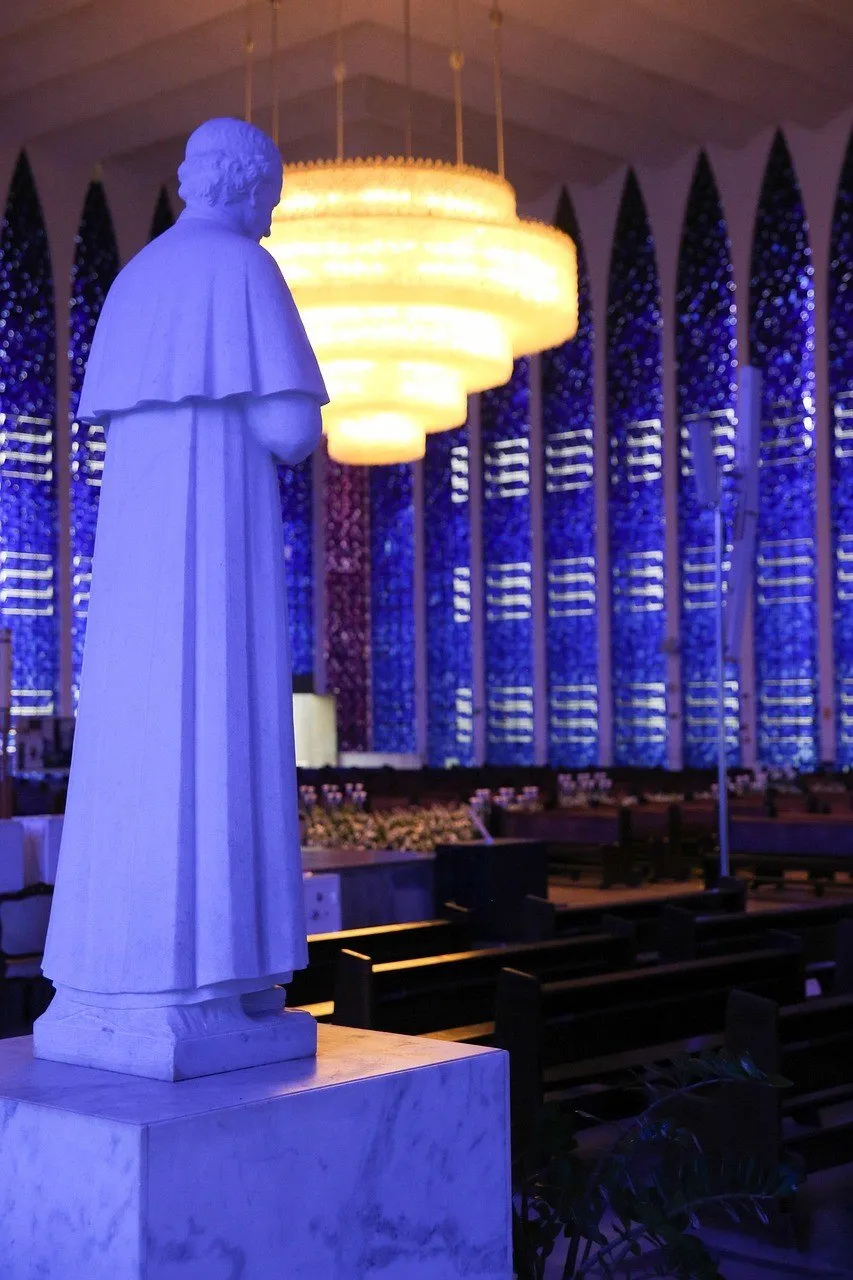 6
Blue stained glass wraps the interior of the Santuário São João Bosco, while a glass chandelier marks the center. The visit calls for daylight and a low voice.
View details for Santuário Dom Bosco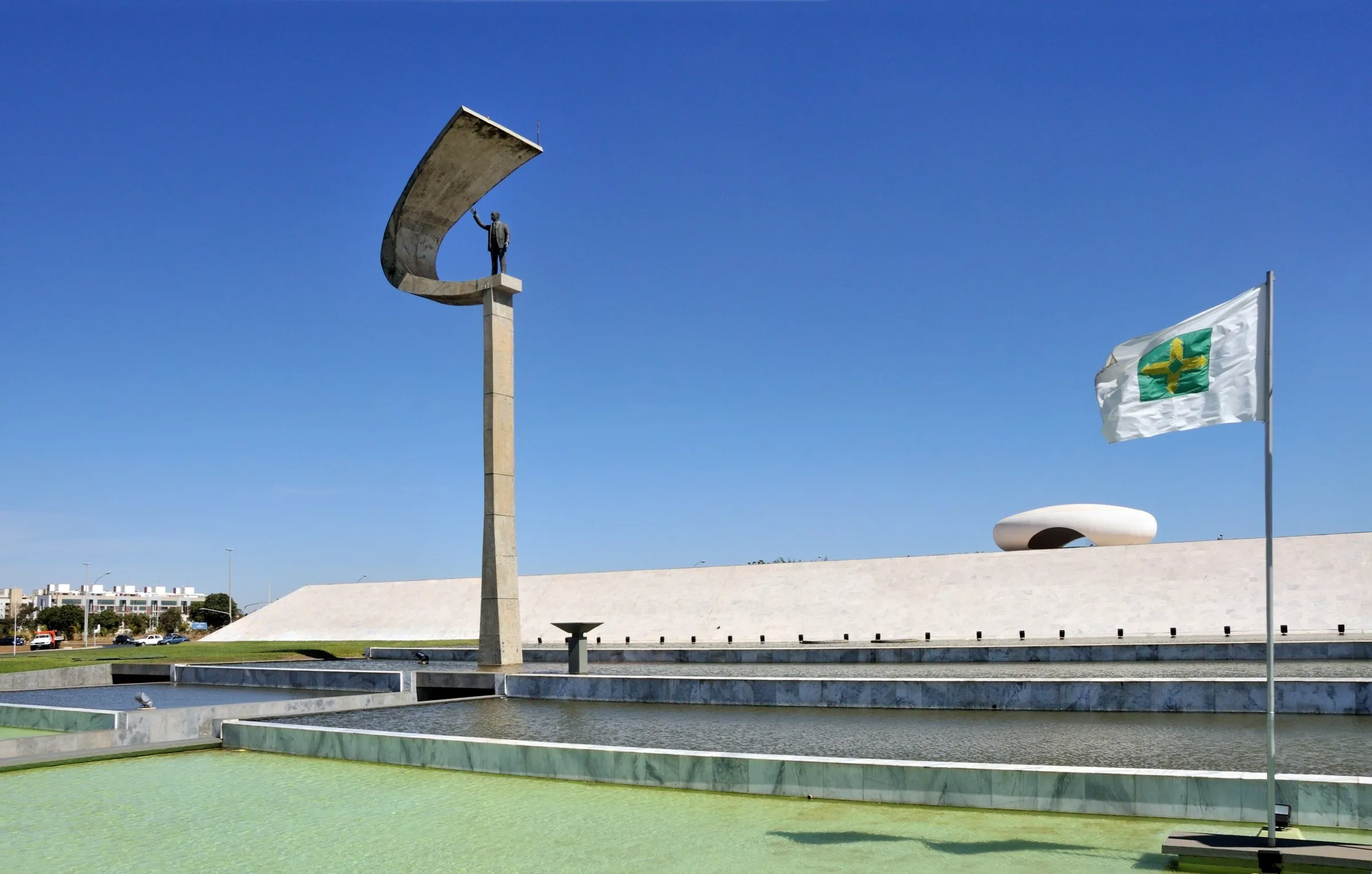 7
A museum and mausoleum dedicated to Juscelino Kubitschek, with personal objects, photographs and a library that bring visitors closer to the story of the building of Brasília.
View details for Memorial JK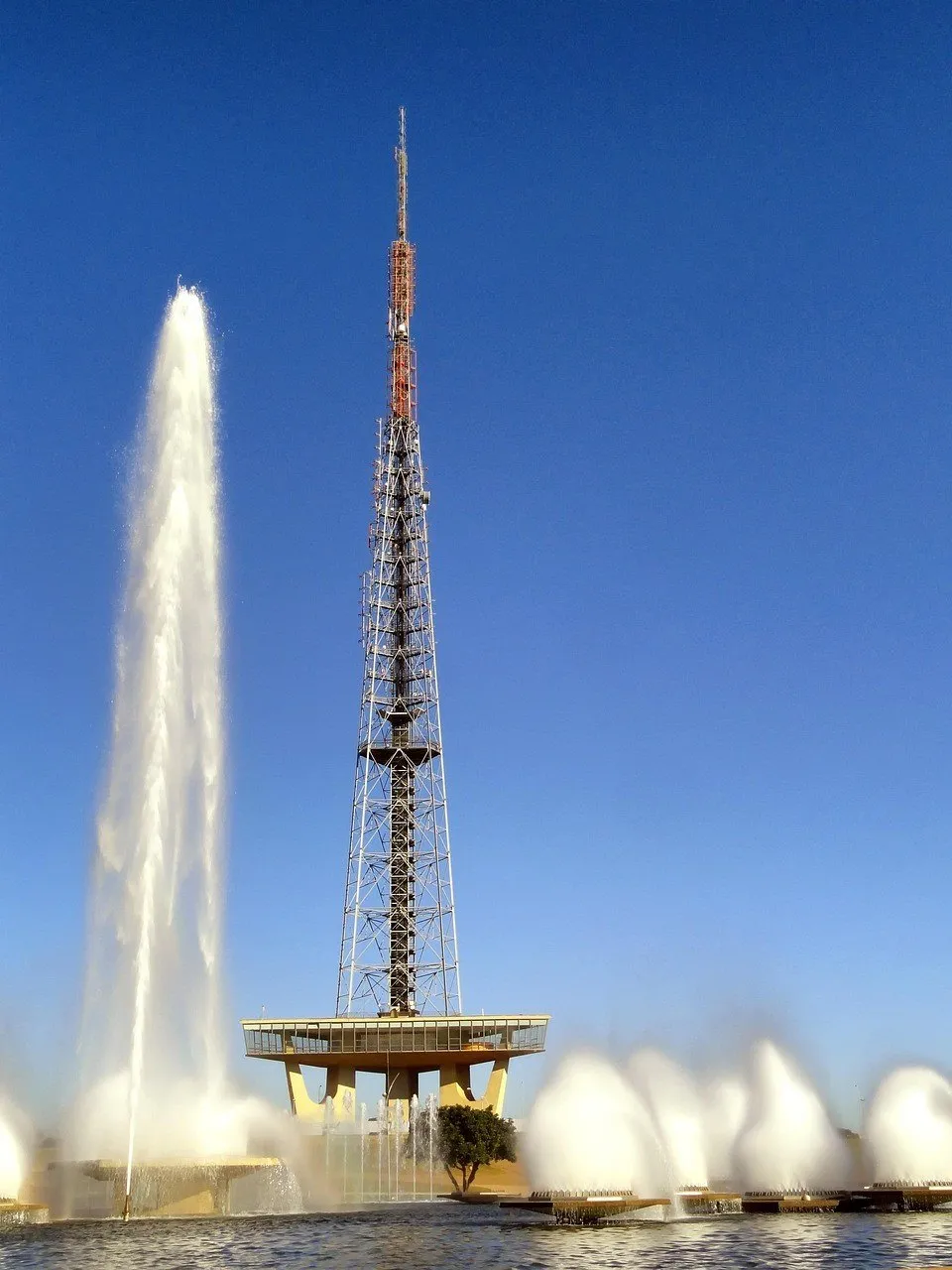 8
Lucio Costa's structure works as a landmark on the Eixo Monumental. When the viewing platform is open, the view helps you grasp the size and layout of Brasília.
View details for Torre de TV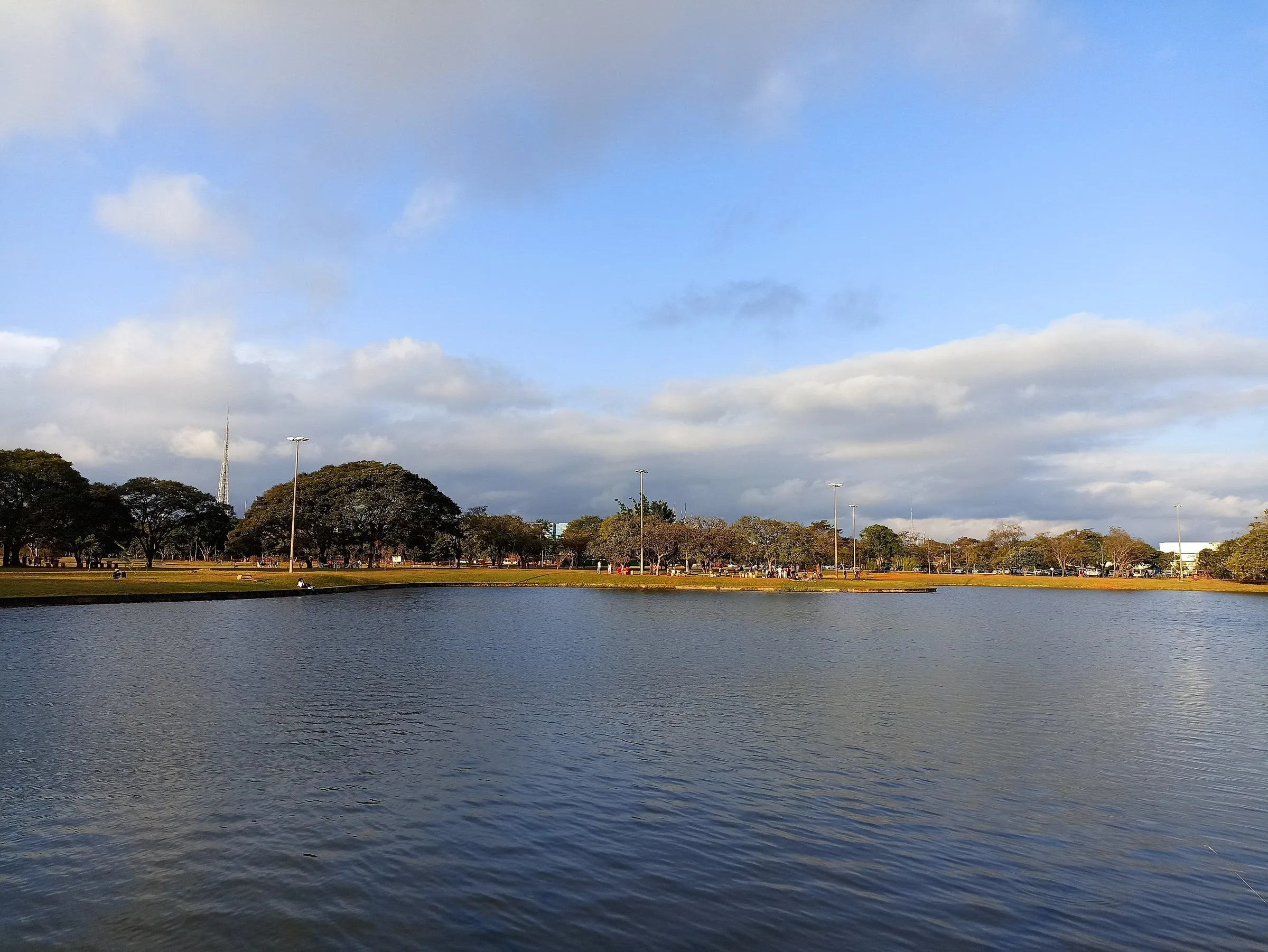 9
Walking and cycling tracks, green areas and leisure spaces show another scale of Brasília. Choose a stretch of the Parque da Cidade and slow down.
View details for Parque da Cidade Dona Sarah Kubitschek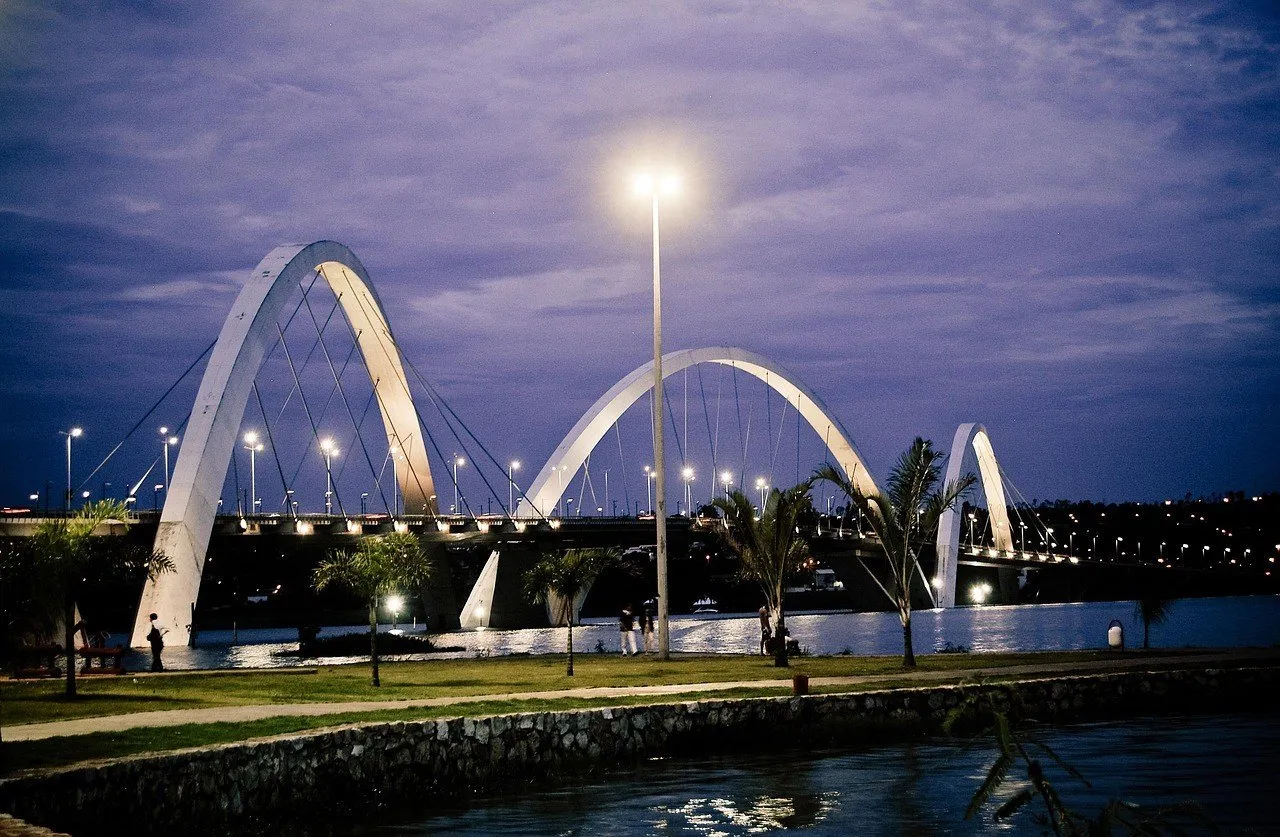 10
The crossing arches of the Ponte JK pass over the Lago Paranoá and change their shape with the angle. Seen from the shore, the structure lets you take in the whole calmly.
View details for Ponte Juscelino Kubitschek1One dome opens upward; the other closes downward. Niemeyer placed the Câmara dos Deputados and the Senado Federal in the same ensemble, with the towers behind. Look from afar and then get closer: the building changes proportion at every stretch.
The guided visit connects the architecture to how the legislative branch works. There is also art in the halls and corridors, including works by Athos Bulcão and Di Cavalcanti. The tour depends on the institutional schedule: book ahead and leave some slack for entry.
2One sweep of the eye takes in the seats of the executive, the judiciary and the legislative branches. The square, conceived by Lucio Costa, organizes this relationship in space, with no need for arrows to explain its name. Look at the buildings together, not just in an isolated photo of each façade.
On the open route, look for Os Guerreiros, a sculpture by Bruno Giorgi also known as Dois Candangos. It recalls the workers who built the capital. The square has a restoration project: adapt your walk to the signage and check the access points before you go.
3The arches continue in the reflection of the reflecting pool, and the sculpture Meteoro, by Bruno Giorgi, stands in front of the palace. As the seat of the Ministry of Foreign Affairs, the Itamaraty becomes an exercise in observation: concrete, glass and water compete for your attention without raising the volume.
Niemeyer's architecture meets Burle Marx's gardens and works of art. The guided route lets you look beyond the façade, but it depends on the schedule. Confirm the rooms included in the route you choose: visiting the palace does not mean moving freely through every salon.
4The entrance begins below street level, through a dark passage. Then come the brightness of Marianne Peretti's stained glass and the angels hanging over the nave. Put your phone away for a moment and let your eyes follow the change in light.
Outside, Niemeyer's curved beams open a crown toward the sky; the sculptures of the evangelists greet those who arrive. Walk around the surroundings to see how the shape changes with the angle. A tourist visit should respect the services and moments of prayer.
5A white half-sphere rests on the open area of the Esplanada, connected to the ground by a curved ramp. The Museu Nacional da República brings Niemeyer's language to a building devoted to the visual arts. Walk around the outside: the ramp changes its design depending on where you stand.
The temporary exhibitions set the pace of the visit, with Brazilian and international work. Check what will be on view and whether an installation is under way. Combine it with the Catedral, trading the light of the stained glass for time spent looking at the works in the galleries.
6The blue arrives before the details. The stained glass surrounds the interior of the Santuário São João Bosco and filters light between the tall columns. At the center, the large glass chandelier adds another point of focus. The color seems to fill the entire space.
In the Asa Sul, the church honors São João Bosco and has doors with bas-reliefs linked to the saint's life. Make the most of the natural light and look without hurry. If there is a service, adjust your visit: the camera can wait, and the temple remains a place of prayer.
7After so many buildings seen from afar, the Memorial JK brings history closer through objects: photographs, belongings and the president's library are part of the route. The library came from his apartment in Rio, with its organization kept. Here, the building of Brasília gains a personal dimension.
The place also houses the tomb of Juscelino Kubitschek, changing the tone of part of the visit. Set aside time to read and look at the pieces. Passing only by the outdoor monument leaves out the political context that helps explain the projects of the Eixo Monumental.
8The Torre de TV helps you locate the center of Brasília even from far away. The project is by Lucio Costa, and the metal structure offers another language among the concrete volumes. Look at the base and follow the lines upward: your head goes along almost by reflex.
With the viewing platform running, the climb reveals the spaces of the Plano Piloto as a whole, correcting the impression that everything fits into a short walk. Access may change because of maintenance. Check beforehand; if you can't go up, set aside time to look at the structure and walk around the area.
9In the Parque da Cidade, all you need to do is walk, cycle or sit and watch the movement. Tracks, green areas and sports spaces show a Brasília that asks for a pause. The official name honors Sarah Kubitschek; in conversation, just call it Parque da Cidade.
The area is large: choose a stretch before ordering your ride. Mentioned in Eduardo e Mônica, by Legião Urbana, the park is also part of the capital's musical memory. You don't need to see all of it: a short stroll, with water and shade, already changes the pace of the day.
10The arches of the Ponte JK cross the deck in diagonals, as if the design gained motion over the water. The structure bears the name of Juscelino Kubitschek and has an architectural design by Alexandre Chan. After the palaces, it widens the conversation about the forms of Brasília.
Watching from the shore lets you understand the whole better than just crossing it by car. Choose a public, safe spot to see the arches, the cables and the reflection in the water. Late afternoon brings soft light; plan the transport back as well.
Group the attractions by sector and compare the real route before setting out on foot. A car or ride-hailing app helps on the long links; near the buildings, do the stretches on foot and use the marked crossings.
Confirm the visits to the Congresso and the Itamaraty before organizing the day. Check documents, dress code, accessibility and rules for bags: these are workplaces, with their own entry controls.
May to July is a good choice for walking with less chance of rain, but the dry season calls for water in your backpack and breaks in the shade. Leave outdoor areas for early morning or late afternoon.
Alternate exhibitions and outdoor walks with the indoor visits you have confirmed. Check the charges for each attraction and include travel between them in the budget: in Brasília, the trip is part of the bill too.
At night, prefer transport routes between sectors and avoid walking alone through empty areas. At the airport, use the indicated pickup points and licensed transport; keep an eye on your phone in circulation areas.
At the Catedral and the Santuário Dom Bosco, the visit shares the space with prayer. Check the service times, wear clothing suited to the place and leave photos and conversation for moments that don't disturb those who are there to pray.
Brasília puts recipes brought from other regions and ingredients of the Cerrado on the same table. For lunch, look in the commerce of the quadras; for a quick break, pastel with caldo de cana does the job without turning the meal into an official event. The pequi deserves a taste for its strong aroma and flavor. Pick a regional dish and leave room for a drink or dessert made from Cerrado fruit.
The yellow fruit of the Cerrado perfumes the rice and changes lunch with the very first forkful.
Fried dough with the filling of your choice and a sweet sugarcane drink: a pair present in the capital's routine.
Ask about the flavors available, such as cagaita or araticum, to taste the fruit beyond its name on the menu.