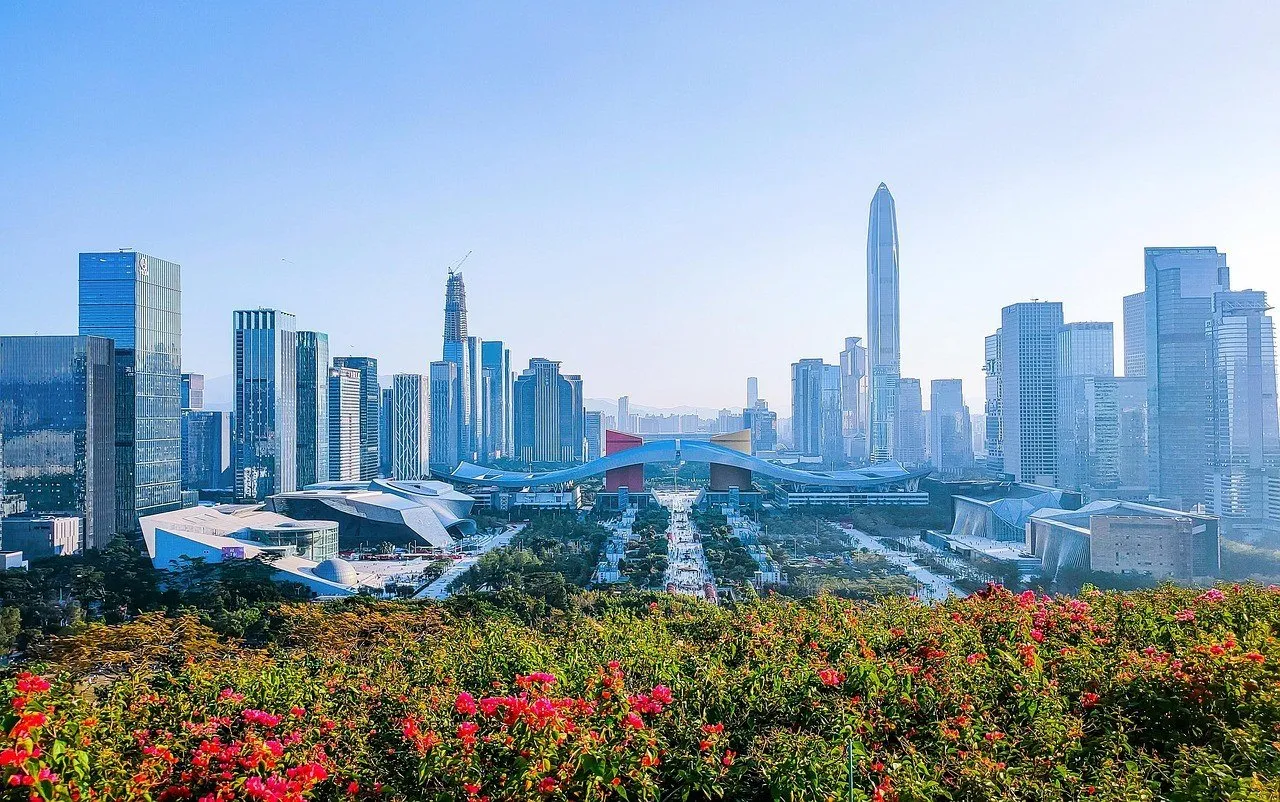
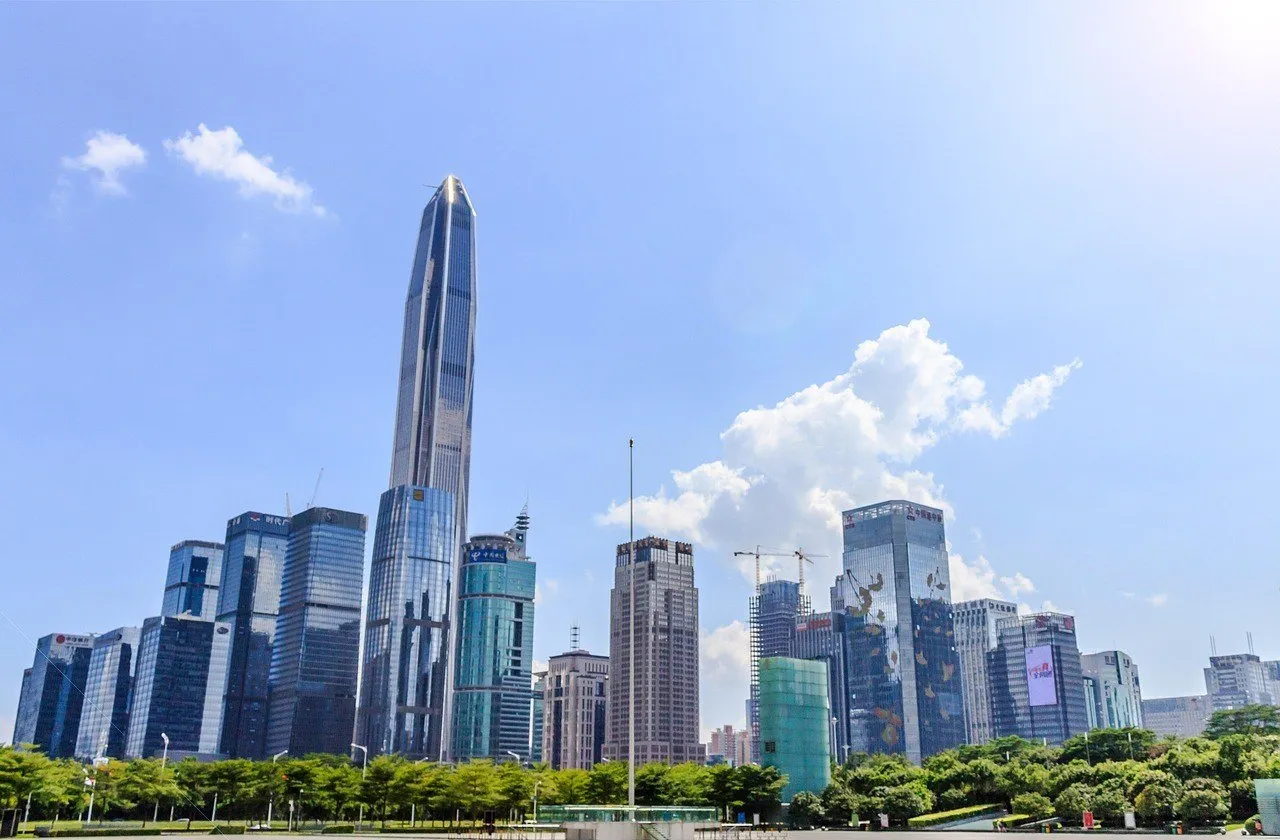
Futian skyline in Shenzhen with the Ping An Finance Center and beds of red flowers in the foreground.

Shenzhen

In Shenzhen, the morning can go to hunting for cables and circuit boards in the Huaqiangbei arcades, and the afternoon to Dafen, the village where thousands of painters copy famous artworks by hand, one brushstroke at a time.

Best time to go
October to DecemberDriest: November and DecemberRainy season: April to September
Suggested stay
3 to 4 days
Airport
Shenzhen Bao'an (SZX)
Currency
Chinese yuan renminbi (CNY)
Language
MandarinCantoneseHakka
Time zone
UTC+8

Overview

Shenzhen is younger than many of the people walking its sidewalks. Until 1980 the area was mostly rural, pressed up against the Hong Kong border; that year it became China's first special economic zone and started growing at a rare pace. The 2020 census counted about 17.5 million residents. Almost everyone came from somewhere else in the country, and Mandarin became the common language, alongside the Cantonese and Hakka of those who already lived here.

But the city did not start from scratch. Among the skyscrapers survive Ming dynasty walls, Hakka villages with watchtowers and the old seat of a county that, in the 16th century, governed the territory of present-day Hong Kong as well. Split your trip into three fronts: Futian, with the Ping An Finance Center and Huaqiangbei; Nanshan, with the old town of Nantou, OCT-LOFT and the bayfront; and the east, with its mountain and beaches.

Hong Kong is right there: there are several border crossings, and the high-speed train links Futian to West Kowloon in 14 minutes on the fastest runs. Plenty of people combine the two cities, but Shenzhen deserves days of its own, with time for morning tea and for the trails of Wutong Mountain. Before you go, sort out your visa, payments and internet: the practical tips below cover the essentials.

Did you know?

  1. The name 深圳 refers to drainage ditches: in the local dialect, 'zhen' meant the channels that irrigated the fields.

  2. The Ping An Finance Center has 33 double-deck elevators that travel at up to 10 meters per second.

  3. Gankeng made Hakka hats for more than 200 years, but the village's last craftsman died in 2002. Four years later, the Gankeng bamboo hat was added to Shenzhen's intangible heritage list.

  4. In the 1990s, the painter Huang Jiang, who started the Dafen reproductions, received an order from an American retail chain for 50,000 paintings to be delivered in 14 days.

Things to see in Shenzhen

10 attractions
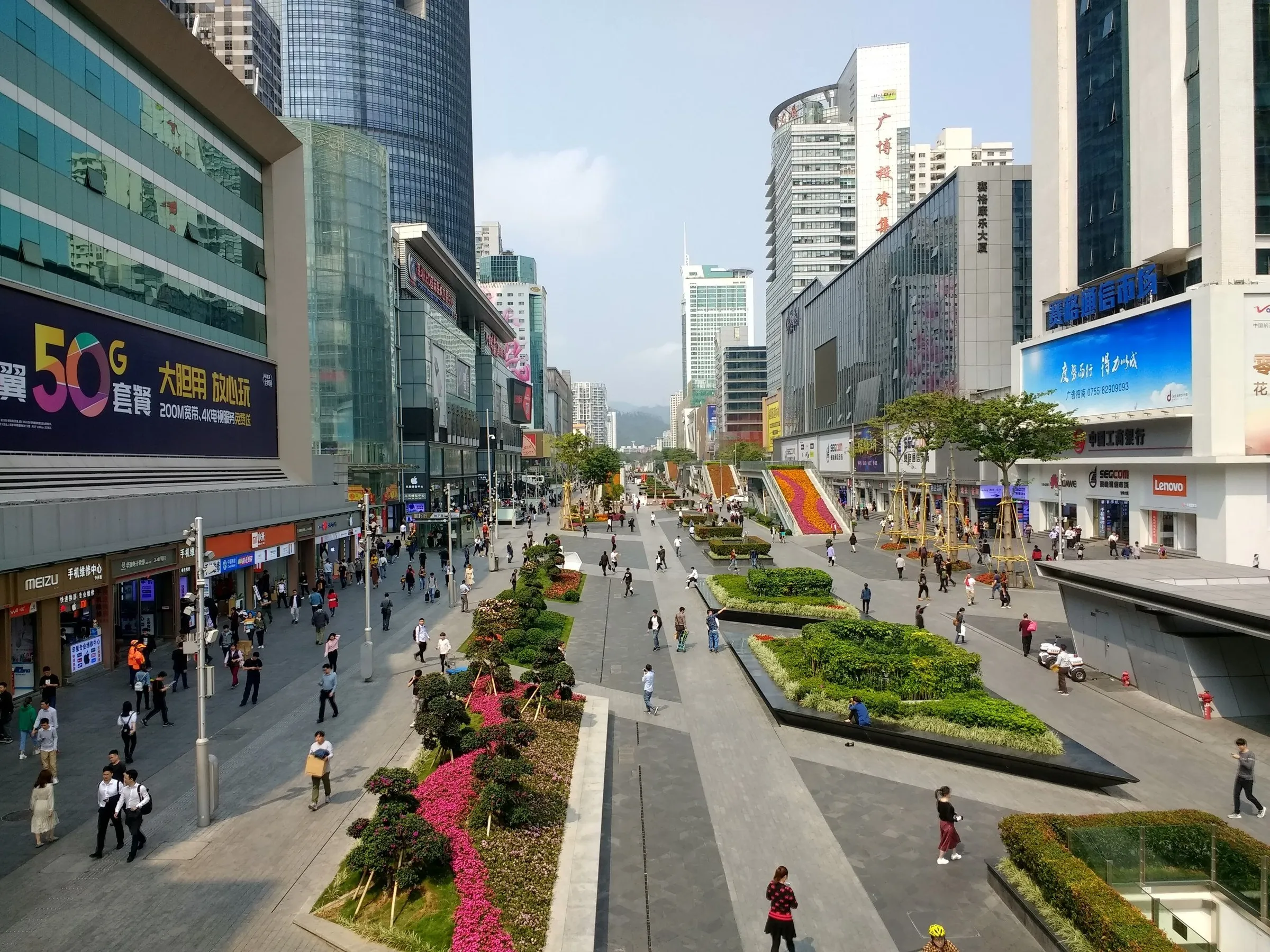
Huaqiangbei pedestrian street seen from a footbridge, with flower beds and buildings full of electronics shops.2
Markets

Huaqiangbei

A Futian district packed with electronics malls: components, screens, phones and accessories at thousands of stalls, with a pedestrian street running through the middle.

Suggested time:2 to 3 hoursArea:Futian
View details for Huaqiangbei
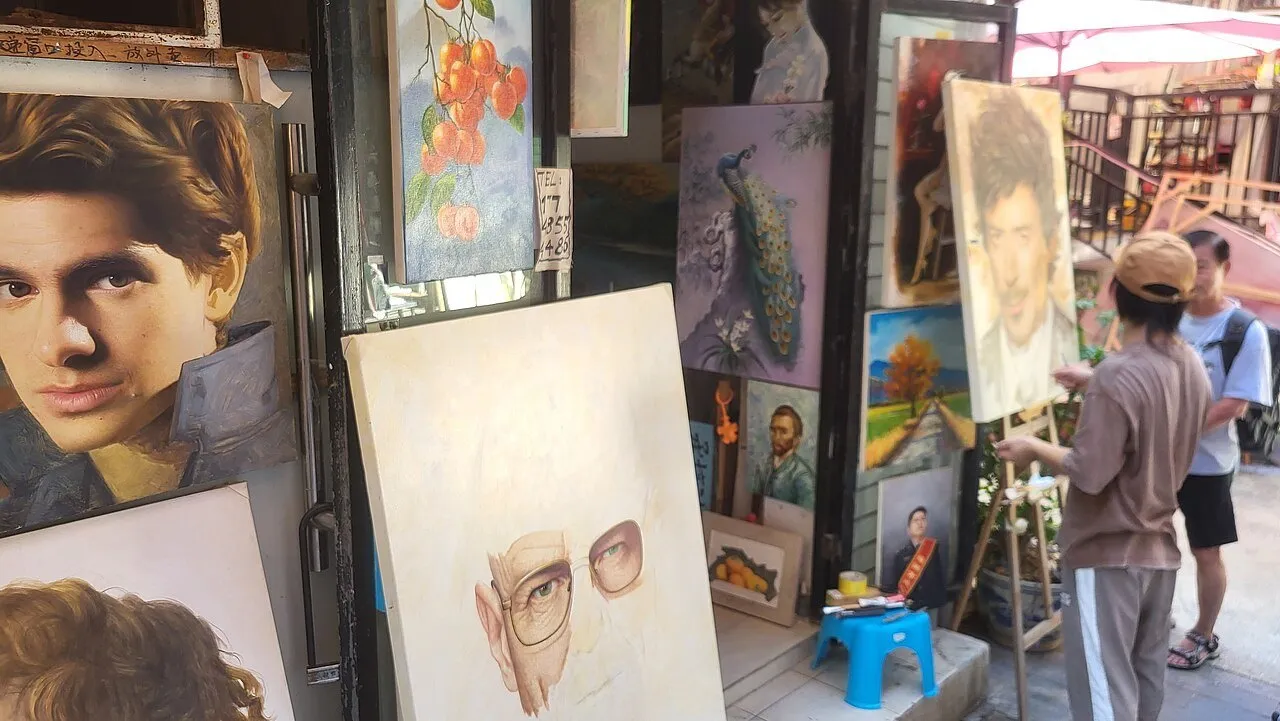
Dafen gallery with many paintings on display at the entrance and a painter with his back turned working at an easel.3
Creative districts

Dafen Oil Painting Village

A Longgang village where thousands of artists paint and sell oil paintings, from reproductions of famous works to original pieces, in studios open to the street.

Suggested time:2 hoursArea:Longgang
View details for Dafen Oil Painting Village
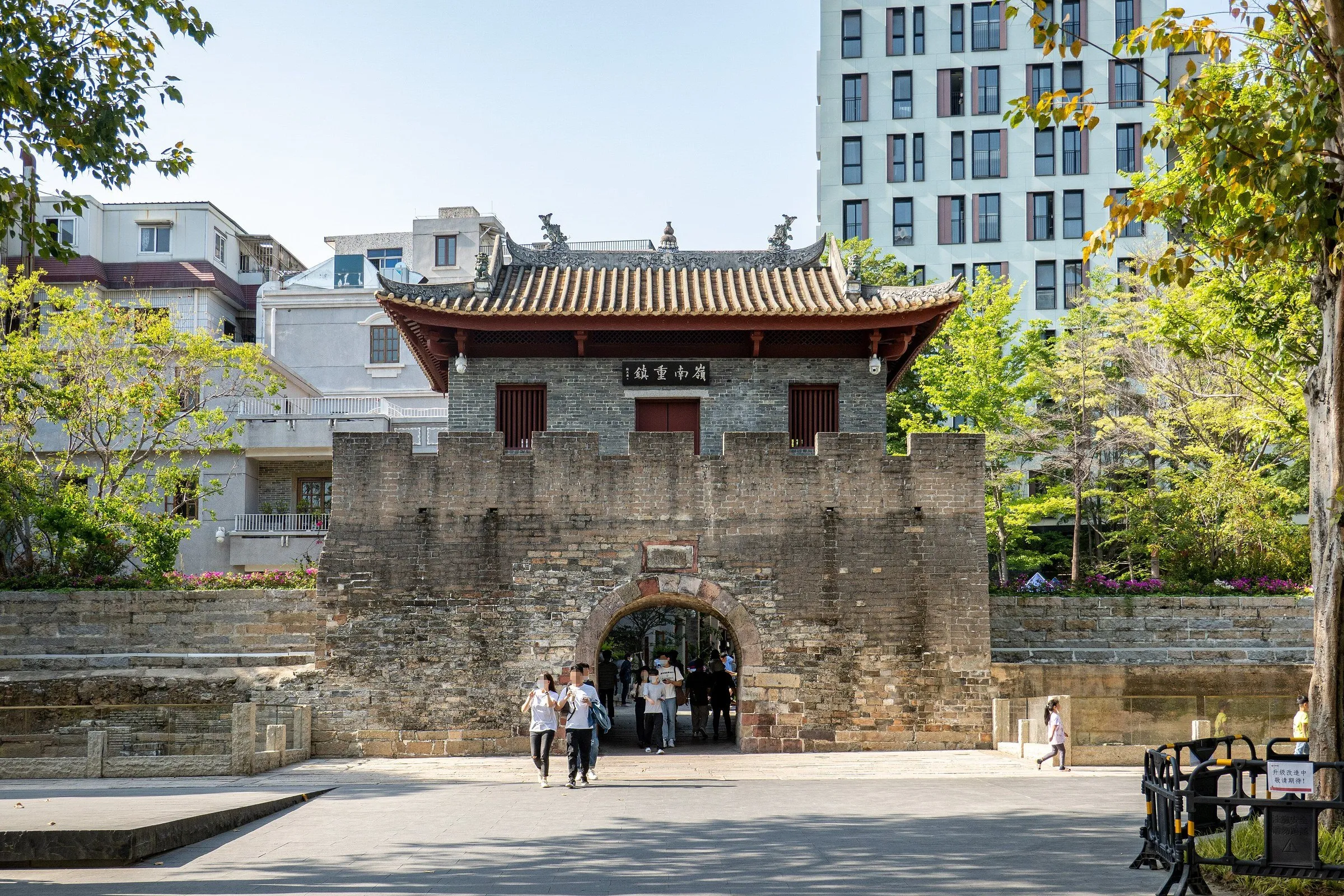
South gate of Nantou Ancient City: a brick wall with an arch and a pavilion with a tiled roof.4
Old villages

Nantou Ancient City

A walled city with walls dating to 1394 that was the seat of Xin'an County, a territory that included present-day Hong Kong. Today it mixes old gates with everyday neighborhood life.

Suggested time:1.5 to 2 hoursArea:Nanshan
View details for Nantou Ancient City
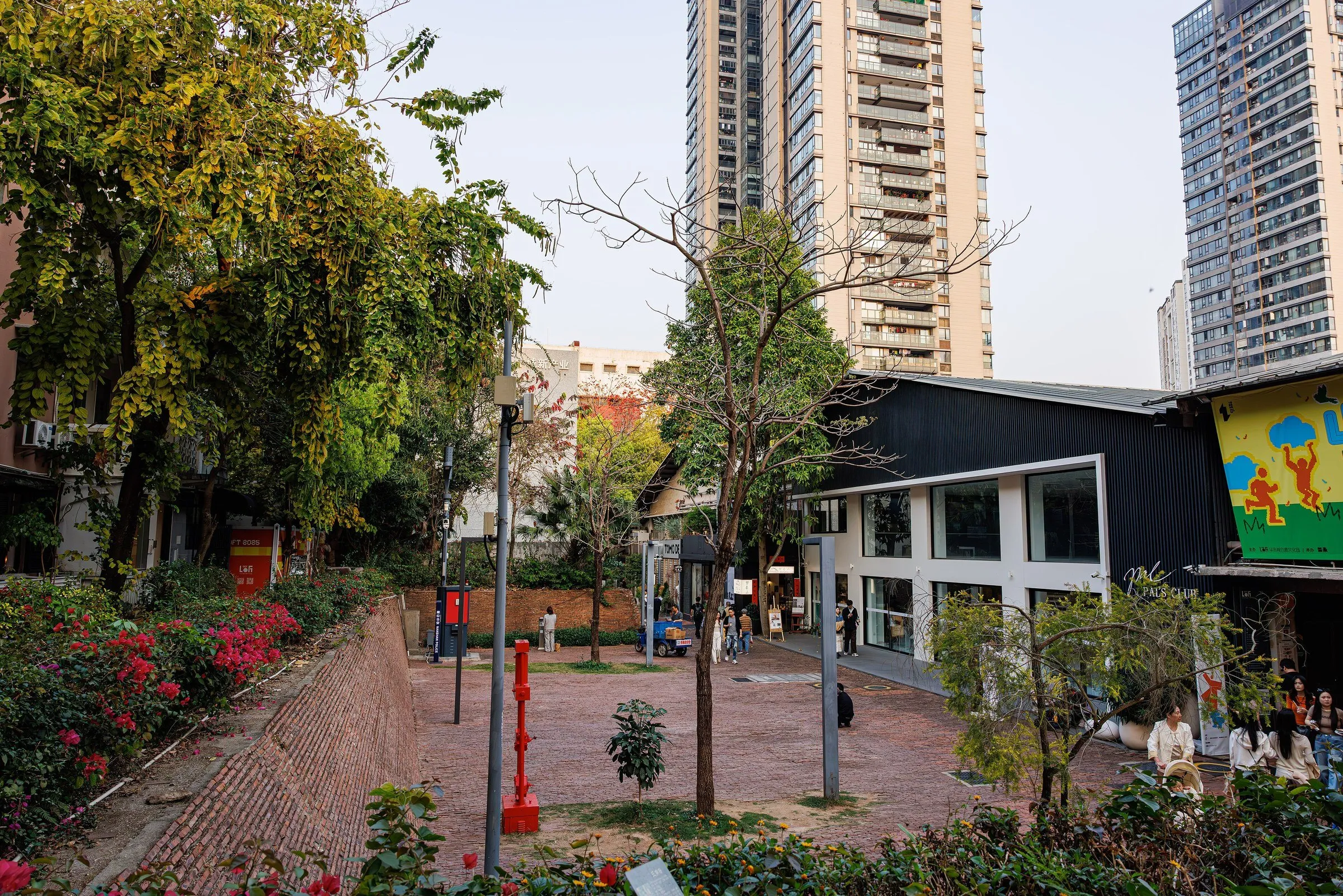
Brick square at OCT-LOFT, with trees, renovated warehouses and residential towers in the background.5
Creative districts

OCT-LOFT

A former 1980s industrial hub in Nanshan, transformed from 2004 into a creative park with galleries, bookshops, cafés and design offices.

Suggested time:1.5 to 2 hoursArea:Nanshan
View details for OCT-LOFT
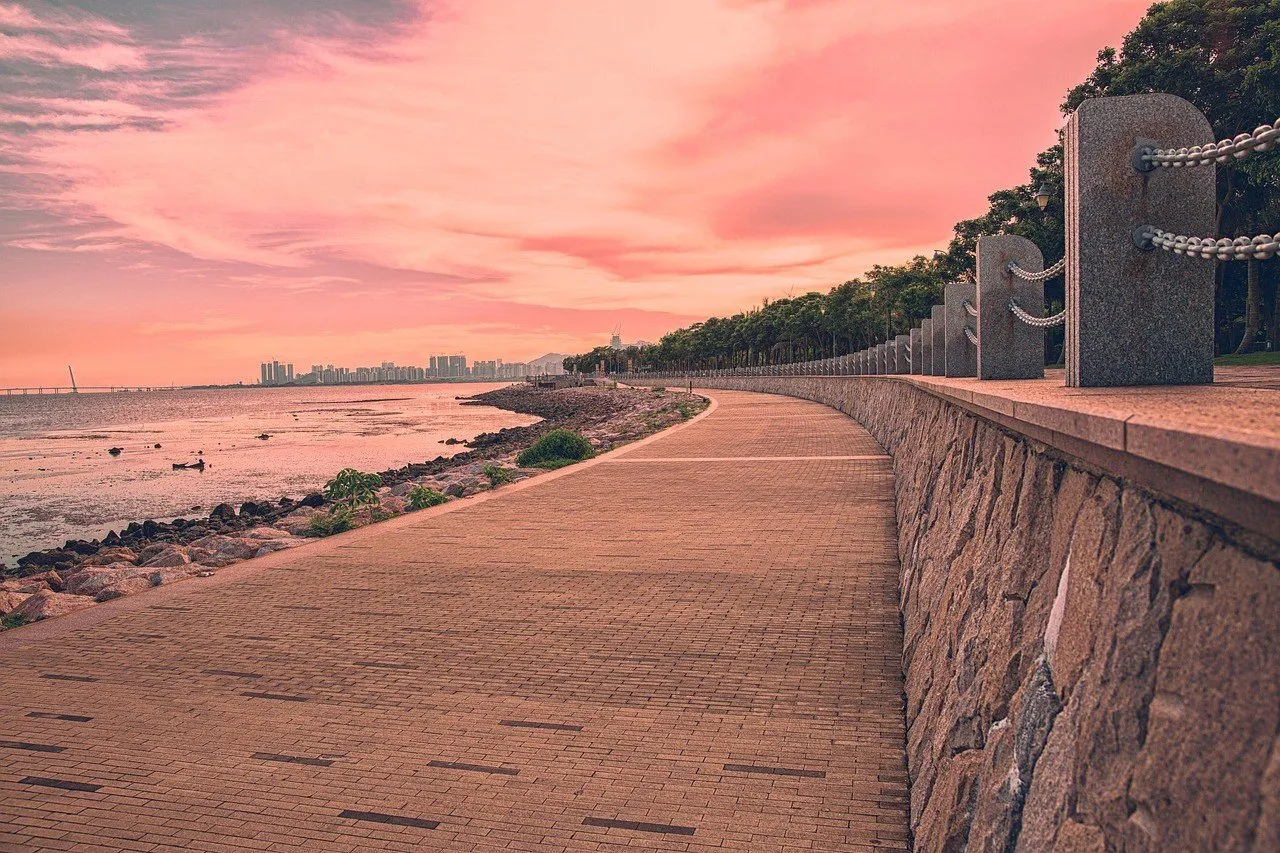
Curved brick promenade on the Shenzhen Bay waterfront, with a stone wall and a pink dusk sky.6
Nature and waterfront

Shenzhen Bay Park

A 13 km park on reclaimed land along the northern shore of Shenzhen Bay, opened in 2011, with an eastern mangrove stretch that hosts migratory birds.

Suggested time:1.5 to 2 hoursArea:Nanshan and Futian
View details for Shenzhen Bay Park
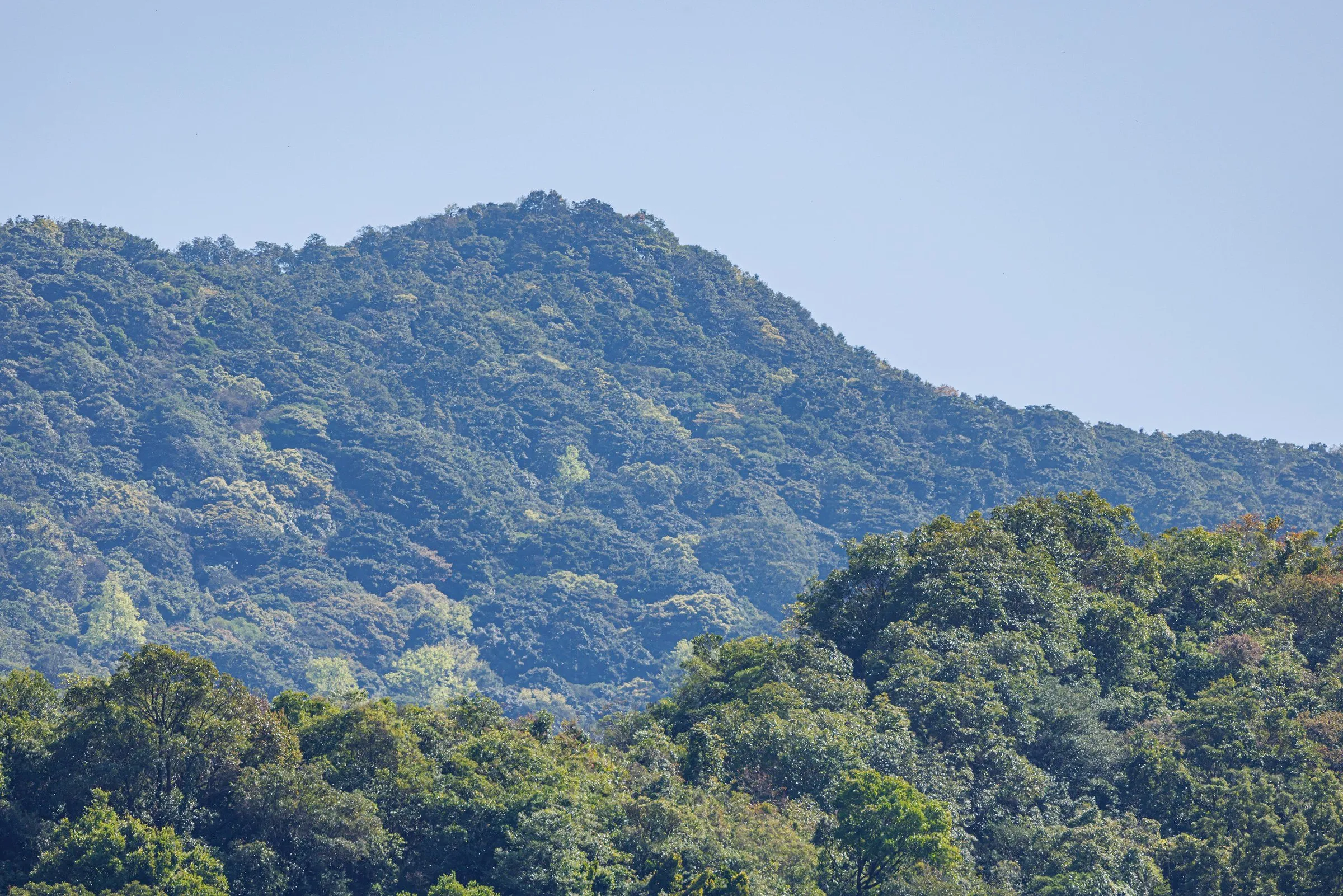
Slope covered in dense forest on Wutong Mountain, in Shenzhen, under a blue sky with a few clouds.7
Nature and waterfront

Wutong Mountain

The highest point in Shenzhen, at 943.7 m, inside a national forest park between Luohu and Yantian, with trails of 5.5 to 7.8 km to the summit.

Suggested time:4 to 5 hoursArea:Luohu and Yantian
View details for Wutong Mountain
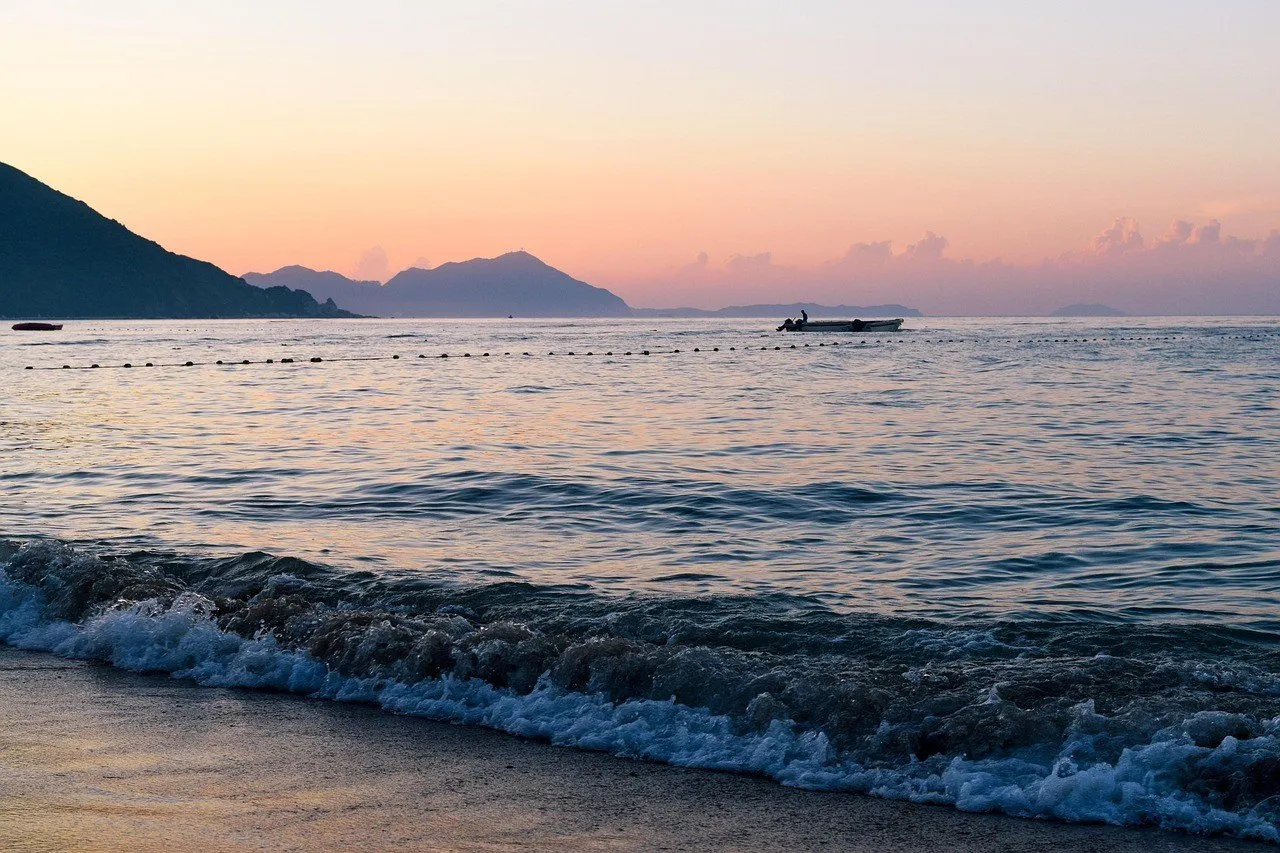
Waves reaching Dameisha beach at dawn, with a line of buoys, a distant boat and hills against an orange sky.8
Nature and waterfront

Dameisha and Xiaomeisha Beaches

Two neighboring beaches on Mirs Bay in the east: Dameisha, with about 1.8 km of sand and open since 1999, and Xiaomeisha, smaller, just to the west.

Suggested time:3 hoursArea:Yantian
View details for Dameisha and Xiaomeisha Beaches
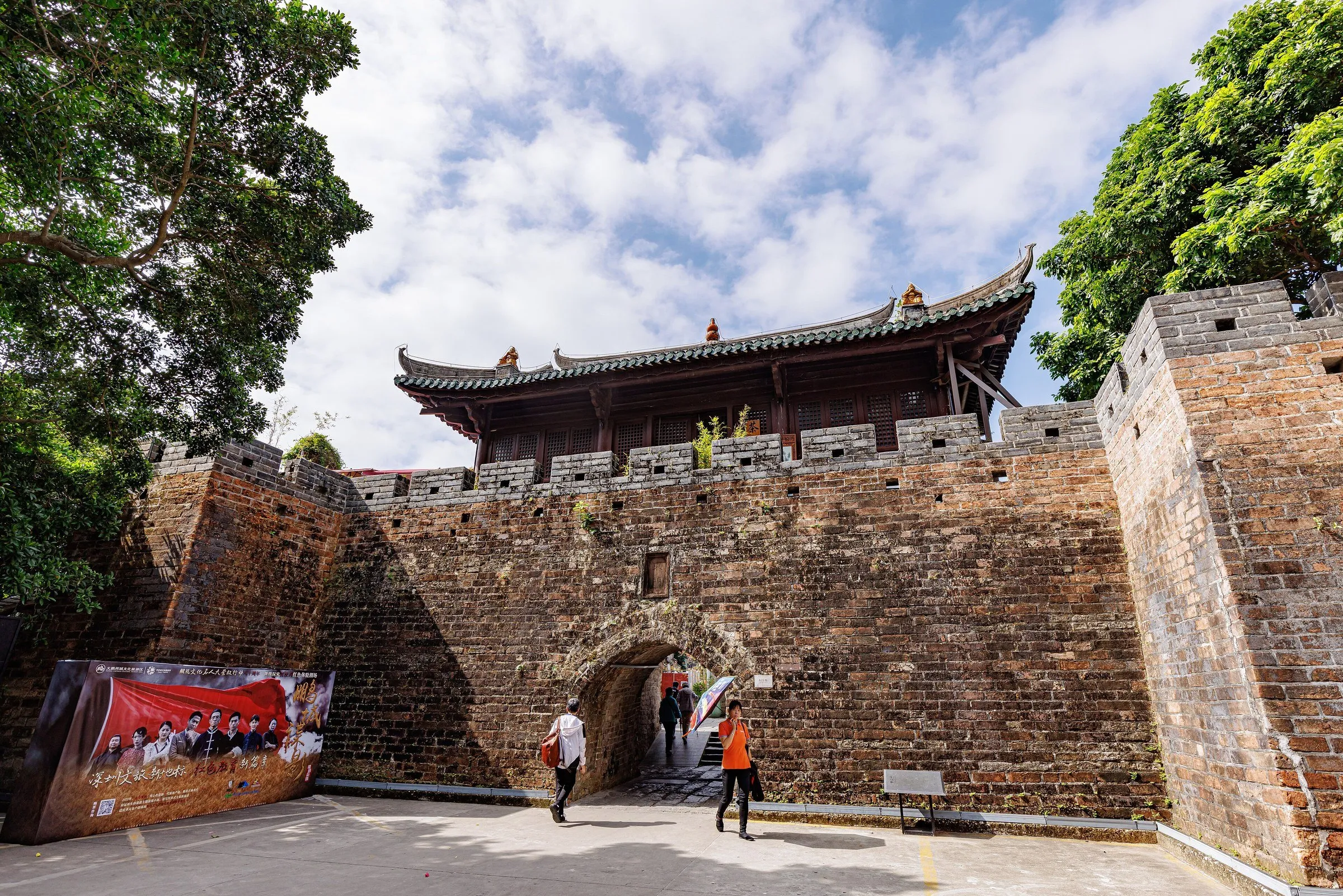
Brick wall and gate tower of Dapeng Fortress under a blue sky with clouds.9
Old villages

Dapeng Fortress

A Ming dynasty fortress built in 1394 to protect the coast from pirates, about 55 km from the center, which withstood a siege of more than 40 days in 1571.

Suggested time:2 to 3 hoursArea:Dapeng
View details for Dapeng Fortress
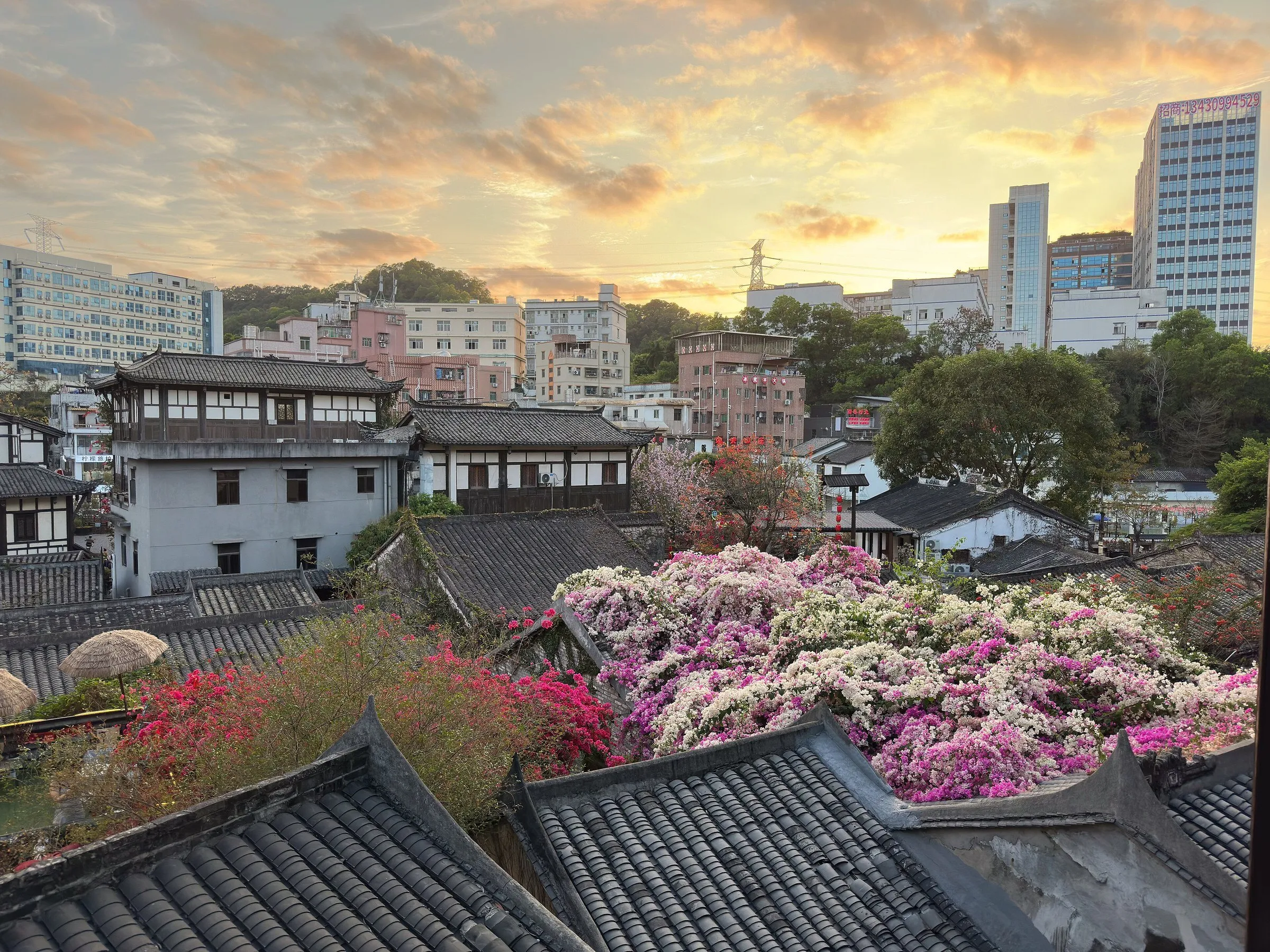
Tiled roofs and blooming bougainvilleas in a Hakka village at sunset, with modern buildings in the background.10
Old villages

Gankeng Hakka Village

A Hakka village in Longgang with an 18th-century mansion, watchtowers and the tradition of the fringed bamboo hat, the liangmao, made here for more than 200 years.

Suggested time:2 hoursArea:Longgang
View details for Gankeng Hakka Village

3-day itinerary

Day 1

Futian and the brushes of Dafen

  • 1Ping An Finance Center and Free Sky Observation Deck
  • 2Huaqiangbei, arcade by arcade
  • Dim sum lunch
  • 3Metro to Dafen Oil Painting Village
  • Cantonese dinner
Day 2

Nanshan, from the wall to the bay

  • Morning tea with dim sum
  • 4Nantou Ancient City
  • 5OCT-LOFT
  • 6Shenzhen Bay Park in the late afternoon
Day 3

Mountain and sea in the east

  • 7Hike on Wutong Mountain
  • Seafood lunch in Yantian
  • 8Afternoon at Dameisha Beach
  • Hakka dinner

Map

10 places on the map

Practical tips

Visa and passport

China offers visa-free entry on ordinary passports to travelers of some nationalities, for stays of up to 30 days (tourism, business, family visits, exchange or transit); the announced validity runs until December 31, 2026, and the rule has changed several times. Check what applies to your own nationality with the Chinese embassy before buying your ticket. Always carry your passport: police run checks and do not accept a printed copy.

Payments

Paying by phone, with Alipay or WeChat Pay, is nearly universal, and both accept linked foreign cards. Install and set up the apps before you leave home. Visa and Mastercard work at hotels and at the airport, which has ATMs for foreign cards, but carry some cash as a backup.

Internet

Google, Facebook, YouTube and X are blocked in China, and other sites may become unreachable from time to time. Under Chinese law, services such as VPNs need a government license. Download the maps, translator and documents you will use beforehand, and find out about the local rules.

Climate and typhoons

Summer is hot and humid, and the rains run from April through the end of September or early October; typhoons appear in summer and early autumn. November and December are the driest months and the most pleasant for walking around.

Hong Kong next door

There are several border crossings, such as Luohu, Futian and Shenzhen Bay, and the high-speed train covers Futian to West Kowloon in 14 minutes on the fastest runs. Each crossing goes through immigration: before planning a day trip, check whether your visa exemption allows you to re-enter mainland China.

Metro and airport

Bao'an airport is about 32 km from the center and has a metro connection at the transport hub next to the terminal. The metro network, with 12 lines in 2022, is the simplest way to cross the city.

Food and drink

Shenzhen eats like the rest of Guangdong, with dim sum and tea in the morning, but the people who came from all over the country brought along the cuisines of Chaoshan, Sichuan and Hunan. Cantonese is the base; Hakka, a legacy of the old residents, shows up in slow-cooked meats, preserves and stuffed tofu. In Yantian, the thing to order is seafood, and in Bao'an, oysters.

Shrimp har gow, pork-and-shrimp siu mai and cheung fun, the rolled rice sheet with sweetened soy sauce. In Cantonese, 'drinking tea' means exactly this: going out for dim sum.

A Hakka classic, born in the Dong River valley, in the east of the province. It used to be baked in a heap of hot salt; today many restaurants use brine and an oven or steamer.

They come from Shajing, in Bao'an, and are famous for their size and tender flesh. They are served raw or cooked.

Free-range chicken slowly cooked in fresh coconut water, which sweetens the meat. The city has more than a thousand restaurants devoted to the dish.

Other cities in China

View China

Sources and credits

Sources

Image credits

  • Futian seen from above: the Civic Center, the Ping An tower and bougainvillea beds brightening a city that rose in just a few decades.Photo: Charlottees · Licença Pixabay · original
  • The Ping An Finance Center on a clear blue-sky day: the slender tower that dominates central Futian.Photo: buihuy89 · Licença Pixabay · original
  • Huaqiangbei's pedestrian street on a busy afternoon: phone shops on one side, flower beds on the other and the world's electronics passing through.Photo: Mx. Granger · CC0 · original
  • At the door of a Dafen gallery, paintings share the sidewalk with a painter at work, in a 2025 photo.Photo: Renek78 · CC0 1.0 · original
  • Renovated warehouses, bougainvilleas and a small brick square: OCT-LOFT shows the Shenzhen that also knows how to slow down.Photo: Dinkun Chen · CC BY-SA 4.0 · original
  • The south gate of Nantou, with bricks centuries old, now surrounded by towers and cafés.Photo: Iswzo · CC BY-SA 4.0 · original
  • The brick path follows Shenzhen Bay at day's end: you can walk for miles with water on one side and a sky putting on a show.Photo: gdmoonkiller · Licença Pixabay · original
  • Wutong Mountain up close: dense forest just a few kilometers from Shenzhen's skyscrapers.Photo: Dinkun Chen · CC BY-SA 4.0 · original
  • Sunrise at Dameisha: the sea breaks on the sand and Shenzhen's hills turn orange in the background.Photo: Charlottees · Licença Pixabay · original
  • The brick wall and gate tower of Dapeng Fortress, which watched over the coast long before Shenzhen existed.Photo: Dinkun Chen · CC BY-SA 4.0 · original
  • Tiled roofs and bougainvilleas at sunset in Gankeng, with modern Shenzhen peeking in the background.Photo: Ubahnverleih · CC0 · original
  • Stacked bamboo baskets and dim sum to share: a Cantonese morning means a full table and an unhurried pace.Photo: chaliceks · Licença Pixabay · original

Search destinations

Type at least 3 letters