 1
Neighborhoods
Senado Square
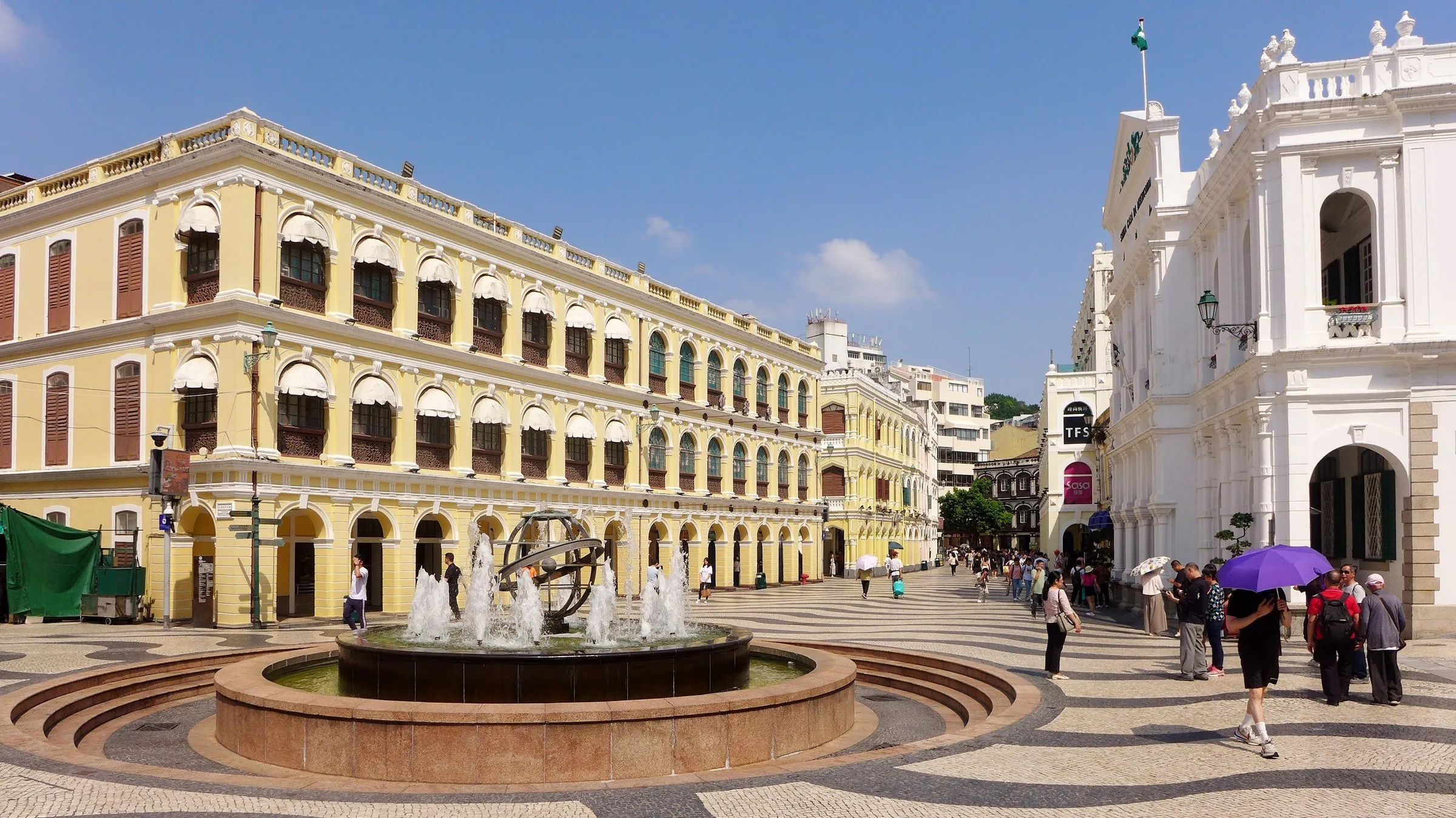
The central square of the peninsula, covered in Portuguese-style paving and surrounded by the Leal Senado and the Holy House of Mercy: the gateway to the historic center.
View details for Senado Square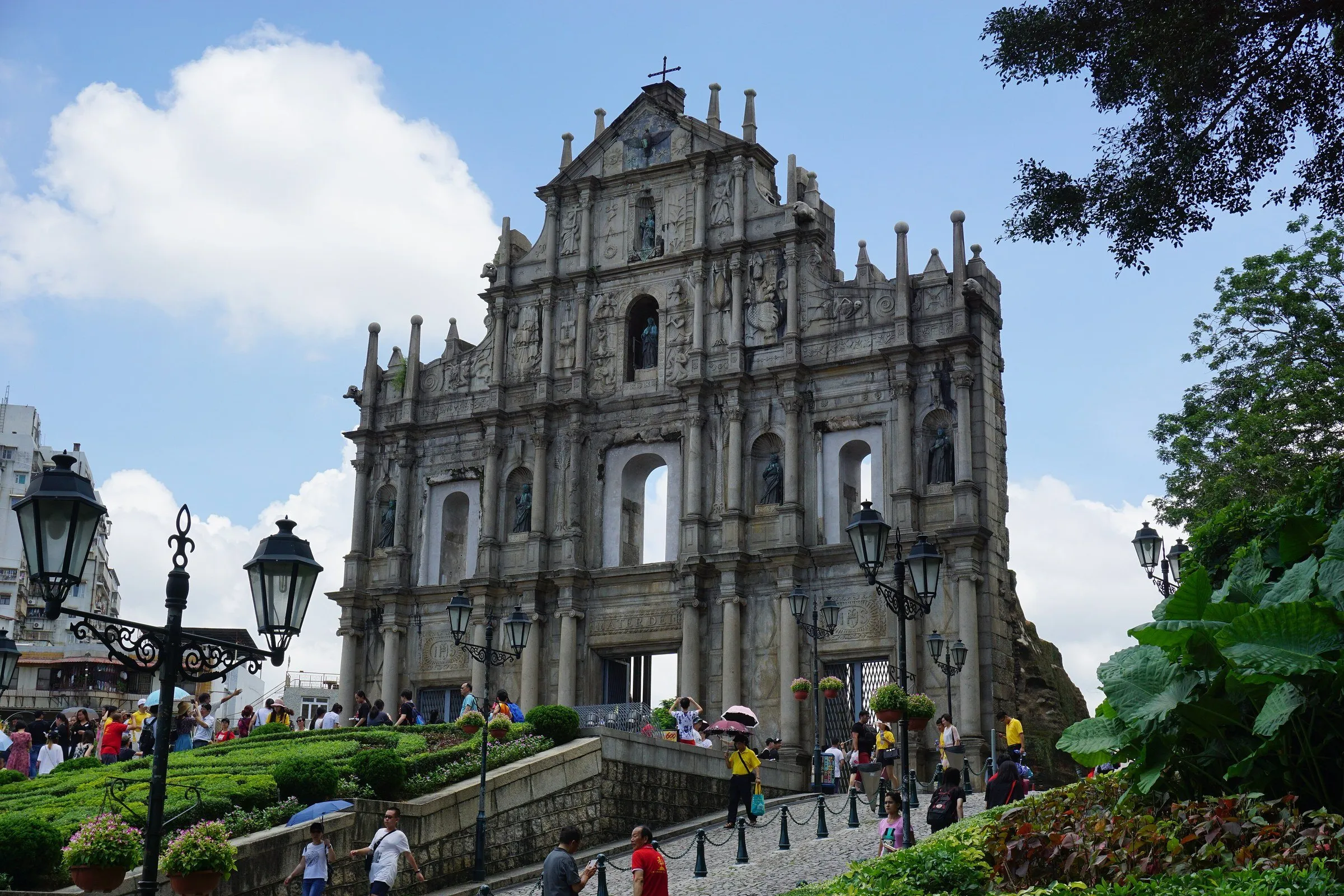
In Macau, the street signs are blue-and-white tile and speak Portuguese and Chinese. You climb 68 steps to the facade of a church that burned down in 1835, and the temple next door is Chinese.
Macau fits into one long walk, but it doesn't fit into one sentence. On the peninsula, the hills are paved in Portuguese-style mosaic, churches share the block with incense-filled temples, and street names appear in two languages. Across the bridges, Taipa and Coloane, now joined by a big landfill called Cotai, alternate between low-rise villages and the giant casino resorts from the aerial photos. That is about 33 km² of land for more than 700,000 residents, one of the highest densities on the planet, which explains why everything feels close and everything feels crowded.
The Portuguese settled here as a trading post in the mid-16th century and administered the territory until December 20, 1999, when Macau became a special administrative region of China under the principle of "one country, two systems." What remains of that history is Portuguese as an official language alongside Chinese, bilingual street signs, and Macanese cuisine, which blends Portuguese techniques, Chinese ingredients and seasonings from other trade routes. On the street, though, the language is Cantonese, and it helps to arrive knowing that.
For the traveler, the math is simple: one day for the historic center, inscribed as a UNESCO World Heritage Site in 2005, and another for Taipa and Coloane, with strategic stops to eat. Casinos are everywhere and there's no pretending they don't exist, but Macau pays off far more for those who walk, climb staircases and step into bakeries.
Tradition says the name Macau comes from A-Ma Temple: Portuguese sailors supposedly landed there, asked what the place was called and were told the name of the temple.
Street signs carry Portuguese and Chinese, but they don't always say the same thing: Praceta de 24 de Junho is called something like "City Day Square" in Chinese.
Macau's most famous egg tart was created by an Englishman: Andrew Stow opened his bakery in Coloane in 1989 and combined a British custard recipe with Portuguese puff pastry.
The Dom Pedro V Theatre, built in 1860, is described as the first Western-style theater in China.
In 1910, Portuguese troops fought pirates who had kidnapped children in Coloane; it was their last battle in Macau, and the victory is still remembered with a local holiday on July 13.
1The central square of the peninsula, covered in Portuguese-style paving and surrounded by the Leal Senado and the Holy House of Mercy: the gateway to the historic center.
View details for Senado Square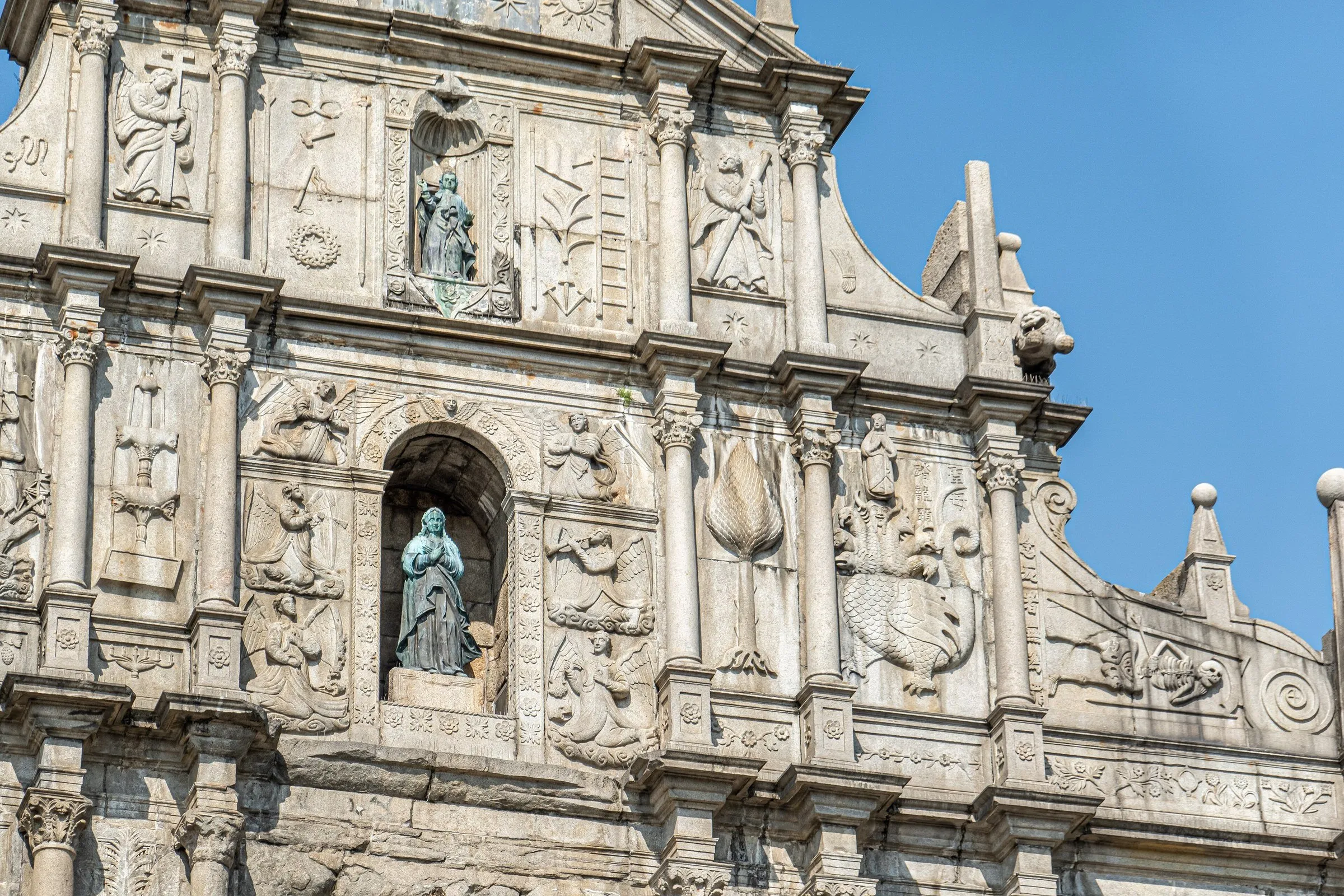 2
The stone facade of the former Church of Mater Dei, built by the Jesuits between 1602 and 1640 and destroyed by fire in 1835, standing atop 68 steps.
View details for Ruins of St. Paul's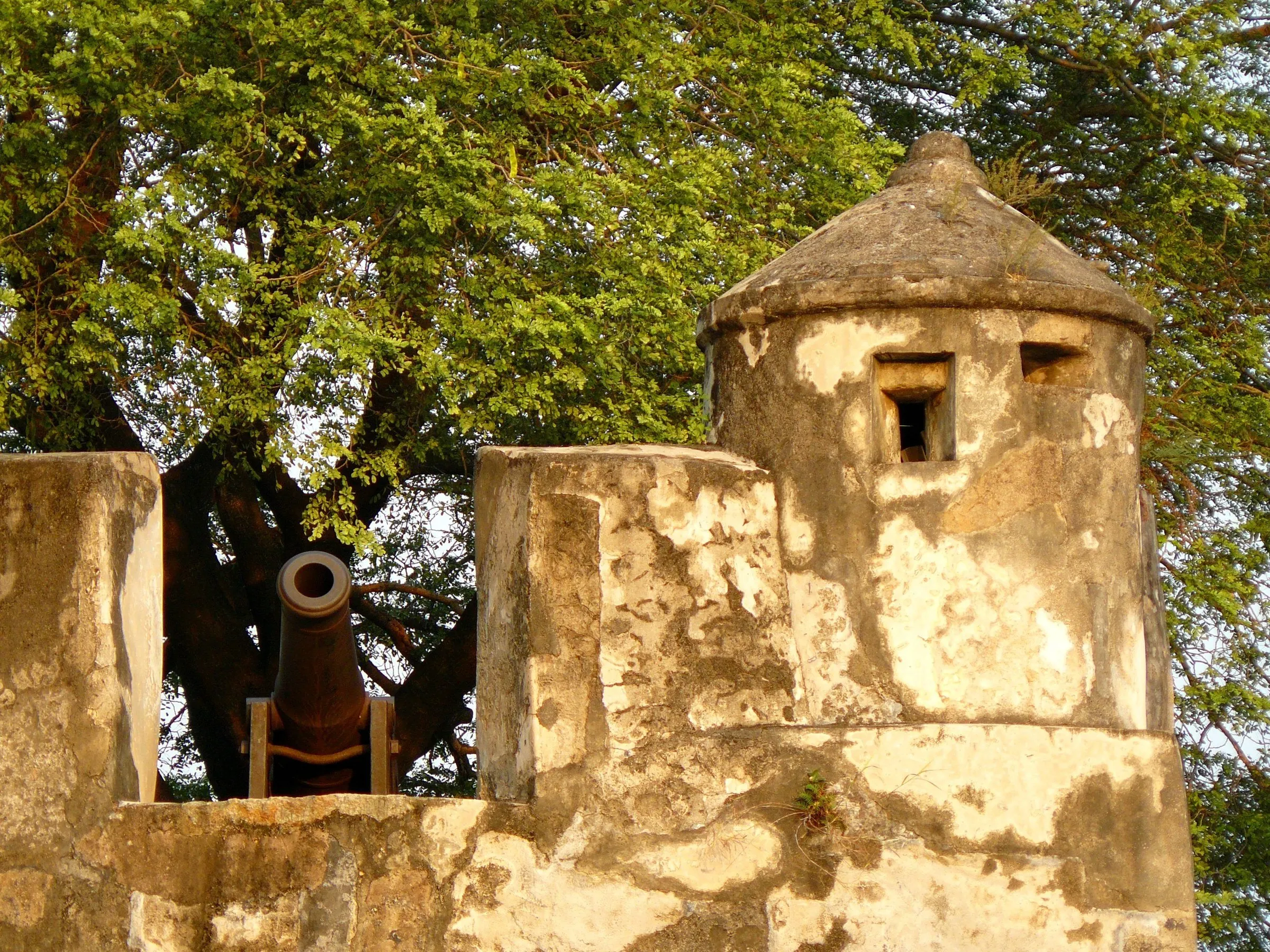 3
A fortress built between 1617 and 1626 right next to the Ruins of St. Paul's, with the Macao Museum at the top of the hill and a view over the historic center.
View details for Mount Fortress and Macao Museum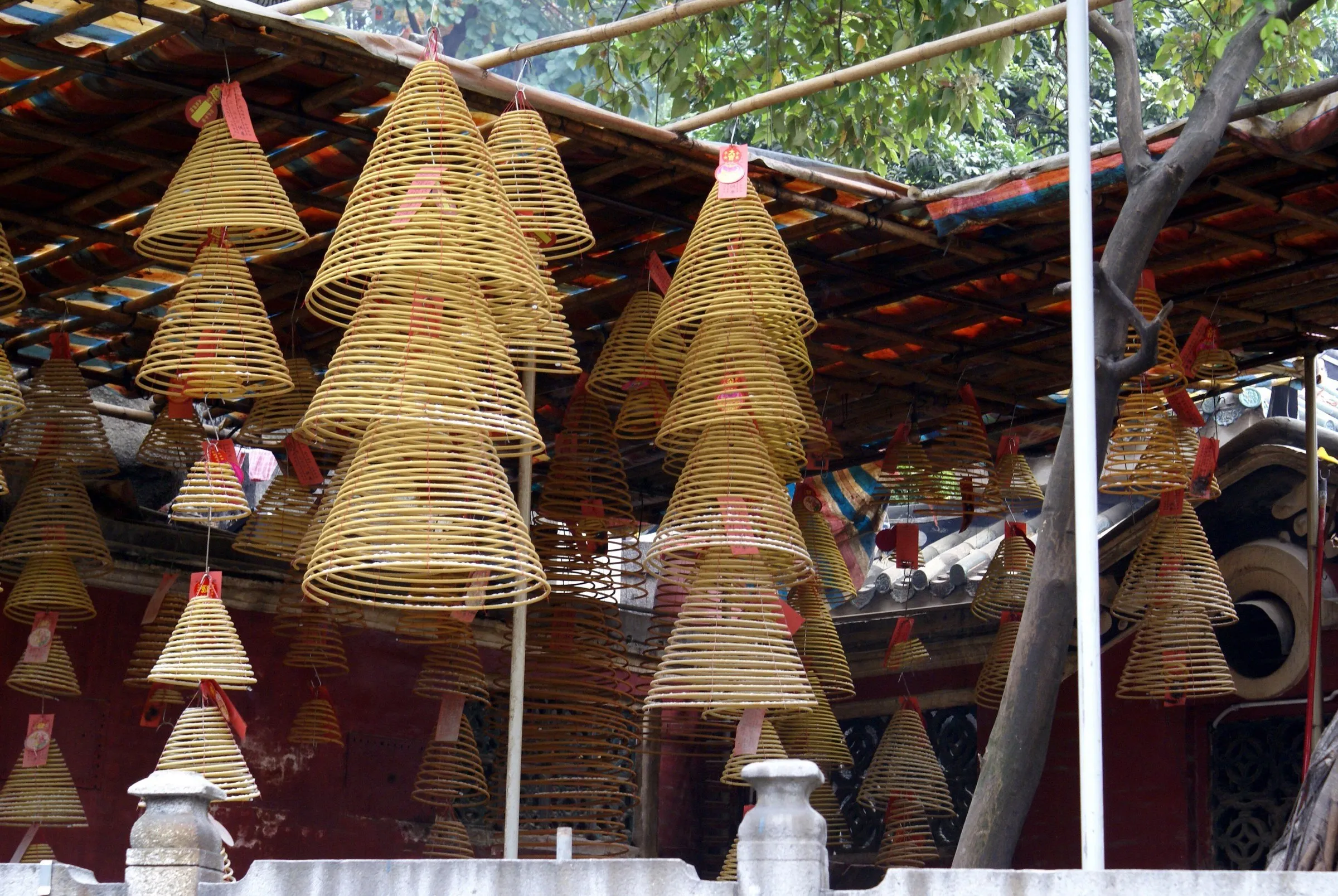 4
A temple dedicated to A-Ma, goddess of seafarers, completed in 1488 and older than the city itself; tradition links the origin of the name Macau to it.
View details for A-Ma Temple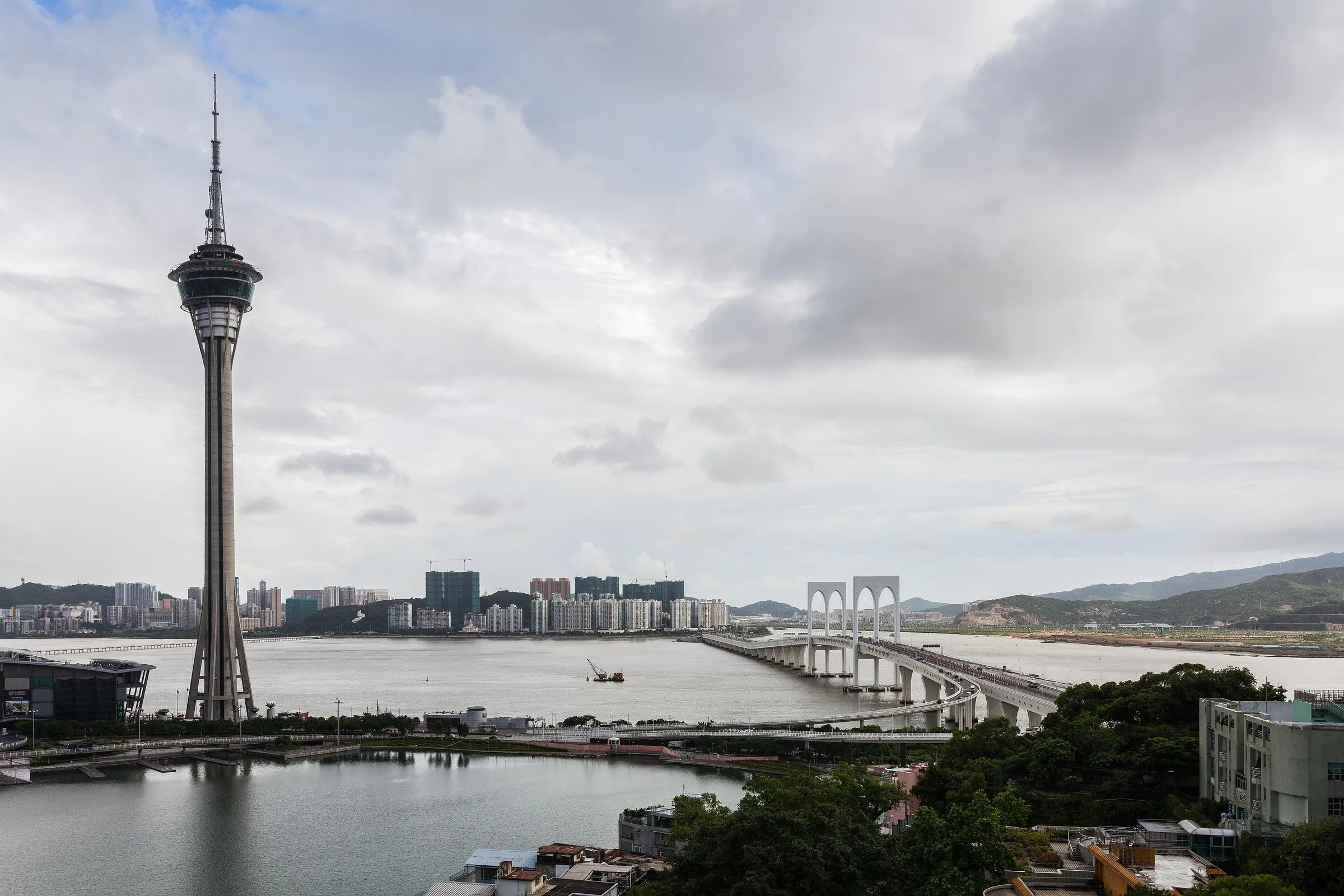 5
A 338-meter tower opened in 2001, with an observation deck at the top and a 233-meter bungee jump for those who prefer to see the city upside down.
View details for Macau Tower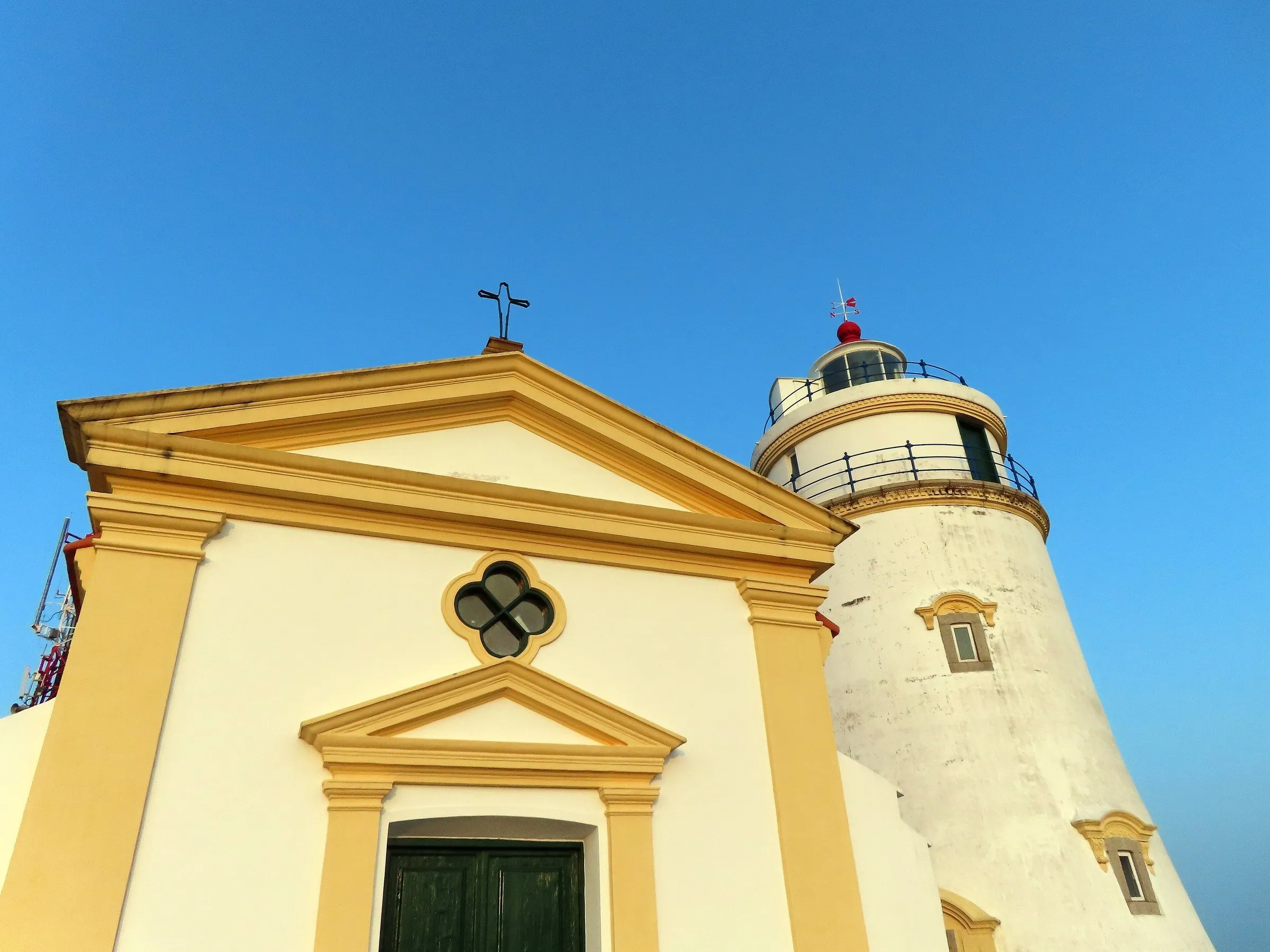 6
At the highest point of the peninsula, a 17th-century fortress holds a chapel with frescoes rediscovered in 1998 and a lighthouse from 1865.
View details for Guia Fortress and Lighthouse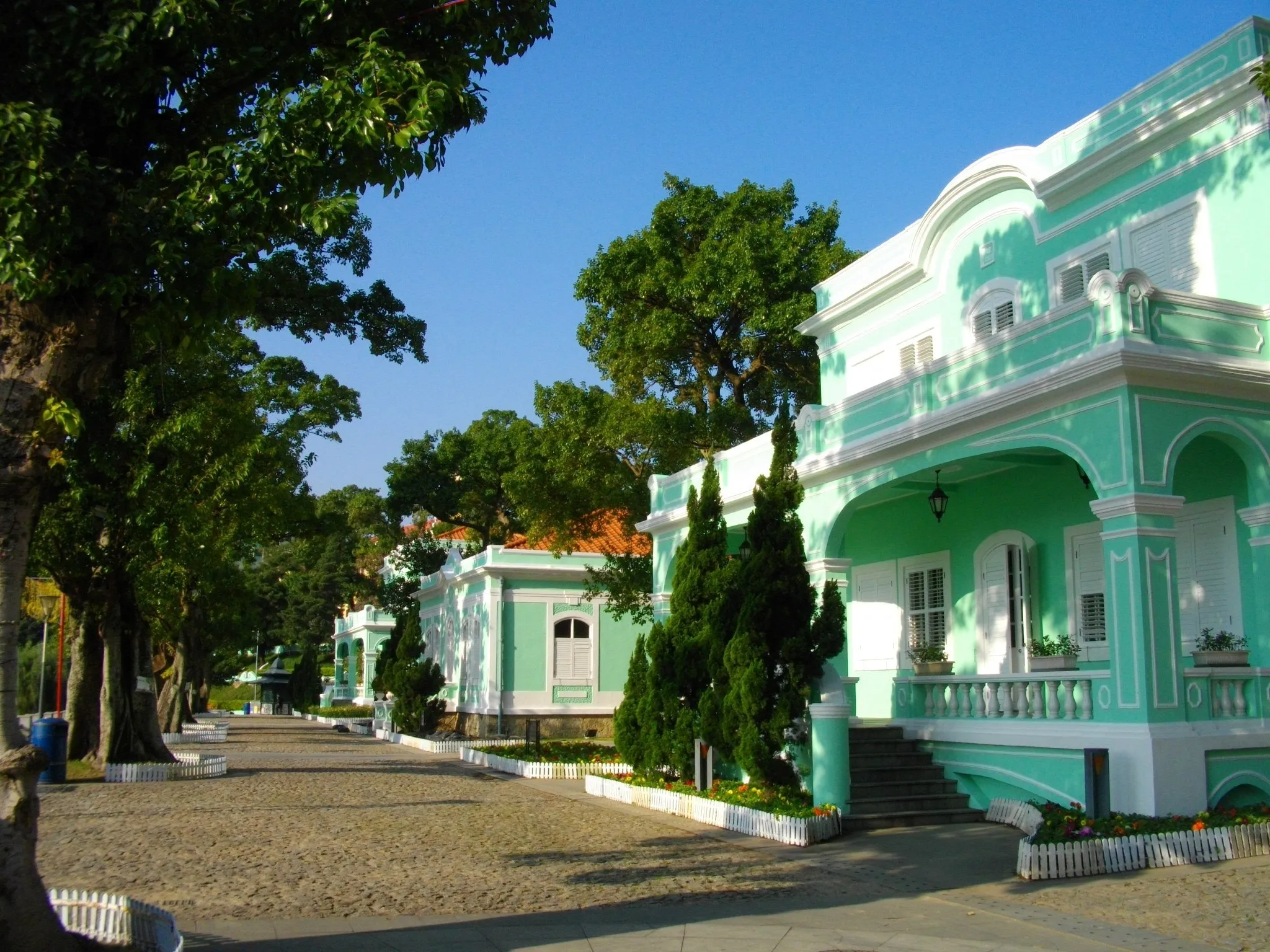 7
Five houses from 1921 turned into a museum, facing a former arm of the sea, and nearby Rua do Cunha, a pedestrian lane packed with shops and food.
View details for Taipa Village and the Taipa Houses-Museum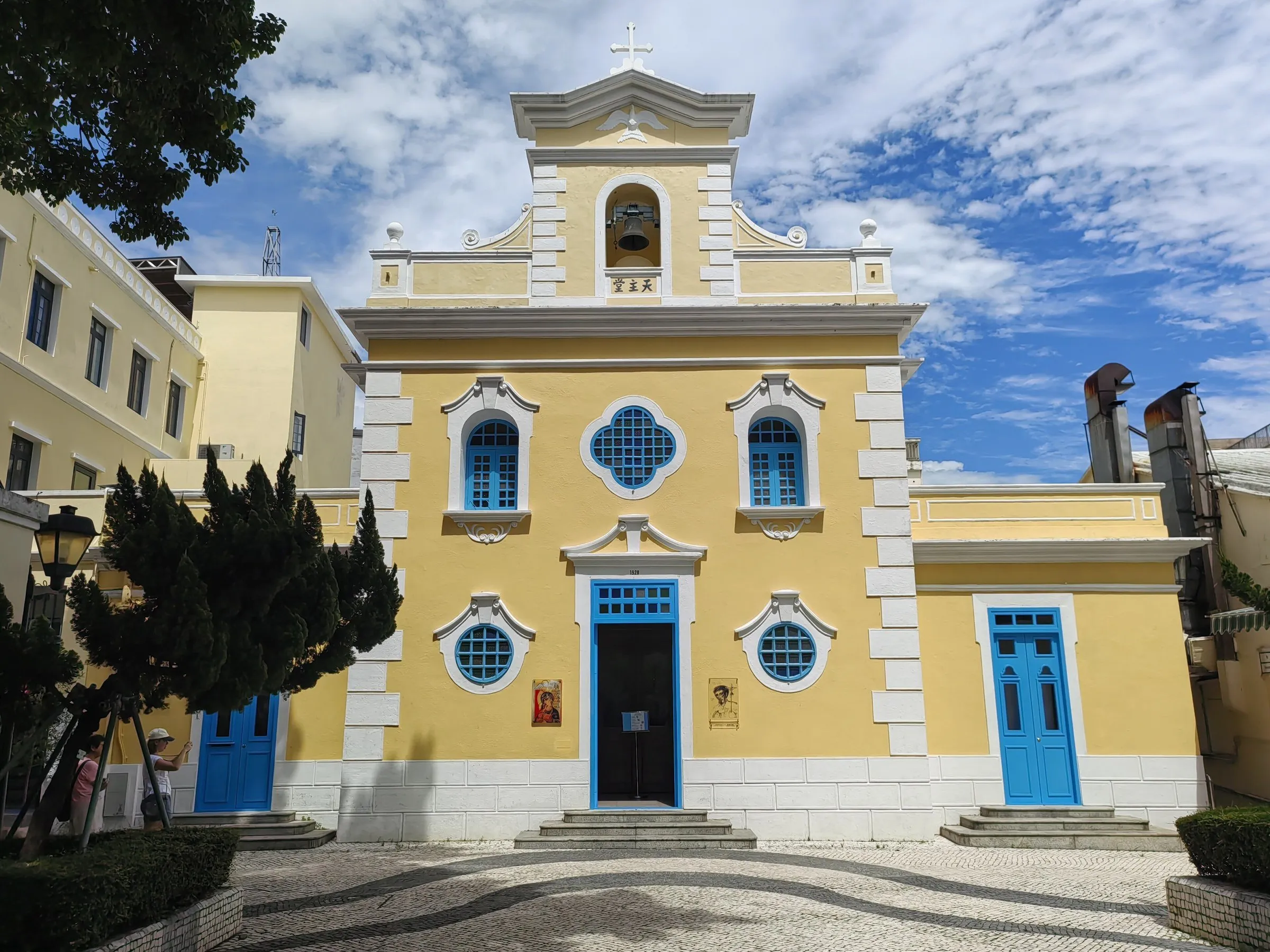 8
A small village on the southwest coast of Coloane, with a square of wavy paving, a chapel from 1928 and the bakery that launched Macau's egg tart in 1989.
View details for Coloane Village1Anyone who knows Portuguese-style paving gets a pleasant sense of strangeness here: the little stones are the same, only surrounded by signs in Chinese. The square, about 3,700 m², got its paving in the early 1990s and became pedestrian-only, with a fountain in the middle and people crossing in every direction.
The surrounding buildings tell Macau's story without needing a guide. The Leal Senado, from 1784, housed the city's first municipal chamber, and the Holy House of Mercy was founded in 1569 by Macau's first bishop. Most walks through the center start here, so it's worth pausing a bit, looking at the facades and only then heading into the alleys.
2Only the front is left, and it's enough. The church the Jesuits raised in the early 17th century, one of the largest Catholic churches in Asia at the time, burned during a typhoon in 1835. The facade stayed standing on its own, silhouetted against the sky at the top of a 68-step staircase, and today it is propped up from behind by a concrete and steel structure.
Get close and read the stone: there is a Virgin stepping on a seven-headed hydra, with an inscription in Chinese, and Chinese guardian lions carved at the base, probably by the hands of Japanese artisans converted by the Jesuits. Behind the facade, a small museum and the crypt show the foundations excavated in the 1990s. Right next to the ruins stands Na Tcha Temple, from 1888, which sums up Macau in just a few meters.
3Mount Fortress was built with the participation of the Jesuits on a hill about 52 meters high and became the city's main defense. It was decisive in 1622, when the Dutch tried to take Macau and were repelled. The walls are still there, and from the top you can see the Ruins of St. Paul's behind it, like peeking backstage at a theater.
At the summit sits the Macao Museum, opened in 1998 where the meteorological observatory used to be. It tells the story of how the territory took shape and of the communities that passed through, which makes it a good map for the rest of the trip: after it, every church and temple you come across on the street has context.
4Before Macau existed, this temple already did. Completed in 1488 in the Barra district, it is dedicated to A-Ma, also called Mazu, the protective goddess of fishermen and sailors. Instead of a single hall, you walk through several pavilions: the gate, the memorial arch, the prayer hall, the Hall of Benevolence, which is the oldest part, and the Guanyin hall.
It is a fully active place of worship, with worshippers lighting incense and making wishes, so move calmly and give way. On the way out, Barra Square has mosaic Portuguese-style paving, which turns the entrance of the city's oldest Chinese temple into a neat summary of Macau.
5From the street, Macau Tower looks like a needle stuck into the peninsula: it is 338 meters to the tip of the antenna, and it opened in December 2001, two years after the handover. From up there, the map organizes itself, with the cramped peninsula on one side and the bridges toward Taipa and Cotai on the other.
For those who want more than looking, there is a walk around the outer edge and the famous 233-meter jump. In 2006, New Zealander A.J. Hackett, considered the father of modern bungee jumping, jumped from here to break his own record for a jump from a building. Even those without the nerve tend to stop and watch someone jump, and the scream arrives before the person does.
6Guia Hill is just over 90 meters tall, which is enough to be the highest point of the Macau peninsula and to offer a wide view of the city. The fortress at the top was built between 1622 and 1638, and inside it is a small chapel that kept a surprise: in 1998, conservation work revealed frescoes hidden in the walls, with Western and Chinese themes side by side.
Next to the chapel is the lighthouse, from 1865, cited as the first Western-style lighthouse on the Chinese coast. The complex is part of the historic center listed by UNESCO, but it has a different pace: it's one of the few places in Macau where the city is down below and what you hear is wind.
7The Taipa Houses-Museum are five houses built in 1921 that, before the Cotai landfill, faced the sea. The water turned into a small marsh, and on the other side the casino resort towers appear: an old facade in the foreground, a skyscraper in the background, all in the same frame. One of the houses, the Macanese Living Museum, recreates the interior of a wealthy family's home in the first half of the 20th century.
In the same village, Rua do Cunha is narrow, pedestrian-only and lined with little shops, restaurants and takeaway counters. It is the right place to try the pork chop bun, a pork chop in a Portuguese-style bread roll, and to discover that the village has many more alleys than it seems on the map.
8After the noise of Cotai, Coloane seems to move in slow motion. The center of the village is Largo Eduardo Marques, paved with black, white and yellow stones in a wavy pattern reminiscent of the sea, and at one end stands the Chapel of St. Francis Xavier, from 1928. Near it, a monument recalls the 1910 victory over the pirates who had kidnapped children from the area.
This is where Englishman Andrew Stow opened his bakery in 1989 and created his own version of the Portuguese custard tart, with a creamier filling, inspired by a family recipe. Locals nicknamed the novelty "Portuguese tart" to tell it apart from the Cantonese version, and the pastry became one of the flavors most associated with Macau. Eat it warm, sitting in the square.
You can come by ferry or by bus over the Hong Kong–Zhuhai–Macau Bridge, opened in 2018. The bus is usually cheaper; the ferry, pricier, is the classic option.
Entry rules for Macau depend on your nationality, and many travelers can stay for short visits without a visa. Check the current rules for your own passport before you fly, especially if you are coming from mainland China.
The official currency is the pataca, but the Hong Kong dollar circulates and is widely accepted. Having a bit of both avoids complicated math in the little shops.
From May to September it is hot and humid, it rains a lot and there may be a typhoon. From October to December the weather turns drier and pleasant; in winter, bring a real jacket.
Portuguese is on the signs, but the conversation on the street is in Cantonese. Having your destination written in Chinese on your phone helps a lot with drivers and shop clerks.
Temples like A-Ma are active places of worship: speak quietly, don't stand in front of the altars and ask permission before photographing people praying.
Macanese cuisine is described as one of the first examples of fusion cooking in the world: it began in the 16th century, when Portuguese families tried to recreate their dishes with Chinese ingredients and seasonings from other trade routes, such as turmeric, coconut milk and cinnamon. In 2017, Macau joined UNESCO's Creative Cities Network as a City of Gastronomy. In practice, you eat in three registers: Macanese restaurants with family recipes, such as bacalhau and African chicken; Cantonese cafés and tea houses; and street bakeries, where egg tarts come out of the oven all day.
Ground beef or pork sautéed with onion and diced potato, seasoned with soy sauce and Worcestershire sauce, almost always topped with a fried egg. Every family has its own recipe.
Puff pastry with a creamier filling than the Portuguese original, the version Andrew Stow launched in Coloane. Good any way, even better warm.
A Cantonese-style pork chop inside a Portuguese-style bread roll. Simple, direct and the snack that best sums up Macau's street food.
We use cookies and similar technologies, such as Google Analytics, in accordance with our Privacy Policy and, by continuing to browse, you agree to these terms. You can decline at any time in the policy.