1
Neighborhoods
Central–Mid-Levels Escalator
About 800 meters of covered escalators and walkways that climb 135 meters between Central and Mid-Levels, passing through the bars and restaurants of SoHo.
View details for Central–Mid-Levels Escalator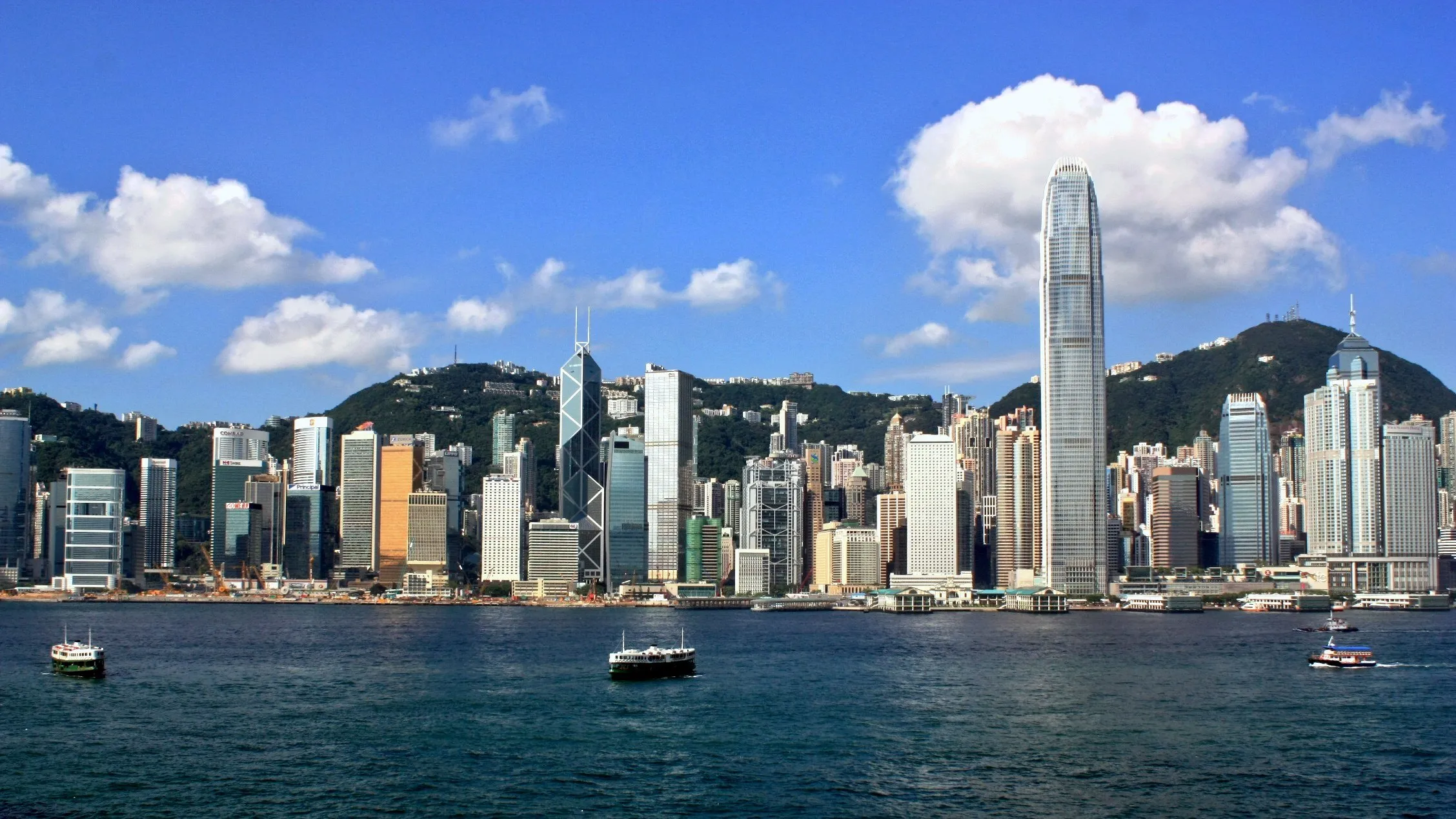
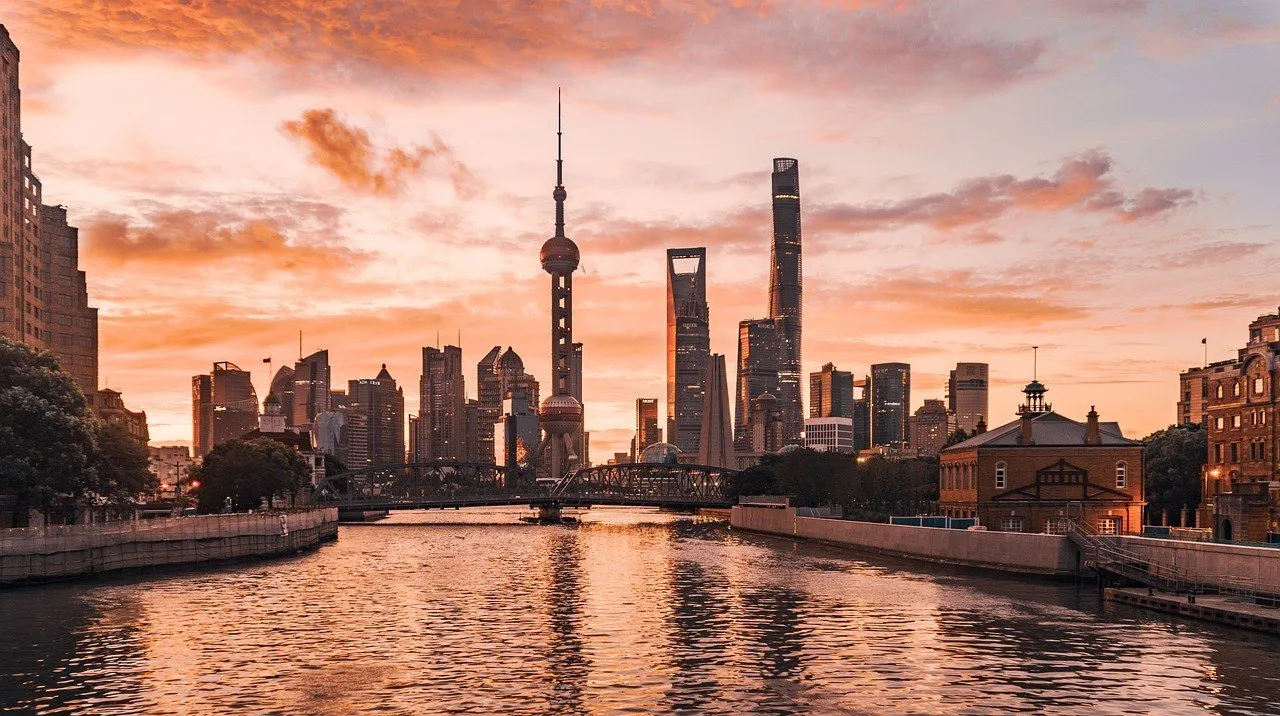
On the Star Ferry crossing, one deckhand hurls a rope and another, on the pier, catches it with a hook, the old-fashioned way. Behind them, a wall of skyscrapers climbs from the sea to the mountain.
Hong Kong has more skyscrapers than any other city in the world and, even so, about 40% of its territory is country park or nature reserve. That math sums up the trip: in the morning you walk among glass towers in Central, in the afternoon you are on a ridge with the sea on both sides, and at night you eat dinner at a street market in Kowloon. Besides Hong Kong Island and Lantau, the territory has more than 260 smaller islands, so crossing water becomes part of the routine, and one of the best parts.
A bit of context helps make sense of what you see. After 156 years of British administration, Hong Kong became a special administrative region of the People's Republic of China on July 1, 1997. It operates under the "one country, two systems" principle, with the Basic Law as its constitutional document, and for that reason it keeps its own currency, the Hong Kong dollar, along with Chinese and English as official languages. On the street, Cantonese rules: it is the everyday language of nearly nine in ten residents.
To get your bearings, think of three pieces. On Hong Kong Island you will find the Peak, Central and Sheung Wan, where 19th-century temples hold out among office buildings. Across Victoria Harbour, Kowloon has the Tsim Sha Tsui waterfront, the night markets and the busiest temples. Lantau, next to the airport, has the Big Buddha and the stilt-house village of Tai O. Metro, ferry, bus and tram connect it all, and a single card, the Octopus, pays for almost everything.
The pineapple bun, king of the local bakeries, has no pineapple in it: the name comes from the cracked golden crust, which resembles the fruit's skin. In 2014, the government added the bun to Hong Kong's intangible cultural heritage list.
The Octopus card debuted in 1997 and was the world's second contactless payment system. Its name in Cantonese speaks of reaching all eight directions, a reference to the points of the compass.
Until 1926, the Peak Tram was driven by coal-fired steam boilers and split passengers into three classes, with a different fare for each.
Wong Tai Sin Temple was the first Taoist temple authorized by the government to hold weddings and issue marriage certificates.
About 800 meters of covered escalators and walkways that climb 135 meters between Central and Mid-Levels, passing through the bars and restaurants of SoHo.
View details for Central–Mid-Levels Escalator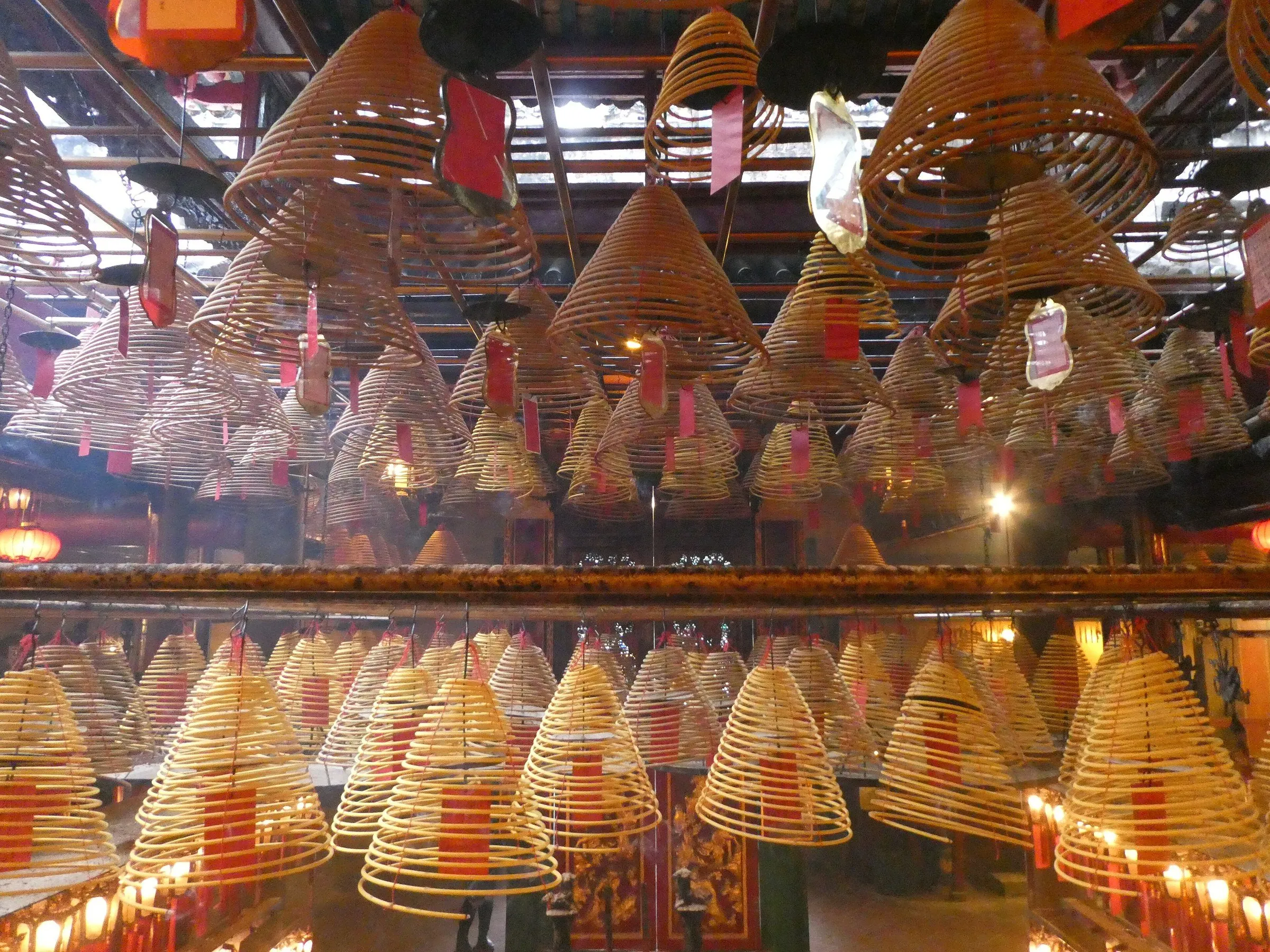 2
A temple from 1847 on Hollywood Road in Sheung Wan, dedicated to the civil god Man Cheong and the martial god Kwan Tai, with incense coils hanging from the ceiling.
View details for Man Mo Temple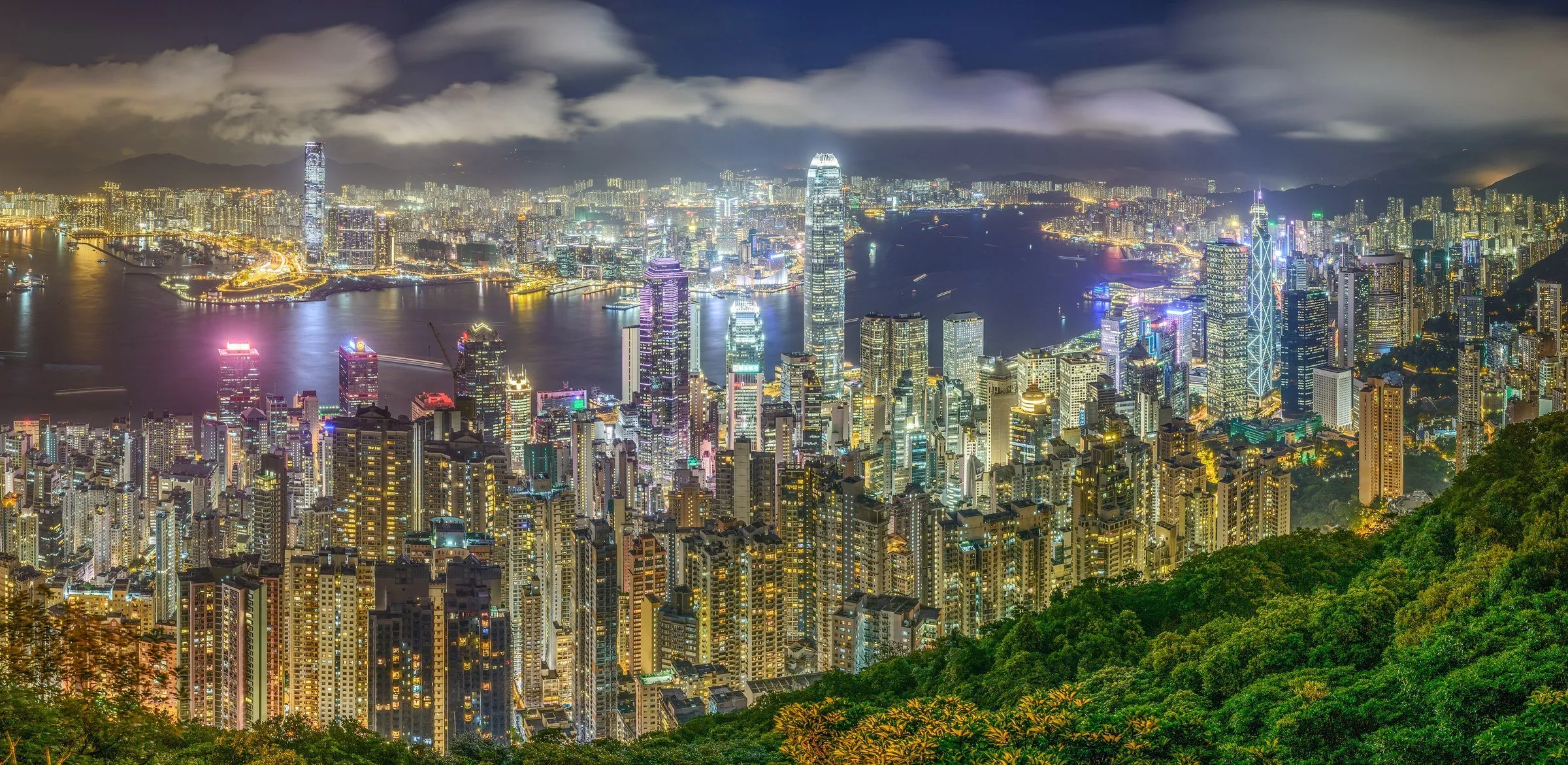 3
The highest hill on Hong Kong Island, at 552 meters, reached by the Peak Tram, a funicular opened in 1888 that climbs the slope in about five minutes.
View details for Victoria Peak and the Peak Tram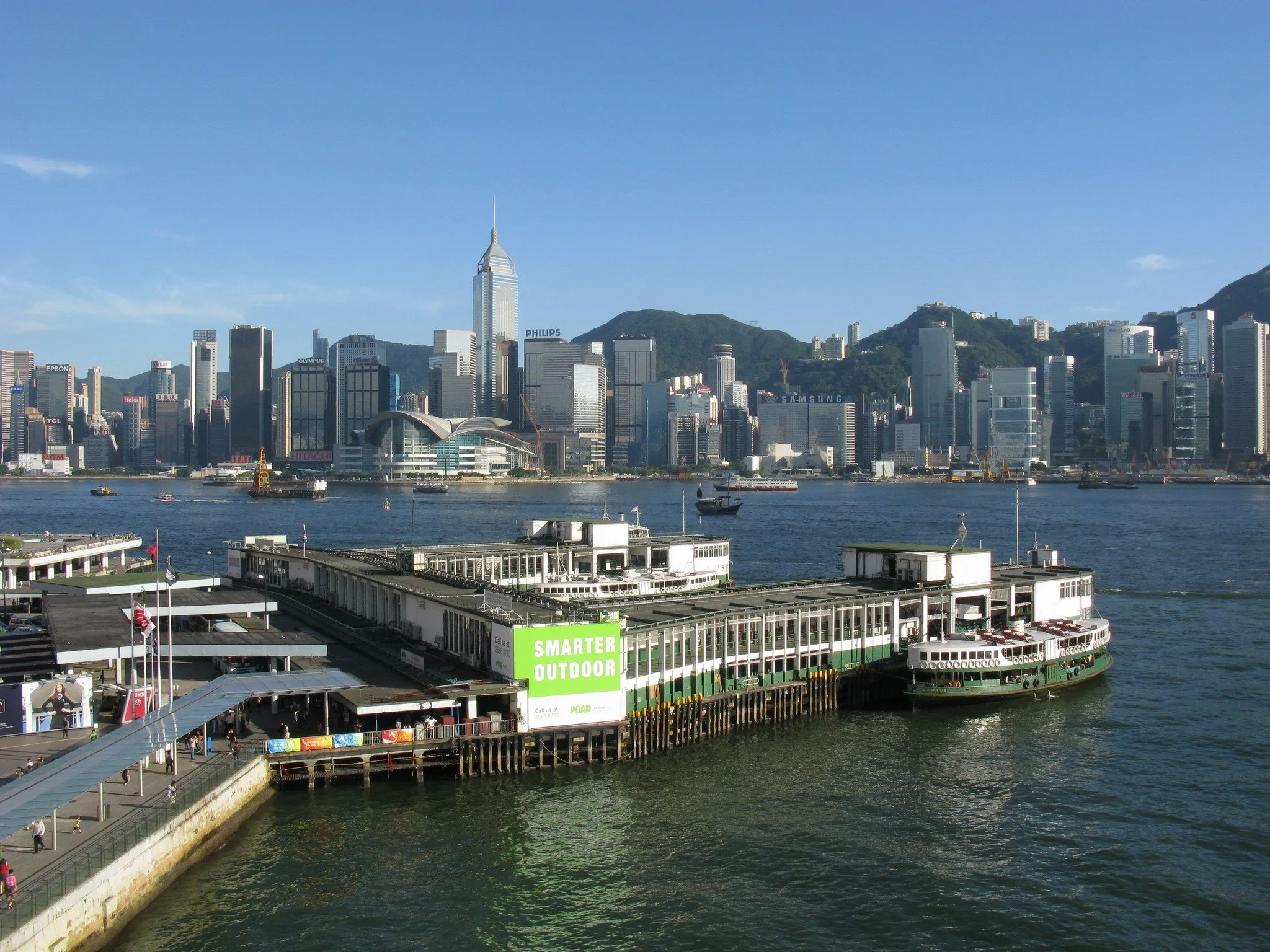 4
The ferries that have crossed Victoria Harbour since 1888, linking Hong Kong Island to Kowloon for a few dollars, on a short crossing with the skyline on both sides.
View details for Star Ferry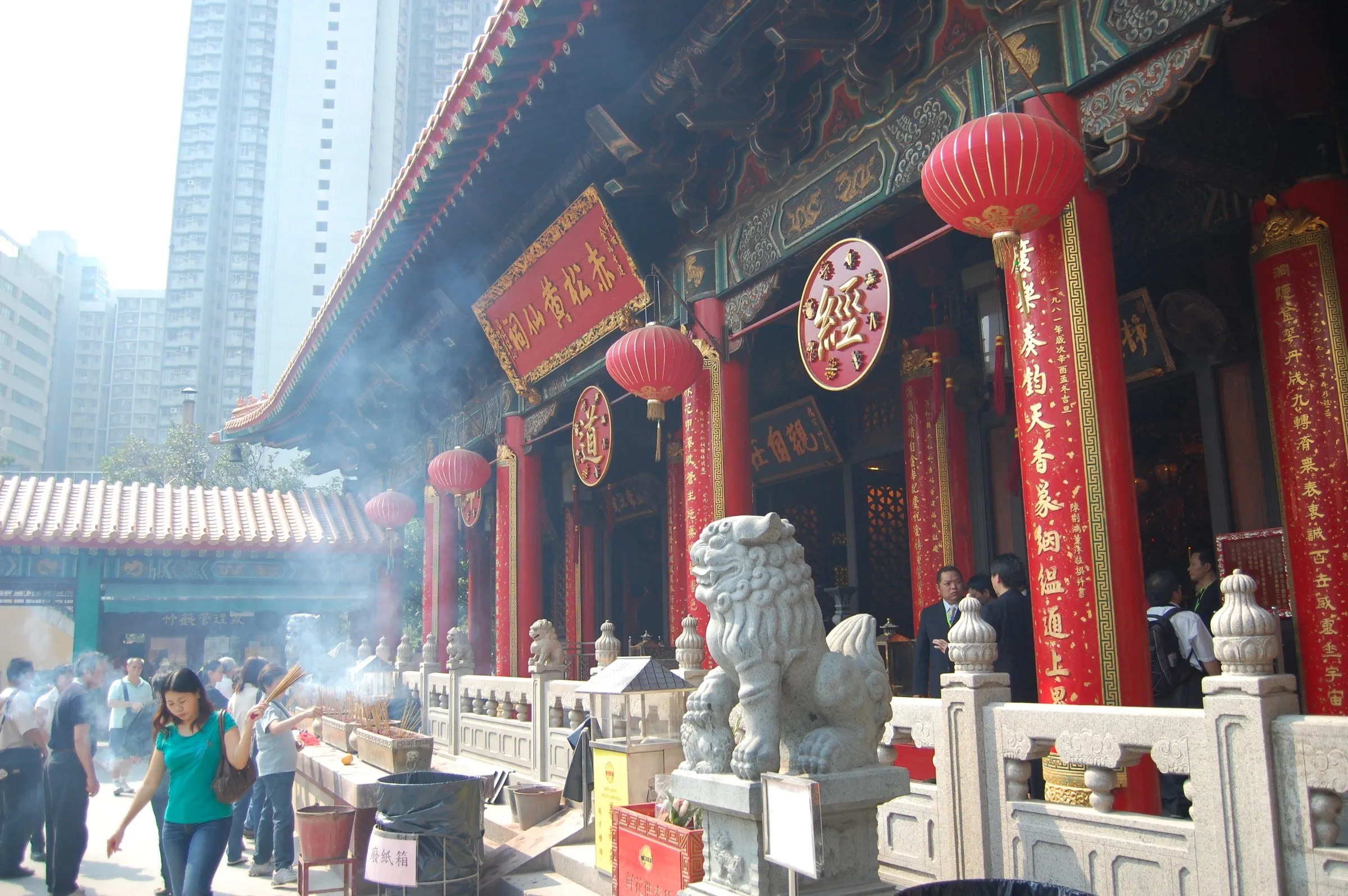 5
A Taoist temple at the foot of Lion Rock, famous for its motto "what you request is what you get" and for the rattle of fortune sticks shaken in bamboo cups.
View details for Wong Tai Sin Temple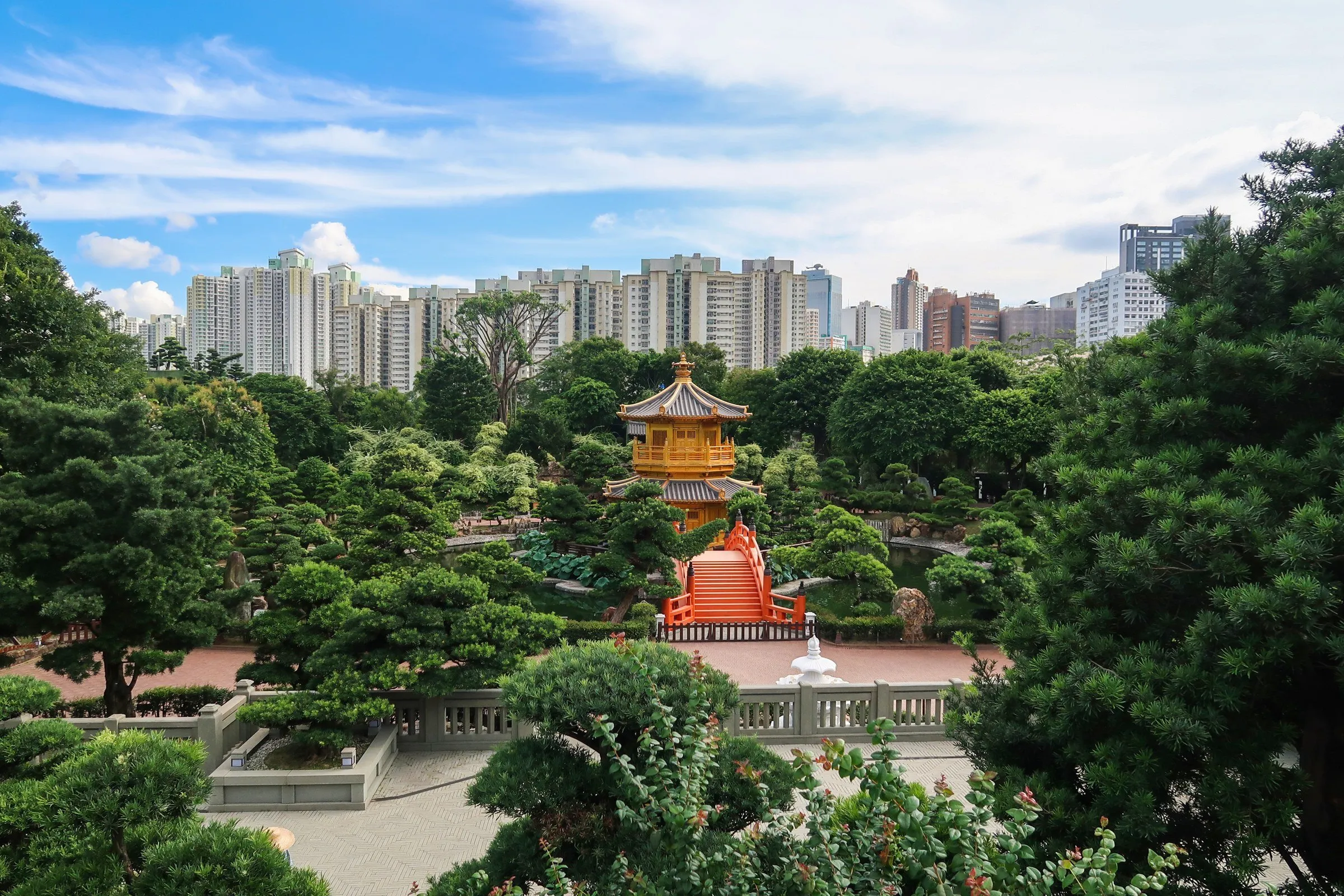 6
A Buddhist nunnery rebuilt in the Tang dynasty style, entirely in cypress wood joined without nails, facing a classical Chinese garden open to the public.
View details for Chi Lin Nunnery and Nan Lian GardenA museum of contemporary visual culture opened in 2021 in West Kowloon, with art, design, architecture and film, in a tower whose LED facade becomes a giant screen over the harbor.
View details for M+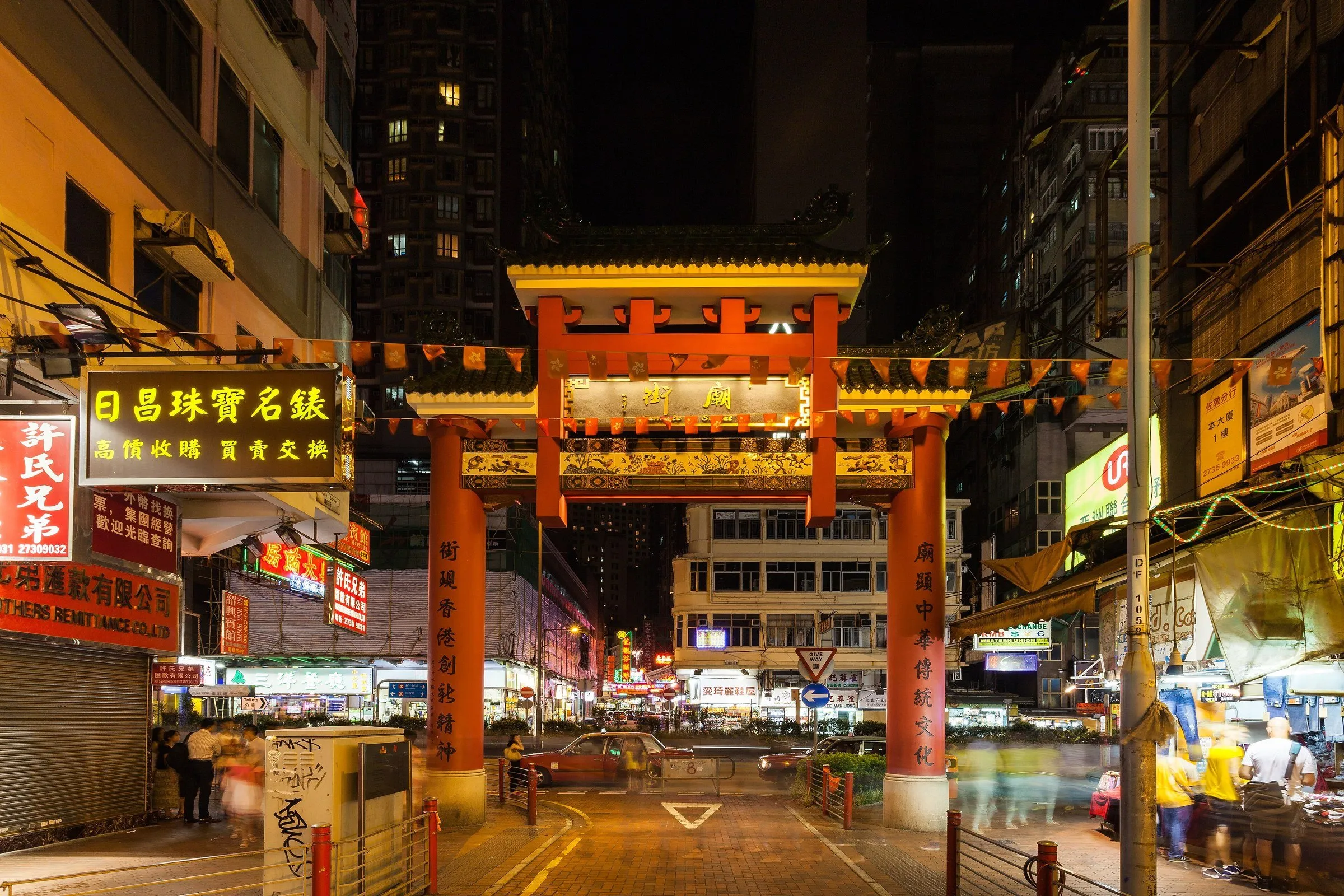 8
A Kowloon night market with more than 100 stalls, bargaining welcome, street food and seafood restaurants, on a street that has served as a set for many films.
View details for Temple Street Night Market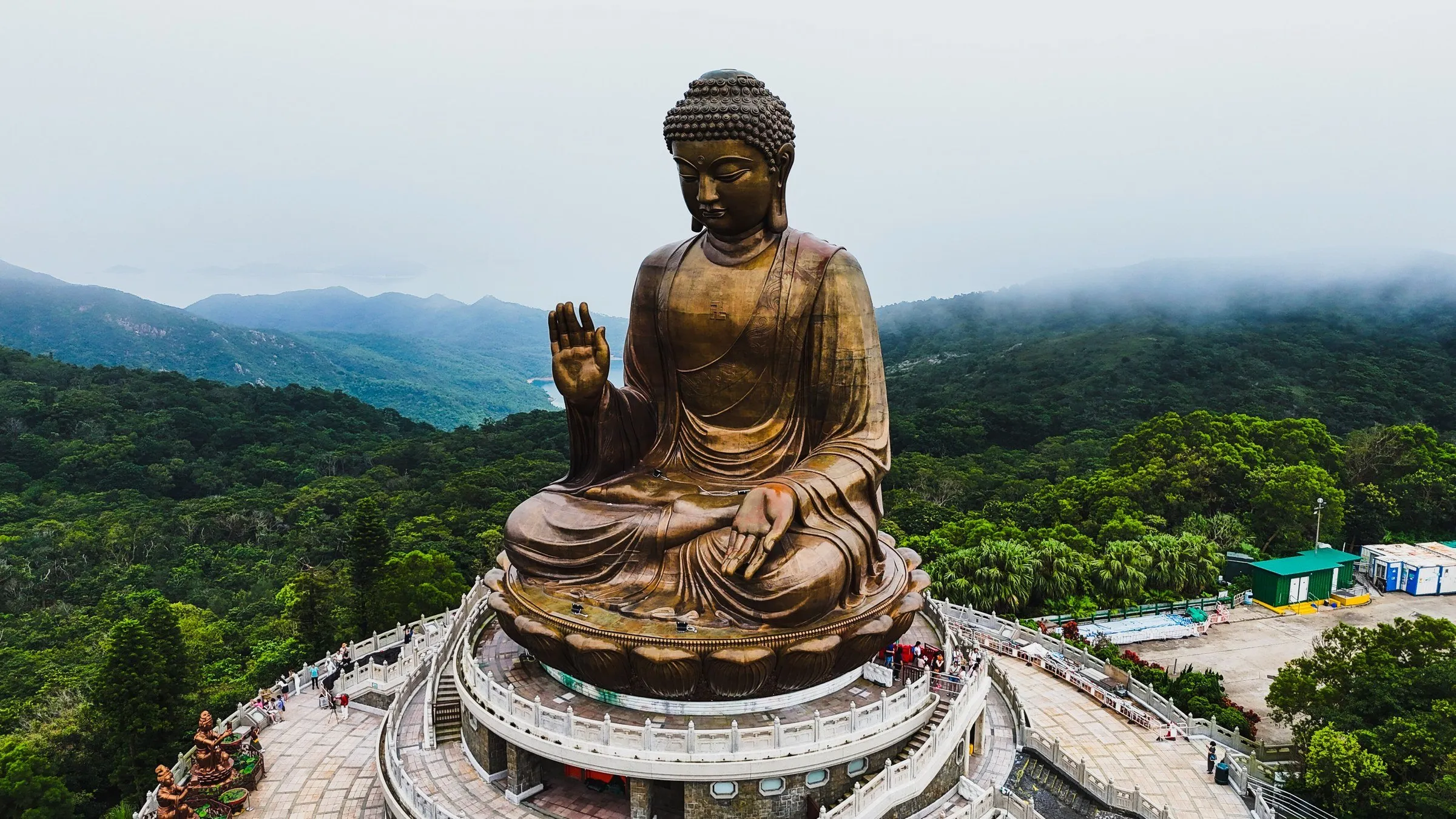 9
A 34-meter bronze statue seated on a lotus on the Ngong Ping plateau on Lantau, completed in 1993 beside Po Lin Monastery. It is 268 steps to reach it.
View details for Big Buddha (Tian Tan) and Ngong Ping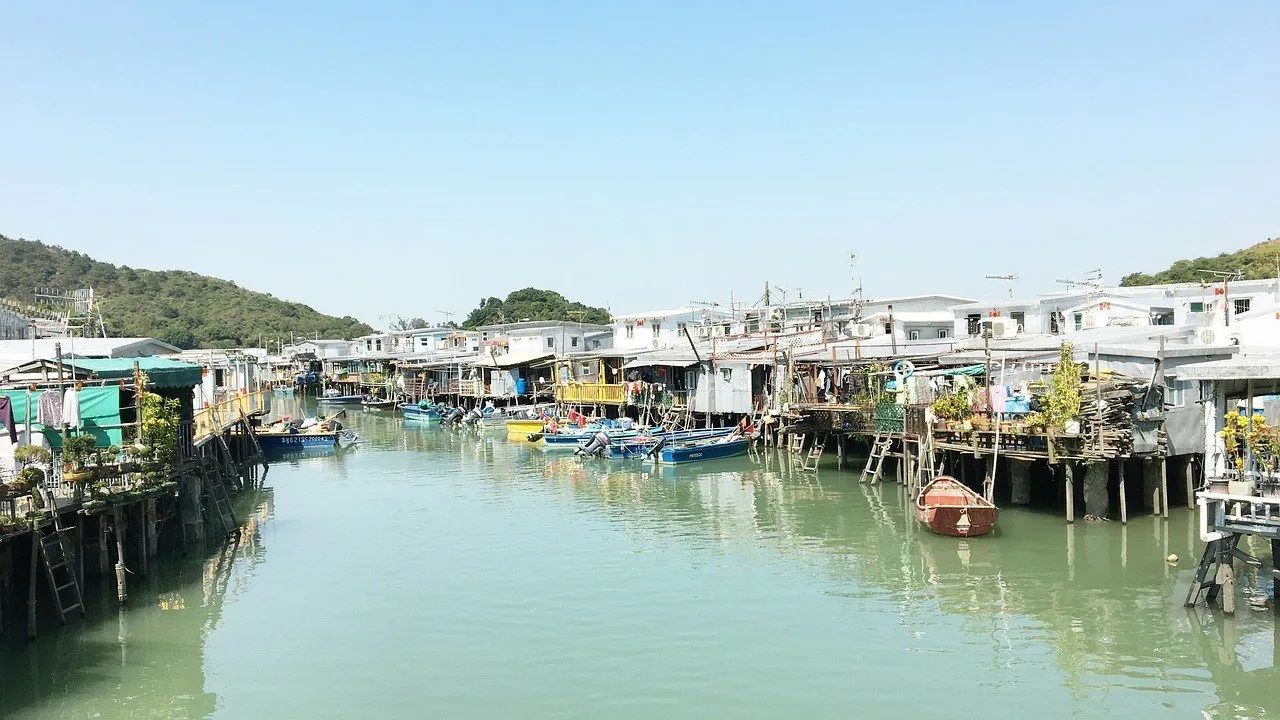 10
A fishing village on the west of Lantau, with stilt houses over the channel, salted fish and shrimp paste in the little shops, and boat rides in search of the pink dolphin.
View details for Tai O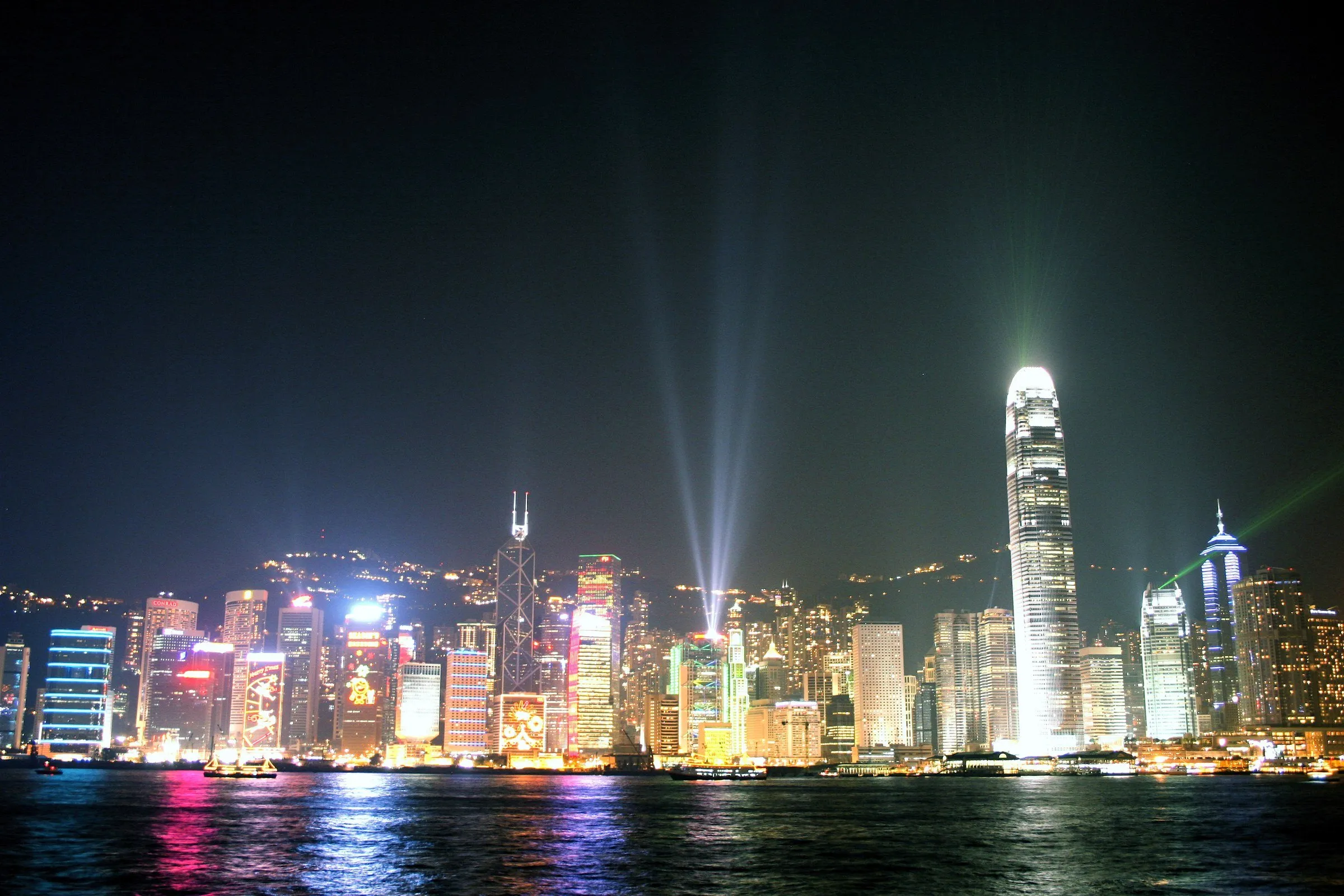 11
Kowloon's promenade facing Hong Kong Island, with the Avenue of Stars and a guaranteed audience for the light show held every night at 8 p.m.
View details for Tsim Sha Tsui Waterfront and the Symphony of Lights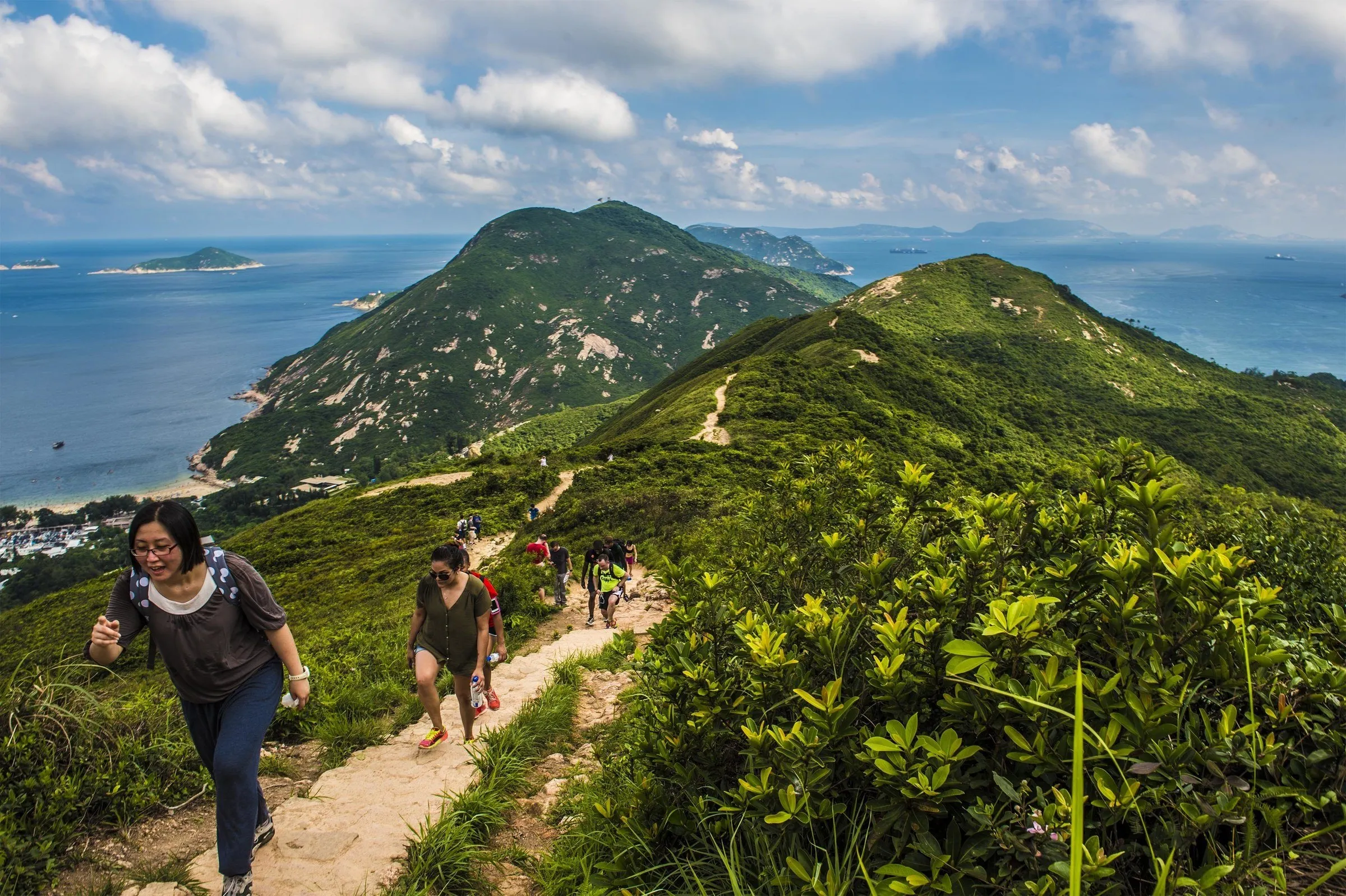 12
A ridge trail between Shek O Peak and Wan Cham Shan, with the sea on both sides of the island, ending at Big Wave Bay after about 8.5 km.
View details for Dragon's Back TrailIn 1993, Hong Kong solved its steep hill in the most Hong Kong way possible: it lined up 18 escalators and three covered walkways over some 800 meters up the hillside. That is 135 meters of elevation gained effortlessly, with shops, grocers and bar tables sliding past sideways like a moving shop window. The structure even appears in the 1994 film Chungking Express.
The system changed the neighborhood: restaurants and bars gradually filled the cross streets and helped form SoHo. Mind the direction: early in the morning the escalators run downhill and, for the rest of the day, uphill until midnight. Anyone who wants to go up during the downhill hours takes the ordinary stairs alongside, and quickly understands why the thing was built.
2On Hollywood Road, a small doorway leads into a dimly lit, smoky hall where incense coils hang from the ceiling like glowing chandeliers. The temple dates from 1847 and honors two deities at once: Man Cheong, the civil god, linked to literature, and Kwan Tai, the martial god. Two patrons, one for the exam and the other for the fight.
The complex, now a declared monument, includes the Kung So, a neighboring hall where the Chinese community gathered to handle collective matters and settle disputes. It is a working temple, with worshippers lighting incense while visitors pass through, so it is best to move slowly and keep your voice down.
3Before 1888, people who lived on the Peak were carried up the slope in sedan chairs. That year the Peak Tram opened, described as the first funicular in Asia, and the roughly 1.4 km climb began taking about five minutes. Some stretches reach a 48% gradient, and you ride the whole way with your back pressed against the seat, watching the city sink away through the window.
The upper terminal sits beneath the Peak Tower, a shopping and entertainment complex. But the nicest plan is free: the flat loop along Lugard and Harlech Roads, which circles the hill with views of the harbor, Kowloon and the islands of Lantau and Lamma. The summit itself is covered in antennas and closed to the public.
4The company began in 1888 as the Kowloon Ferry Company and took its current name ten years later. Ever since, its vessels have had names ending in "Star": Morning Star, Twinkling Star, Solar Star. Watch the docking, which is still done the old-fashioned way: the rope flies from the boat to the pier and someone catches it with a hook.
It is public transport, not a tourist ride, and that is why it costs so little. The main route links Central to Tsim Sha Tsui, and there is another between Wan Chai and Tsim Sha Tsui. The upper deck costs a little more and has the most open view. In 2009, the Society of American Travel Writers ranked this crossing at the top of its list of the world's most exciting ferry rides.
5The sound that greets you is bamboo. Worshippers kneeling before the altar shake cylinders full of numbered sticks until one jumps out: this is kau cim. The number is exchanged for a slip of paper with the prediction, which interpreters read at the stalls nearby, and plenty of people check with more than one, just in case.
Completed in 1921, the shrine honors the immortal Wong Tai Sin and covers 18,000 m² at the foot of Lion Rock, with a Nine-Dragon Wall modeled on one in Beijing. On the eve of Lunar New Year, thousands of people wait for midnight outside to run to the main altar: tradition says that whoever offers incense first secures more luck for the year.
6In Diamond Hill, a complex of cypress-wood halls holds together with joinery alone, without a single nail. Founded in 1934 as a retreat for Buddhist nuns, Chi Lin Nunnery was rebuilt in 1998 in the Tang dynasty style and has 16 halls, a library, a pagoda, a bell tower and a drum tower, on grounds of more than 33,000 m².
Across the street is Nan Lian Garden, a classical Chinese garden of about 35,000 m², also in the Tang style and maintained by the nunnery itself. The halls and the garden are open every day, with no admission fee. The noise of Kowloon vanishes the moment you pass through the gate, and returns in full when you leave.
Designed by Herzog & de Meuron with the firm Farrells, M+ opened in November 2021 in the shape of an upside-down T: the galleries sit in a large horizontal slab and the tower rises above it. At night, the harbor-facing facade, full of LEDs, becomes a screen for video works that can be seen from Hong Kong Island.
The collection covers art, design, architecture and moving image from the 20th and 21st centuries, with a strand devoted to Hong Kong's visual culture. The donation from the Swiss collector Uli Sigg, with more than 1,400 works of contemporary Chinese art, is one of the pillars of the collection.
8The street takes its name from the Tin Hau temple built there, but its fame comes from what happens after dusk. Cars are kept out, the crowds arrive, and more than 100 stalls sell clothes, watches, phones and secondhand knickknacks. The local nickname "Men's Street" comes from the menswear sold at the stalls.
Haggling is part of the game, done with a smile and without hurry. When hunger strikes, look for the street snacks, the seafood restaurants and the rice served in a hot clay pot. Between one stall and the next, old Chinese medicine clinics appear. If the scene looks familiar, it is because the street has starred in films such as Stephen Chow's The God of Cookery.
9Getting there is half the fun. From Tung Chung, the Ngong Ping 360 cable car takes about 25 minutes to reach the plateau, over the green slopes of Lantau. Up top, 268 steps separate you from the Buddha, seated on a lotus on a three-tiered altar and surrounded by six bronze figures representing offerings. The raised right hand symbolizes the removal of suffering.
Completed in 1993, the statue was assembled from 202 bronze pieces over a steel frame and weighs more than 250 tonnes. Inside there are three floors of exhibits and a relic that, according to tradition, holds the cremated remains of the Buddha. Next door is Po Lin Monastery, which rounds out the visit.
10Tai O means something like "big cove," and the name makes sense when you see the river channels that cut through the village. Above them balance the pang uk, stilt houses that recall the days when the place was known as a Tanka village, home to people who lived off the water. The nickname "Venice of Hong Kong" is a friendly exaggeration: here, what perfumes the streets is the salted fish and shrimp paste sold at the doorways.
Locals offer short boat trips to try to spot the Chinese white dolphin, the famous pink dolphin. On land, Yeung Hau Temple, from 1699, is a declared monument, and the old police station has become a nine-room boutique hotel.
11Shortly before 8 p.m., the Tsim Sha Tsui waterfront turns into a grandstand: people leaning on the railing, phones at the ready, everyone facing Hong Kong Island. Then the buildings on the other side start to flash, firing lasers and spotlights in sync with the music. This is the Symphony of Lights, running since 2004 and recognized by Guinness as the world's largest permanent light and sound show.
The show lasts about 10 minutes, and the narration changes language depending on the day of the week: English, Mandarin or Cantonese. The best spot to watch is the Avenue of Stars, a stretch of the waterfront that honors Hong Kong cinema. Arrive early to stroll along it at your own pace, facing the harbor.
12From the bus stop at To Tei Wan on Shek O Road, the trail climbs to Shek O Peak and follows the ridge that locals call Lung Chek, the dragon's back. It is narrow, with steep slopes on both sides, and shows the sea to the east and west at once, with the Clear Water Bay peninsula and Tung Lung Island in the distance.
The full route, of about 8.5 km, is part of Section 8 of the Hong Kong Trail and descends by the Pottinger Peak path to Big Wave Bay, where a picnic area awaits tired feet. The terrain is rugged: shoes with good grip and plenty of water make a difference.
The Octopus pays for the metro, buses, ferries and trams, plus purchases at convenience stores, supermarkets and restaurants. There are versions designed for tourists, including on your phone.
Tropical cyclones can appear from May to November, most likely between July and September. Follow the Hong Kong Observatory's warnings: in severe weather, the harbor light show is suspended, and heavy rain or fog can disrupt ferries and flights.
From May to August, afternoons often top 31 °C with high humidity, and about 80% of the year's rain falls between May and September. Save hikes for early morning and always carry an umbrella.
Man Mo, Wong Tai Sin and Chi Lin are active places of worship. Speak softly, avoid flash, and do not stand in front of the altars while someone is praying or lighting incense.
At Temple Street, negotiating the price is normal and expected. Make a counteroffer calmly and with good humor, and only haggle over what you actually intend to buy.
Eating out is almost a local sport in Hong Kong, partly because of long working hours. The three main stages are yum cha, the ritual of drinking tea with dim sum that families often observe on weekends; cha chaan tengs, casual cafés with a Western-influenced menu adapted to Cantonese taste; and dai pai dongs, open-air stalls serving hot dishes stir-fried to order, increasingly rare. The name dai pai dong means something like "big license plate stall," a reference to the operating license.
Small portions, almost always steamed, which some restaurants still send around on carts between the tables. Order the cha siu bao, a bun filled with roast pork.
Nicknamed silk-stocking tea, it is the signature drink of the cha chaan tengs and, with the pineapple bun, forms the classic duo of the local snack.
A sweet bun with a cracked crust and not a piece of pineapple. In the bo lo yau version, it comes hot and split open with a thick slice of butter inside.
A sure thing at cha chaan tengs, alongside congee and egg tarts, for anyone who wants to eat well and fast.
We use cookies and similar technologies, such as Google Analytics, in accordance with our Privacy Policy and, by continuing to browse, you agree to these terms. You can decline at any time in the policy.