 1
Religion and art
Cologne Cathedral
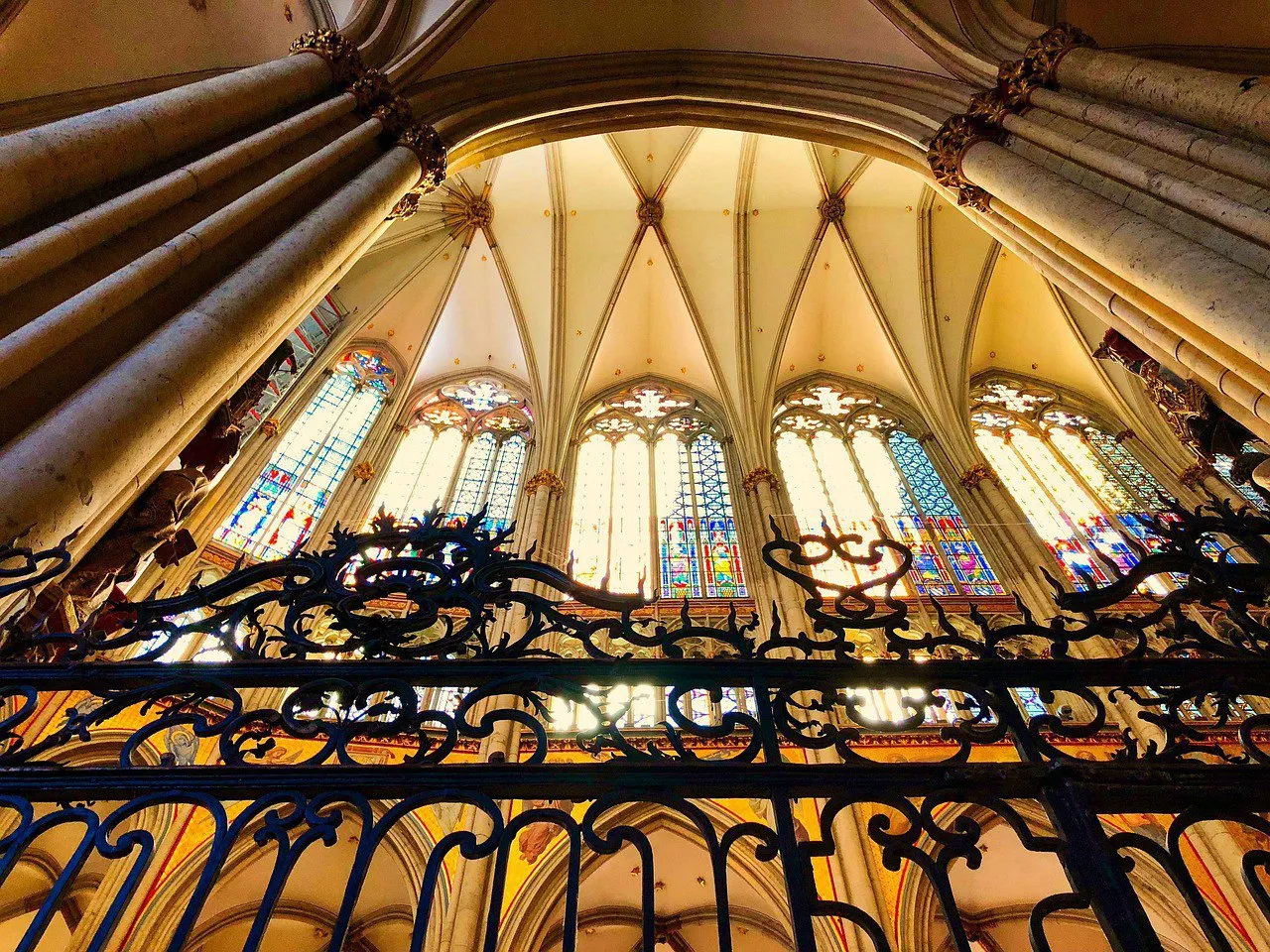
The Gothic cathedral dominates the exit of the central station with its towers, stained glass and a nave that asks for a few minutes of silence before your next photo.
View details for Cologne Cathedral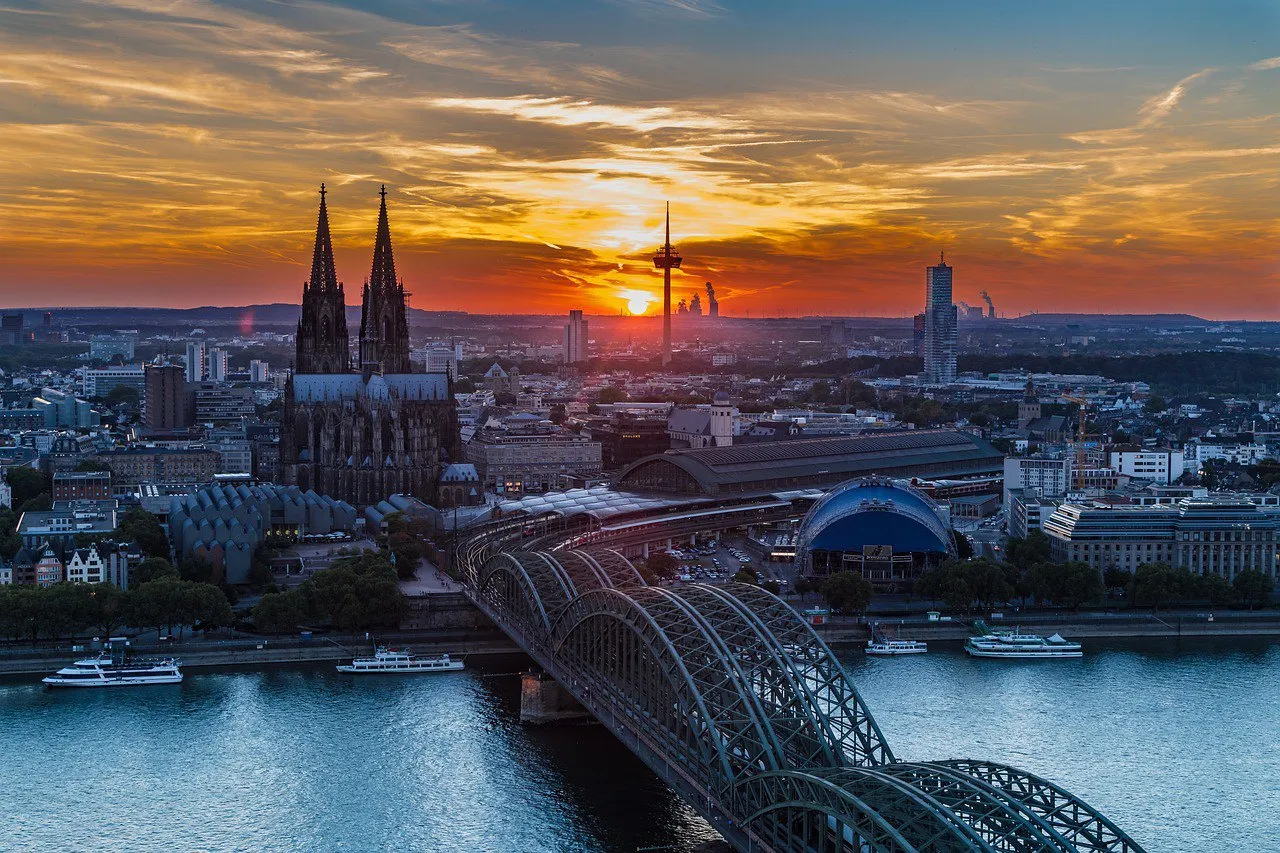
Germany
You step out of Cologne's train station and have to tilt your head back to find the top of the cathedral. Then the Rhine carries you from a bridge covered in padlocks to a museum with a chocolate fountain.
Trains pull in almost at the foot of the cathedral, and Cologne starts your visit without much ceremony: you are still trying to fold the map when the towers have already taken over the sky. The Rhine organizes much of the trip. On one side lie the old town and its brewhouse restaurants; on the other, Deutz offers the kind of view that fits the bridge, the water and the church that wouldn't fit in your first photo.
Set aside three days to combine the riverbanks with modern art, gardens and the difficult memory preserved at the EL-DE-Haus. The itinerary leaves room to eat, browse the perfume shop windows and sit down without turning the trip into an endurance test. With one extra day, Augustusburg Palace in Brühl makes a day trip by train or tram: it sits in another town, keeps its own calendar and deserves an outing of its own.
The name EL-DE-Haus comes from the pronunciation of the initials of Leopold Dahmen, the builder of the building that later became Gestapo headquarters; today it is a documentation and remembrance center.
In the cathedral, Gerhard Richter's stained-glass window uses colored squares instead of a figurative scene: light can make abstract art inside a Gothic church, too.
In traditional brewhouses, the paper coaster works as a signal: placed over your Kölsch glass, it tells the waiter you are done with the rounds.
1The Gothic cathedral dominates the exit of the central station with its towers, stained glass and a nave that asks for a few minutes of silence before your next photo.
View details for Cologne Cathedral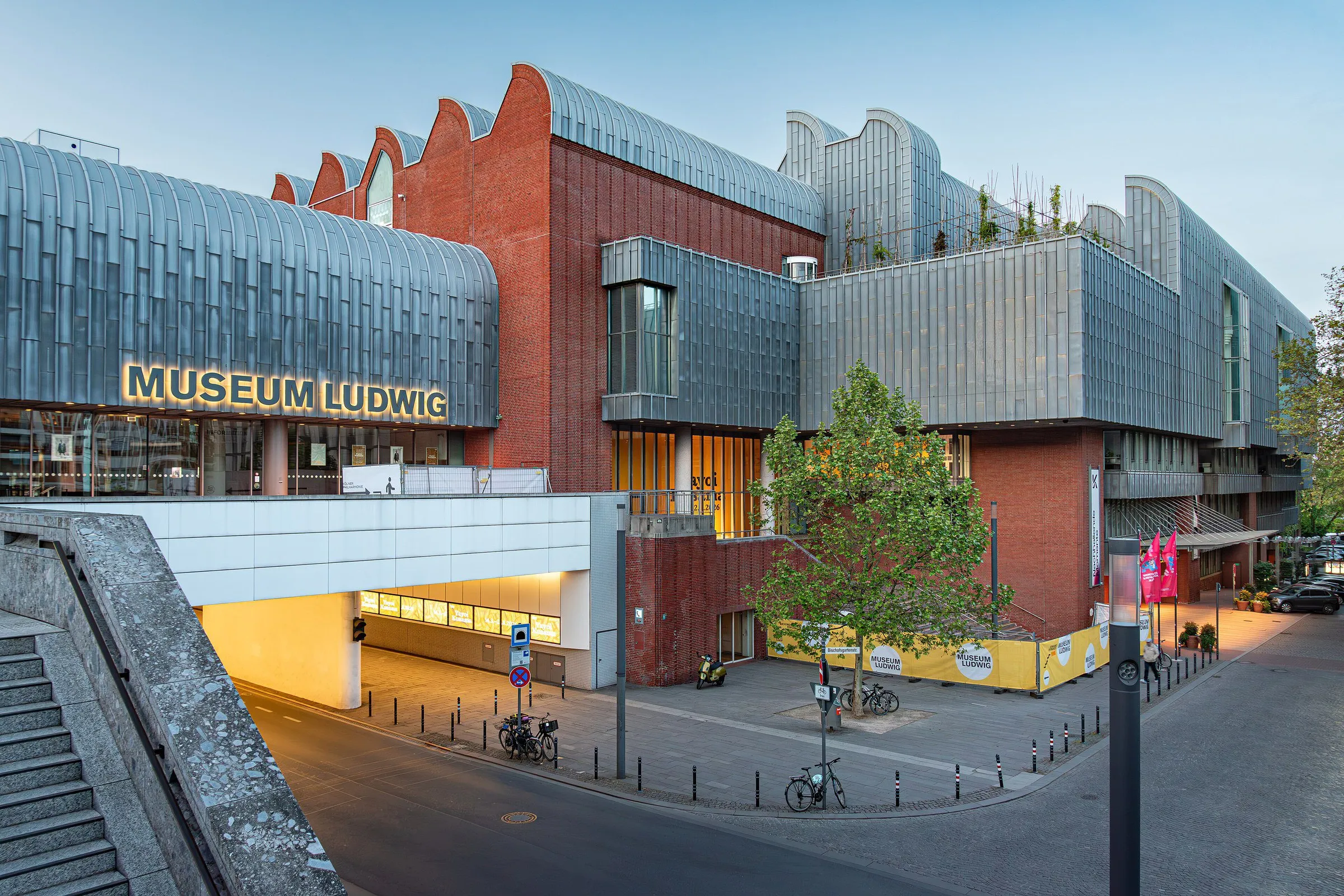 2
Picasso, Expressionism and pop art share the museum next to the cathedral: a stop to swap stone details for paint, photography and other ideas.
View details for Museum Ludwig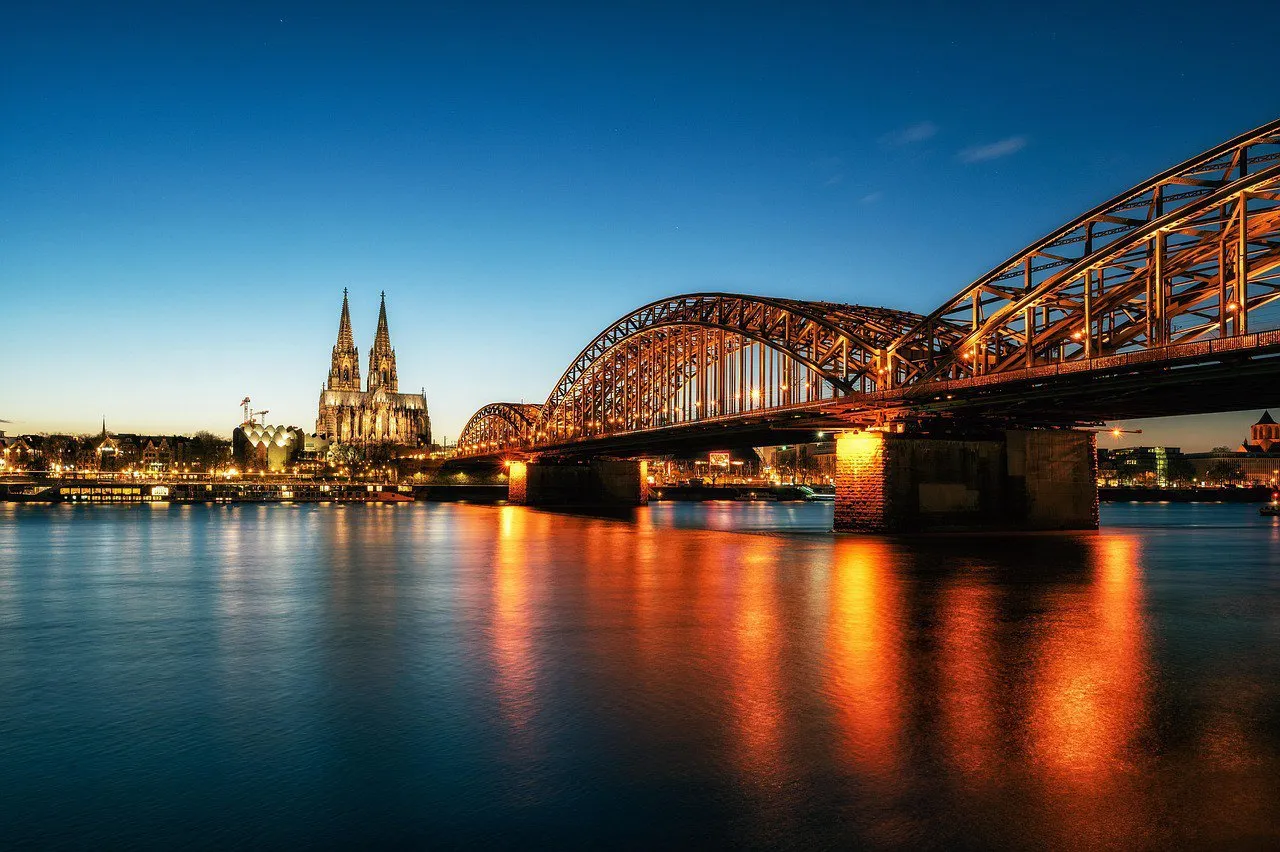 3
Trains, steel arches and padlocks accompany the crossing of the Rhine; on arrival in Deutz, the cathedral finally fits in the same photo as the bridge.
View details for Hohenzollern Bridge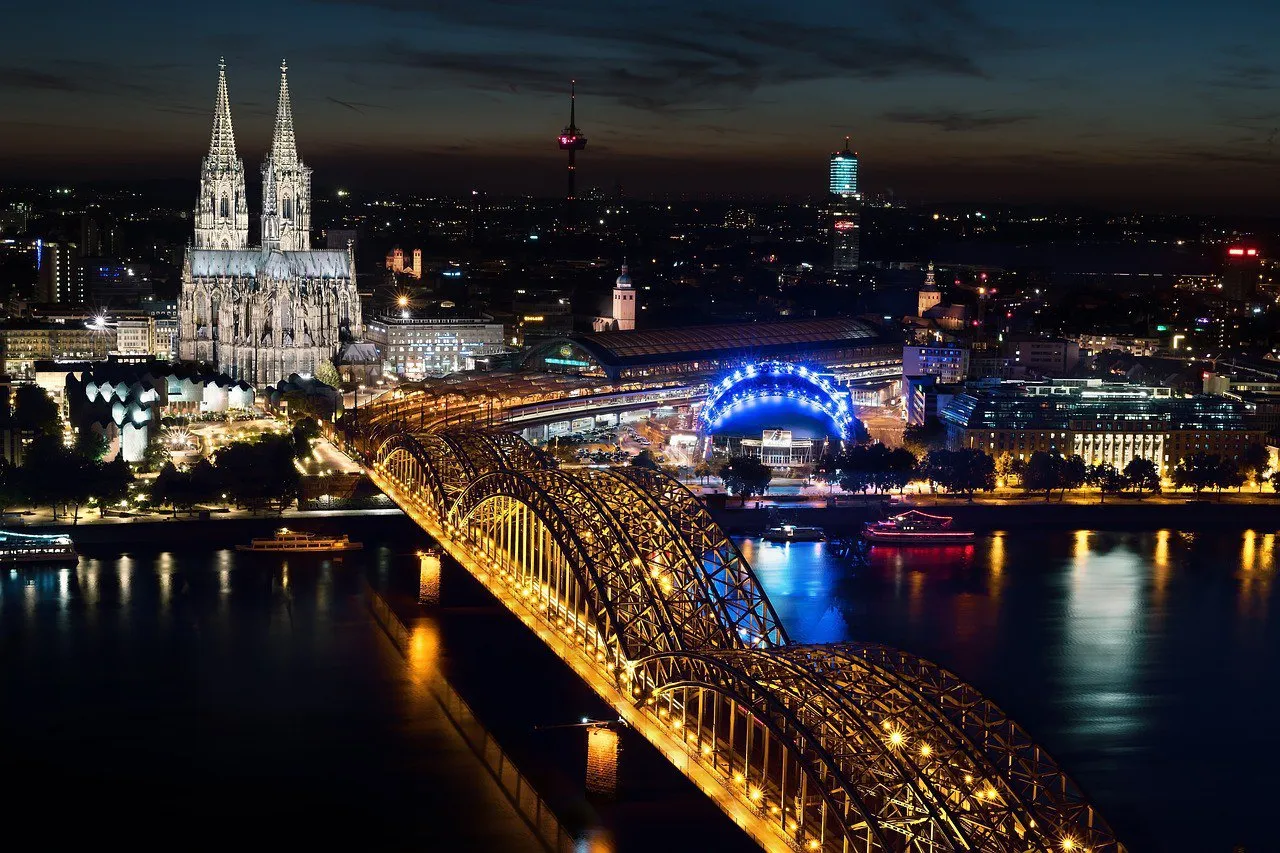 4
The Deutz viewpoint lets you look at downtown Cologne head-on, with the bridge, the cathedral and the Rhine gathered on the other side of the glass walls.
View details for KölnTriangle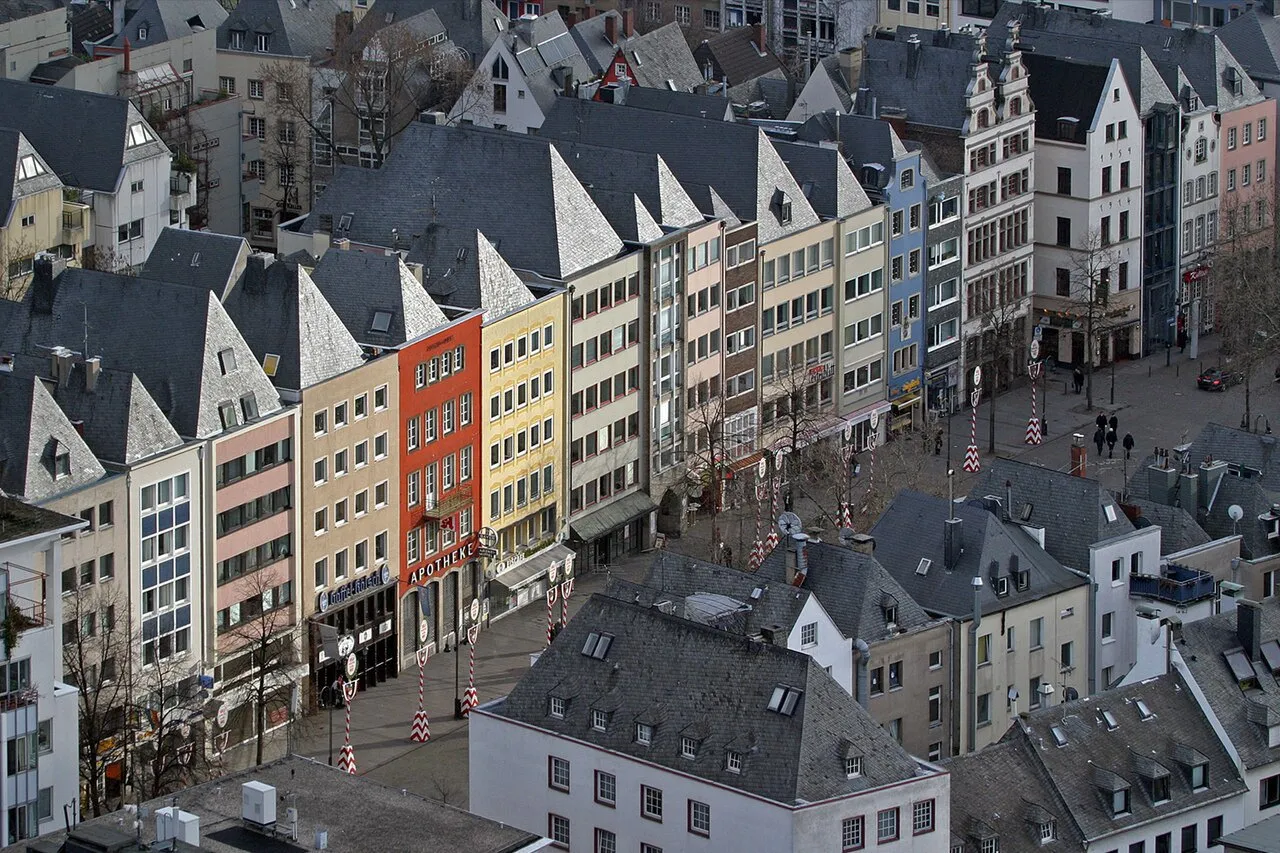 5
The Alter Markt gathers facades, brewhouse restaurants and the town hall; from there, the old town's streets lead you to the bank of the Rhine.
View details for Alter Markt and the Old Town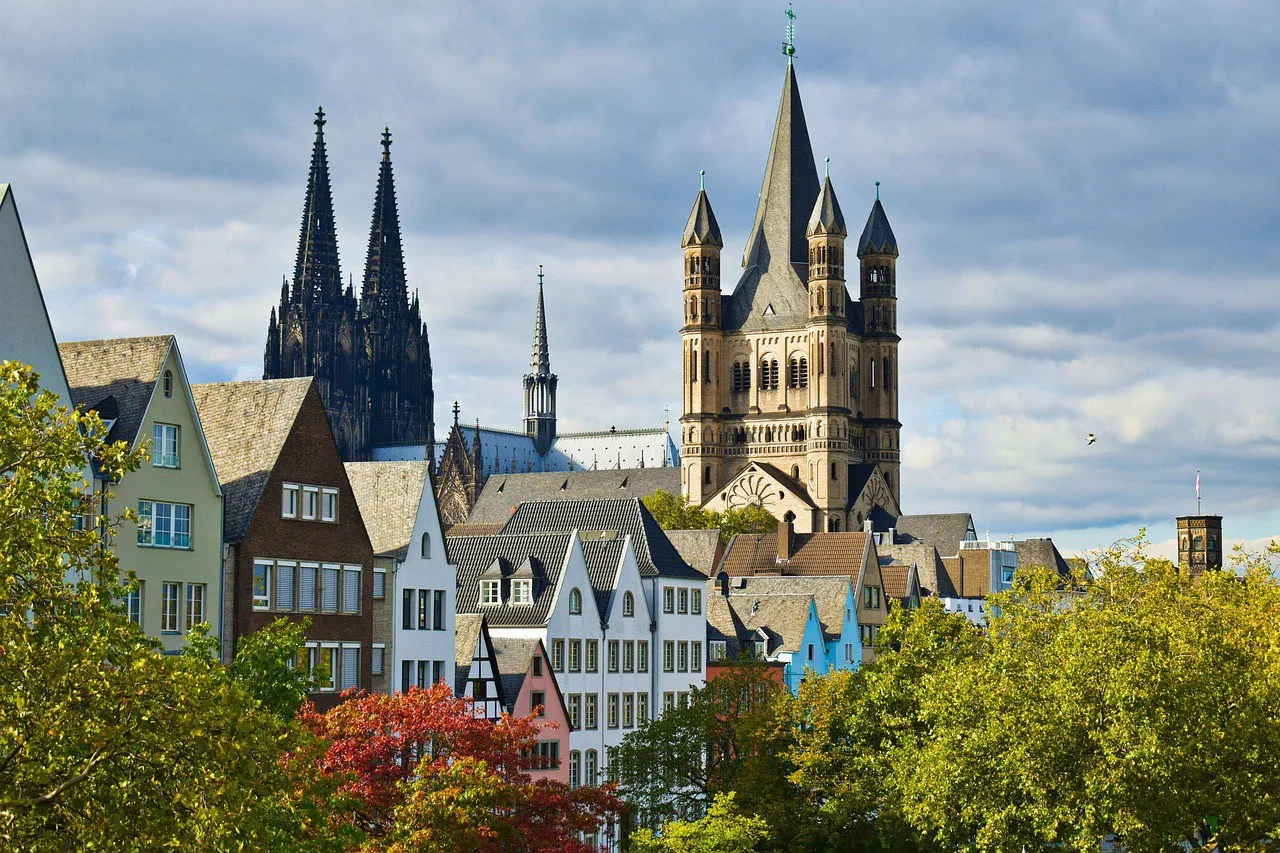 6
The sturdy tower of Groß St. Martin stands out above the old town; inside, Romanesque arches and archaeological remains change the scale of the visit.
View details for Groß St. Martin Church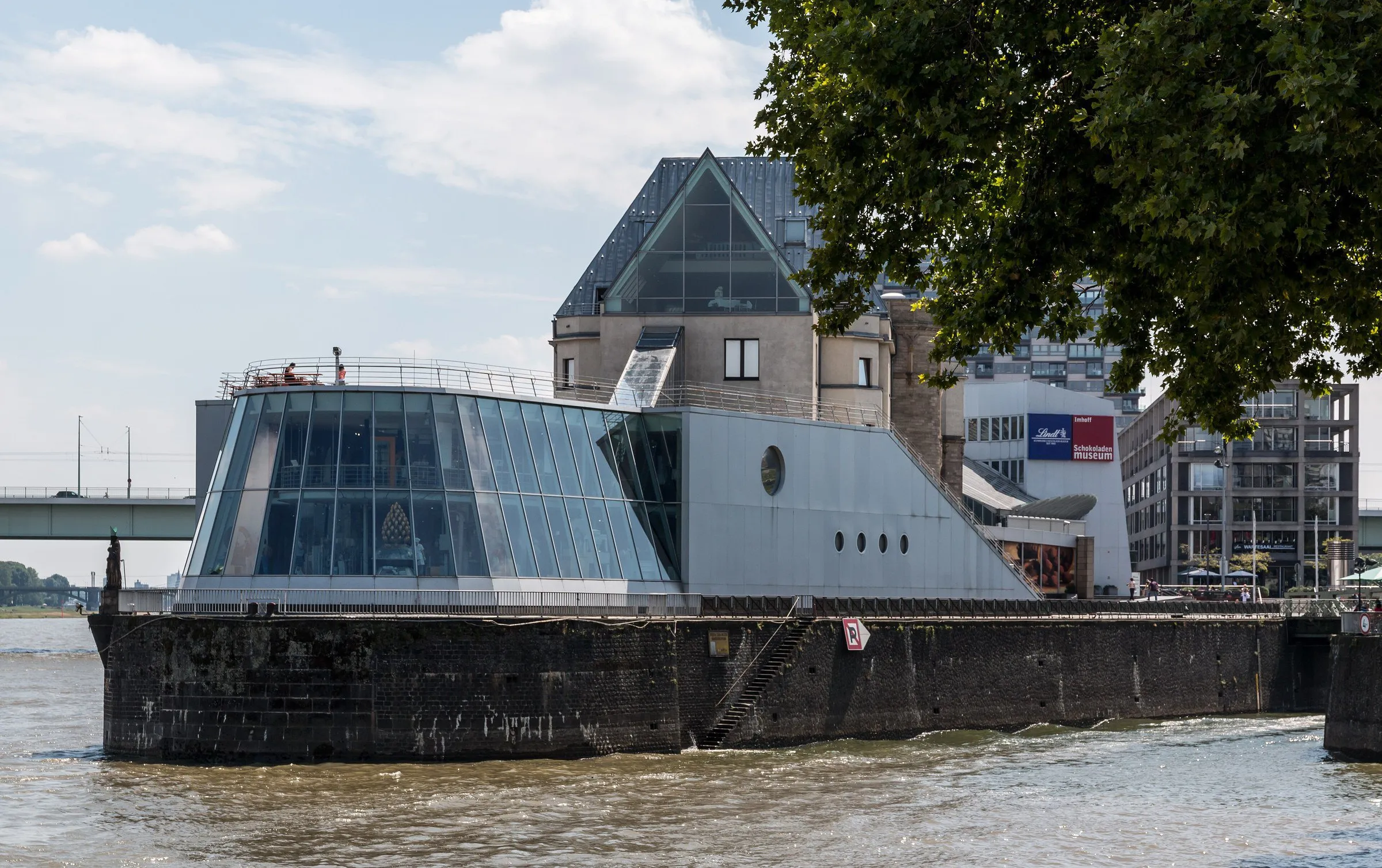 7
Cocoa, machines, a greenhouse and the famous chocolate fountain trace the ingredient's journey to the shop window, right by the Rhine.
View details for Chocolate Museum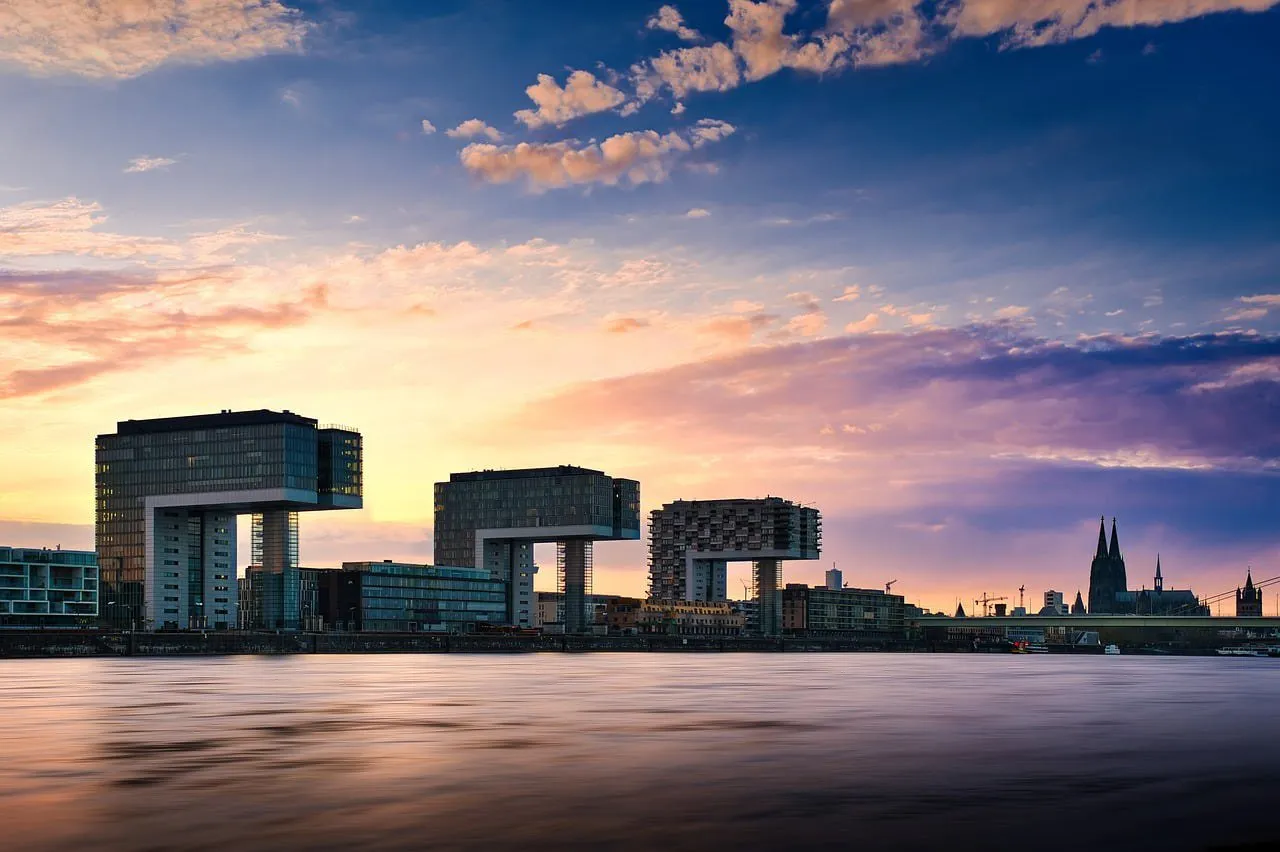 8
The old harbor mixes warehouses, preserved cranes and the Kranhäuser buildings, whose big arms seem to keep working beside the river.
View details for Rheinauhafen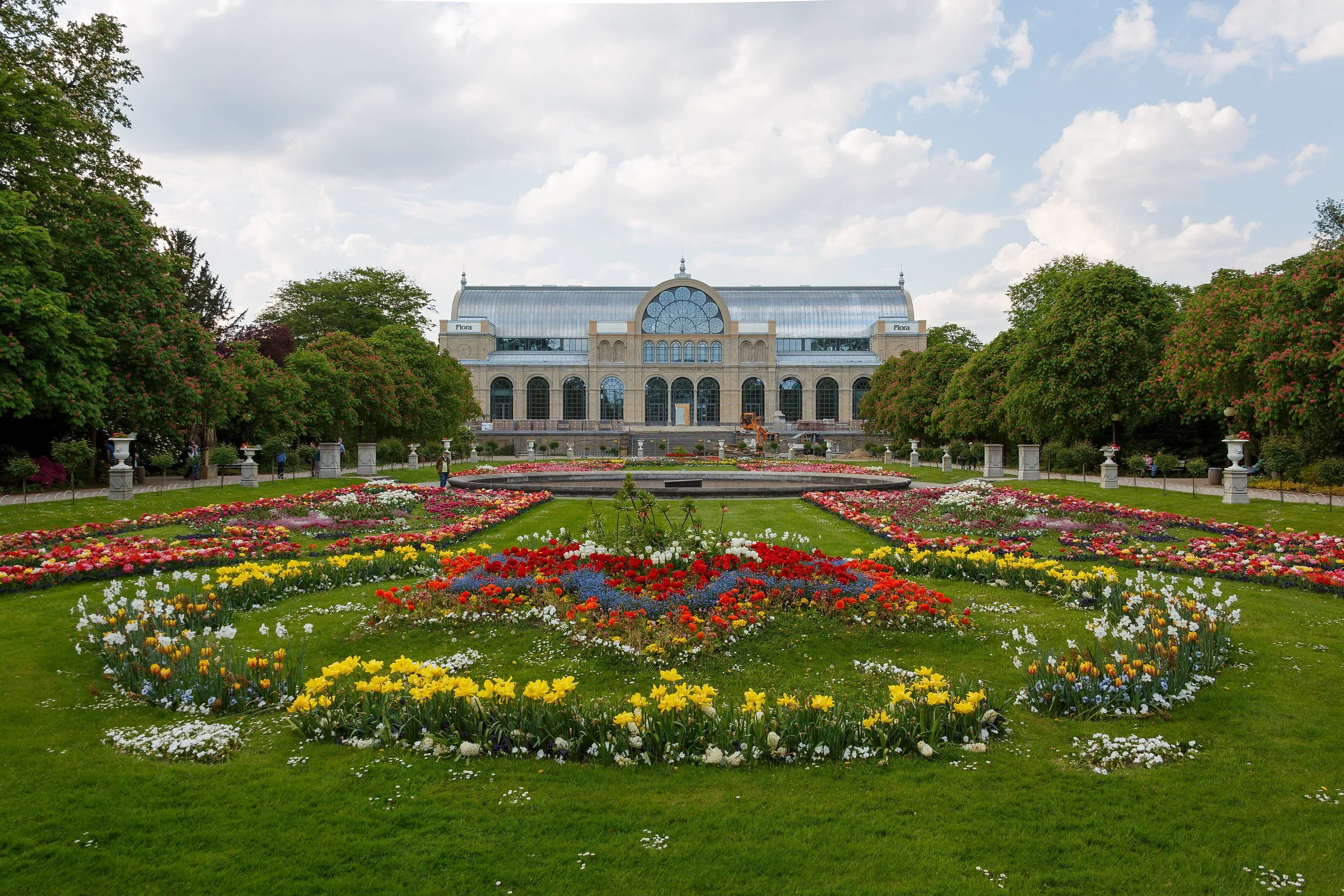 9
Formal flower beds, trees and greenhouses offer a break in the Riehl district; the garden trades downtown facades for leaves and paths.
View details for Flora and Botanical Garden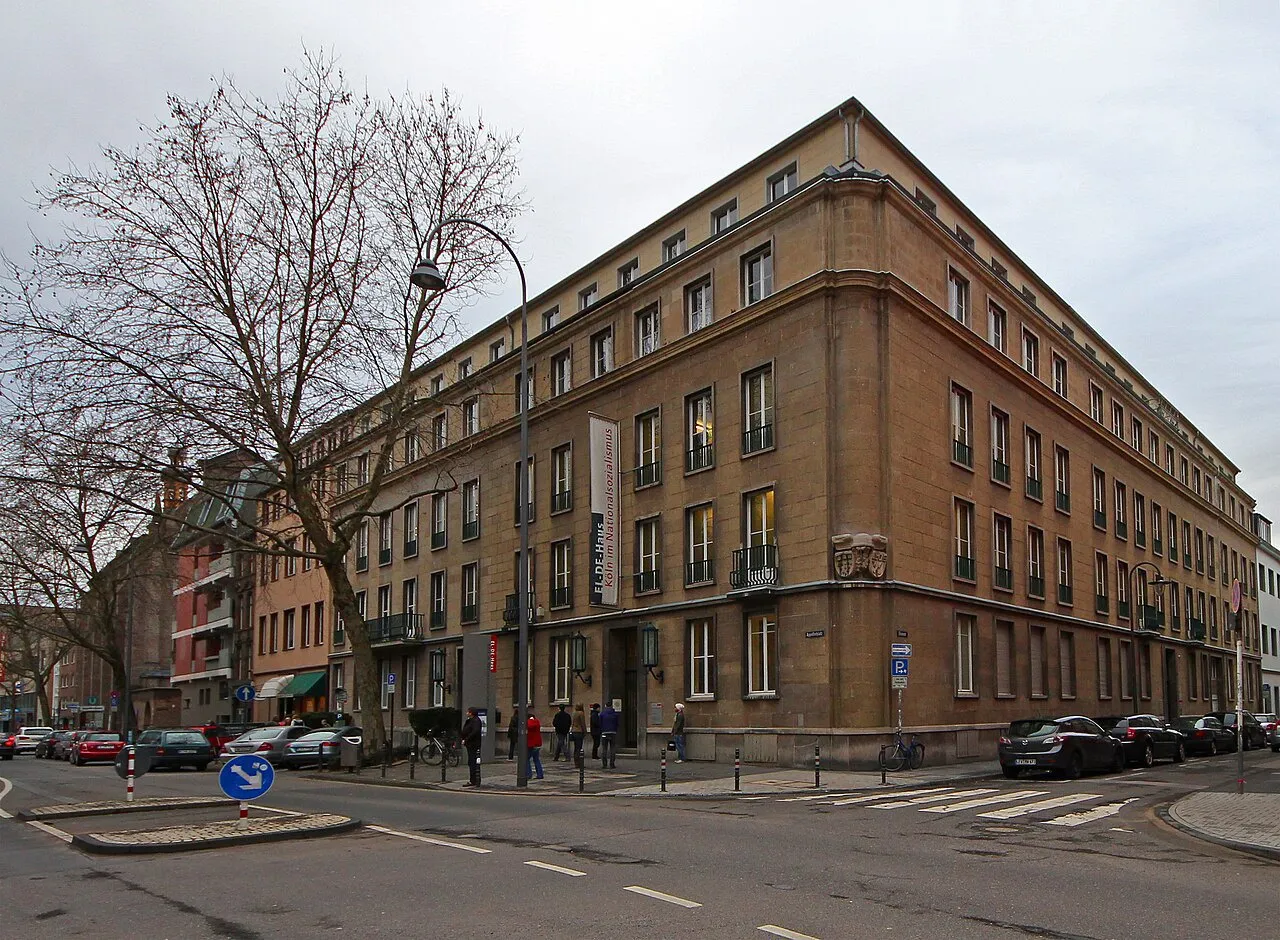 10
The former Gestapo headquarters houses a documentation center on Nazism in Cologne, with preserved cells and inscriptions left by prisoners.
View details for EL-DE-Haus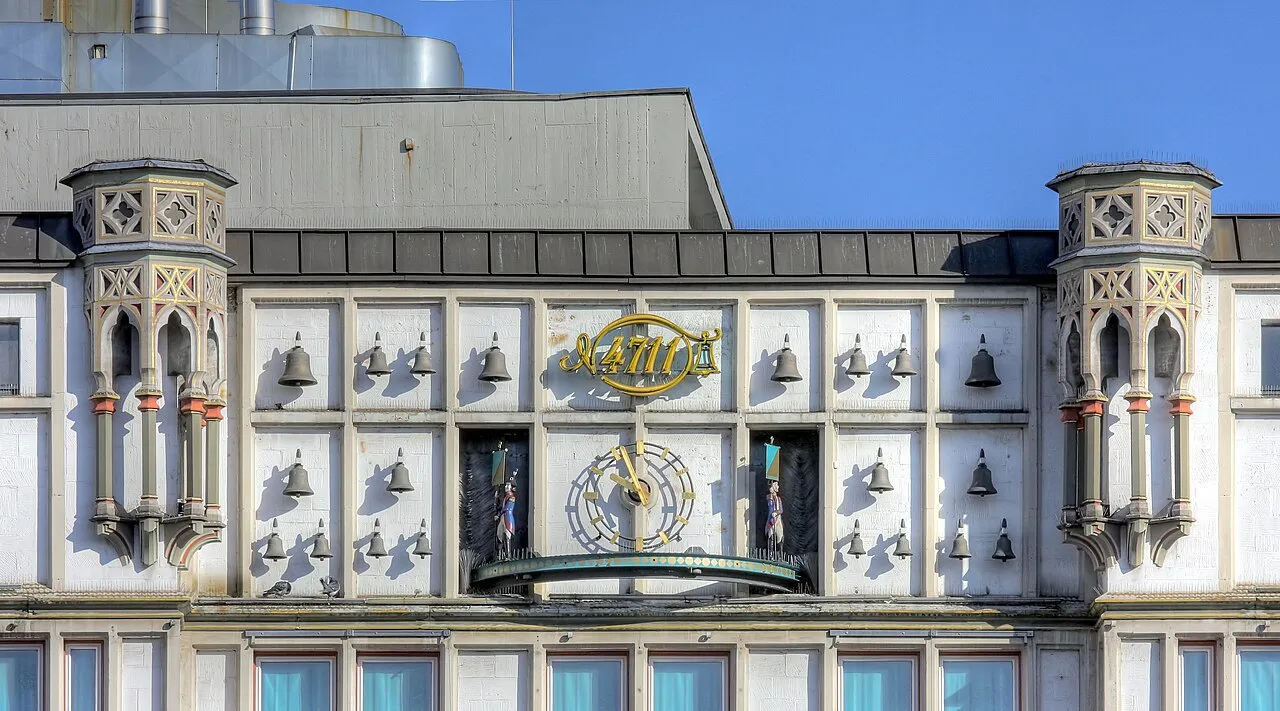 11
At the house of the 4711 brand, Cologne's link with perfume shows in the shop, the historical objects and the scent activities offered by reservation.
View details for Dufthaus 4711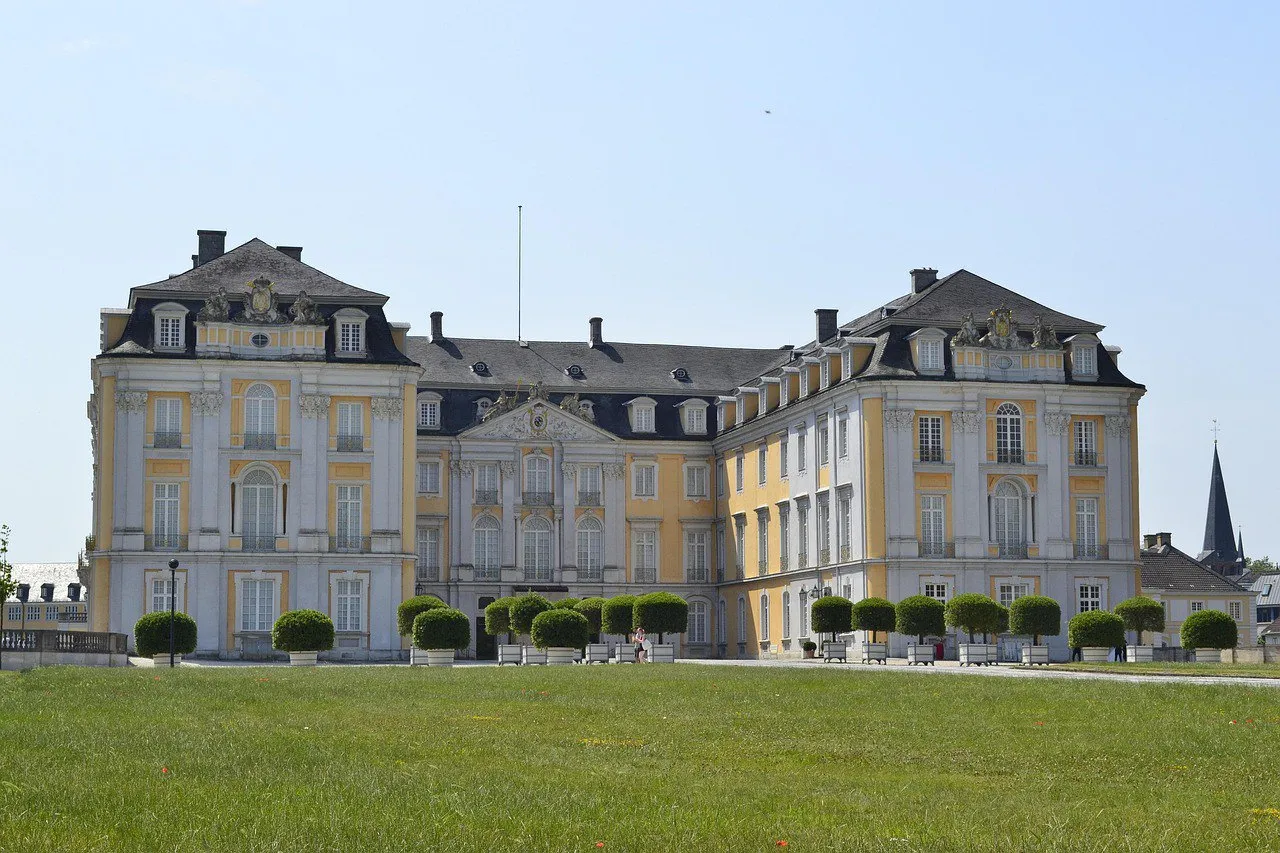 12
In Brühl, outside Cologne, Augustusburg combines Rococo rooms and formal gardens; the trip works as a dedicated day trip, with rail access.
View details for Augustusburg Palace1Leaving the station and finding this facade so close makes you want to step back onto the platform just to take it all in. The Kölner Dom brings together Gothic arches, stained glass and the shrine associated with the Three Kings; your eyes tend to run upward, but it is worth stopping at the details inside, too.
Look for Gerhard Richter's abstract window and notice how its color shifts with the light. Tourist visits have to respect religious services, and the tower requires its own planning; decide beforehand whether you want to see the interior, climb up, or do both.
2Between the cathedral and the Rhine, the Museum Ludwig changes the day's visual vocabulary. The collection brings together Expressionism, pop art, photography and works by Picasso; you can go from stained glass to Warhol without turning the transfer into yet another attraction.
Pick a few rooms to look at closely instead of trying to cover every wall. Some works and photographs may rotate between exhibitions, so it pays to check what will be on view; art lovers should set aside a generous slice of the day.
3Trains rumble past alongside you, a reminder that the Hohenzollernbrücke is still real infrastructure, even when your phone insists on treating it as a photo studio. The pedestrian path follows the steel structure and the long run of padlocks fixed along the crossing.
Walk from the Museum Ludwig side toward Deutz. Once you reach the other bank, turn around to see the bridge with the cathedral behind it; that change of position is the whole walk in miniature. Keep moving without blocking the way for people crossing.
4From the top of the KölnTriangle, the cathedral stops being a gigantic facade and becomes part of the city. The viewpoint sits in Deutz, in an office building with a triangular floor plan and curved sides, and offers a panoramic view protected by glass panels.
Access combines an elevator and a final stretch of stairs; check the conditions if that matters to you. Pick a time of good visibility and try to reduce reflections in your photos. Crossing the bridge and going up work well in the same outing, with no need to return to the center in between.
5At the Alter Markt, tables and facades do the job of slowing your stride. The square sits in the heart of the Altstadt and brings together restaurants, the Jan von Werth monument and the neighborhood of the town hall; it is a practical starting point for understanding the old town without staring at the map the whole time.
Take a turn around the square, then follow the streets toward the river. Instead of choosing the first table just because of its facade, read the menu and compare options; events and markets can change the flow and mood of the place quite a bit.
6The tower of Groß St. Martin rises above the Altstadt houses and helps you get your bearings before you even reach the door. The thick walls, round arches and bulk of the building present Romanesque architecture in a different language from the cathedral.
The church is an active place of prayer, so enter discreetly and check whether the interior is open to visitors. When available, access to the archaeological level adds another layer to the visit; it is also worth looking at the building from outside, in the small streets around it.
7The chocolate fountain tends to grab the attention first, but the Schokoladenmuseum has plenty to say beyond the urge to taste. The exhibition covers the history of cocoa, utensils, machines and stages of production; there is also a greenhouse that brings visitors closer to the plant's environment.
The museum sits at the entrance to the Rheinauhafen, so it fits well between lunch downtown and a walk among the old warehouses. Leave time for the exhibition before reaching the shop: trying to follow the whole story with your mind already on dessert makes the job a bit harder.
8At the Rheinauhafen, cranes have become an architectural idea: the Kranhäuser project large volumes over the promenade and let the sky show through underneath. The old harbor brings together renovated buildings, preserved equipment and a walk whose scenery changes as you go.
Follow the bank after the Chocolate Museum, looking at the buildings and the spaces between them. The appeal lies in the forms of the ensemble, with no obligation to go into every building; many of them are residential or office space. Pause to watch the boats and the traffic on the Rhine.
9At the Flora, the visit moves at the pace of the flower beds. The Riehl botanical garden combines different landscaping styles, trees, reflecting pools and plant collections; the central building adds a solemn facade to a stroll that can be taken without hurry.
Choose your paths according to the season and leave time to sit. The greenhouses have their own opening arrangements, so check access before counting on them for a rainy day. The garden lies outside the heart of the old town; public transport helps save your energy for the afternoon.
10The inscriptions on the cell walls bring visitors closer to the people persecuted by the Nazi regime. At the EL-DE-Haus, the former Gestapo headquarters, the NS Documentation Center combines memorial and exhibition to explain the repression and its effects on the life of the city.
This is a visit that takes reading time and emotional readiness. Take in the testimonies slowly and use the translation resources available, where offered; the experience can be heavy for children. When you leave, allow a gap before your next activity instead of chaining everything together like a to-do list.
11Scent enters the itinerary on the Glockengasse, where the Dufthaus 4711 houses the brand's shop and activities tied to eau de cologne. The stop helps explain why the city's name also appears in the world of perfumes; even the house fountain plays a part in the story.
Dropping in to see the shop is different from a historical tour or a perfumery workshop. Those activities depend on their own schedule, language and booking. If you only want to look at the facade and browse the products, keep the stop short; to create a fragrance, set aside a bigger block.
12The staircase at Augustusburg makes arriving upstairs feel like an event. Clemens August's summer palace stands in Brühl, outside Cologne, and brings together Rococo interiors and gardens; seeing the halls depends on the guided tour and the opening calendar.
Take a regional train to Brühl, with a short walk to the complex, or a tram to Brühl-Mitte, with a longer walk. Set aside the fourth day as a day trip, with no overnight stay required, and check current connections before setting out; the seasonal closure of the interior can change the point of the outing.
Do the old town and the Rheinauhafen on foot and use the KVB network for the trip to the Flora; check the journey planner for the right ticket and its conditions of use before boarding.
Cologne Bonn airport has a railway station right by the terminals; check whether your train goes to Köln Hbf or to Messe/Deutz, because they are different stations.
Alternate museums with walks on the bridge, squares and gardens; work out which tickets you plan to use before deciding on any tourist pass.
Bring rain protection and a layer that's easy to take off; outdoor plans work best when you can swap them with a museum depending on the forecast.
In a traditional brewhouse, cover your glass with the paper coaster when you are done with the rounds; if you don't drink alcohol, you can also pick the restaurant for the food.
Keep documents and phone in zipped compartments when moving through the central station and while taking photos on the bridge; avoid leaving luggage loose while you look for the best angle.
Brewhouse cooking suits long days of walking along the Rhine: bread, cheese, potatoes and meat dishes arrive with no concern for delicate portions. Choose a Brauhaus for its mix of menu and atmosphere, and ask for help with the names; the Halver Hahn is a good reminder that translating everything literally can end in a very different lunch from the one you imagined.
Local beer served in narrow glasses called Stangen; in traditional houses, watch out for the next round.
Bread with cheese, despite a name that suggests chicken: the surprise fits entirely on the plate.
A combination of potato, apple and blood sausage, with versions that vary by kitchen.
Marinated, roasted beef found on traditional Rhineland menus; check the side dishes and the house's ingredients.