 1
Palaces and history
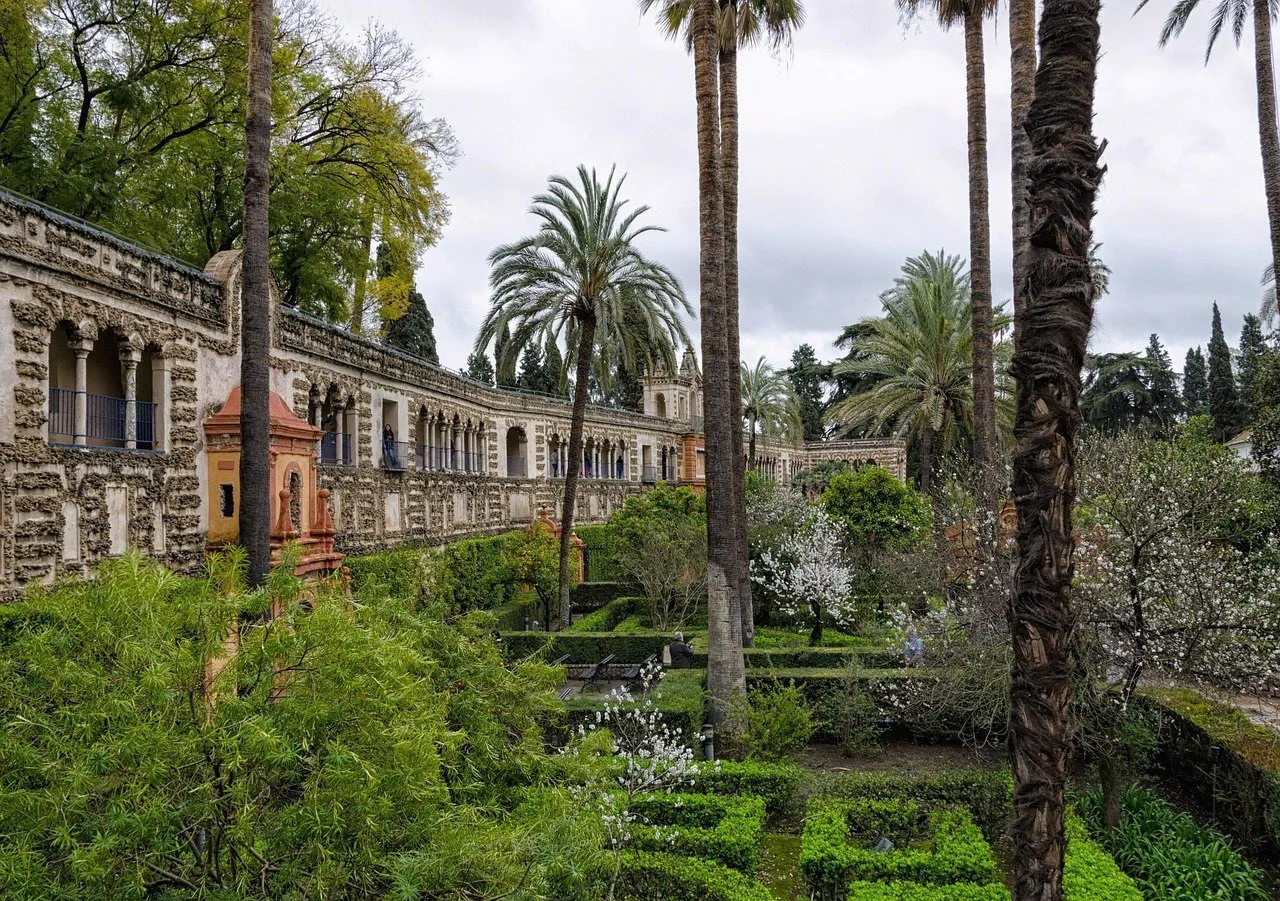
Royal Alcázar of Seville
Courtyards, tiles, halls and gardens of a royal palace still in use, where different rulers left their mark without agreeing on a single decorating style.
View details for Royal Alcázar of Seville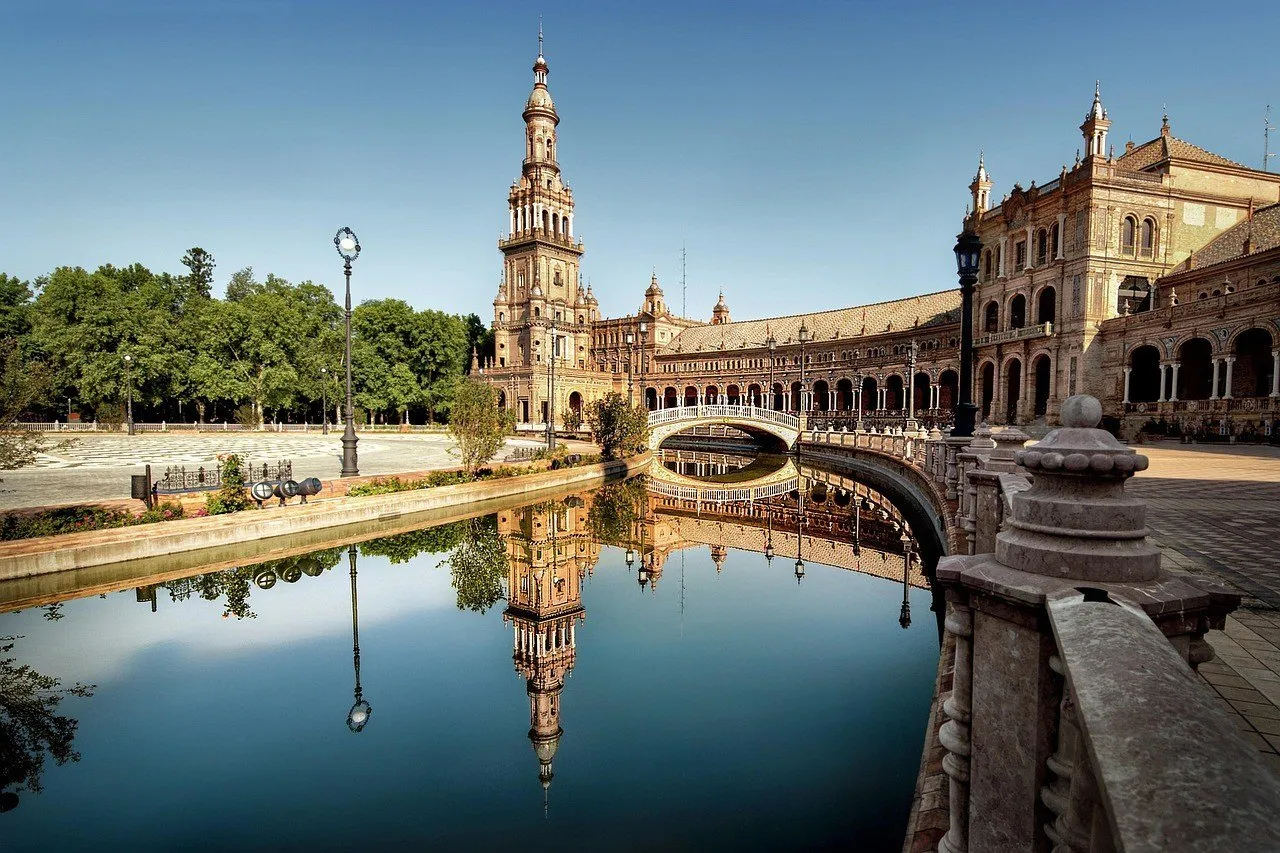
Spain
You leave the lanes of Santa Cruz, spot the Giralda above the rooftops and end the day across the Guadalquivir, in Triana. In Seville, even the walk to a tapa makes a good outing.
In Santa Cruz, a narrow street opens onto a square with orange trees; a little further on, the Giralda rises above the rooftops. Seville works well like that, alternating small spaces with buildings that fill your entire view. The Royal Alcázar, the Cathedral and the Archivo de Indias form the monumental core recognized by UNESCO. Save time for the interiors: stopping at every door and going into none is a way to come home with a collection of façades and plenty of unfinished business.
Split the trip between the historic center, the Plaza de España complex with María Luisa Park, and the banks of the Guadalquivir. Cross over to Triana, where ceramics, bars and flamenco help change the pace of the walk. Summer is very hot: plan walks for early in the day and leave breaks between visits. Spring and autumn tend to make life easier for anyone who wants to walk, although a pause in the shade is still a good idea.
The Giralda began as a minaret and became a bell tower. The climb keeps ramps inside, with steps on the final stretch: fewer stairs does not mean you can leave your legs at home.
The Plaza de España was created for the Ibero-American Exposition of 1929. Its tiled benches turn the Spanish provinces into a sequence of scenes, maps and coats of arms.
The Archivo de Indias occupies a former merchants' exchange. The building that once housed business now keeps the records of the Spanish colonial administration.
1Courtyards, tiles, halls and gardens of a royal palace still in use, where different rulers left their mark without agreeing on a single decorating style.
View details for Royal Alcázar of Seville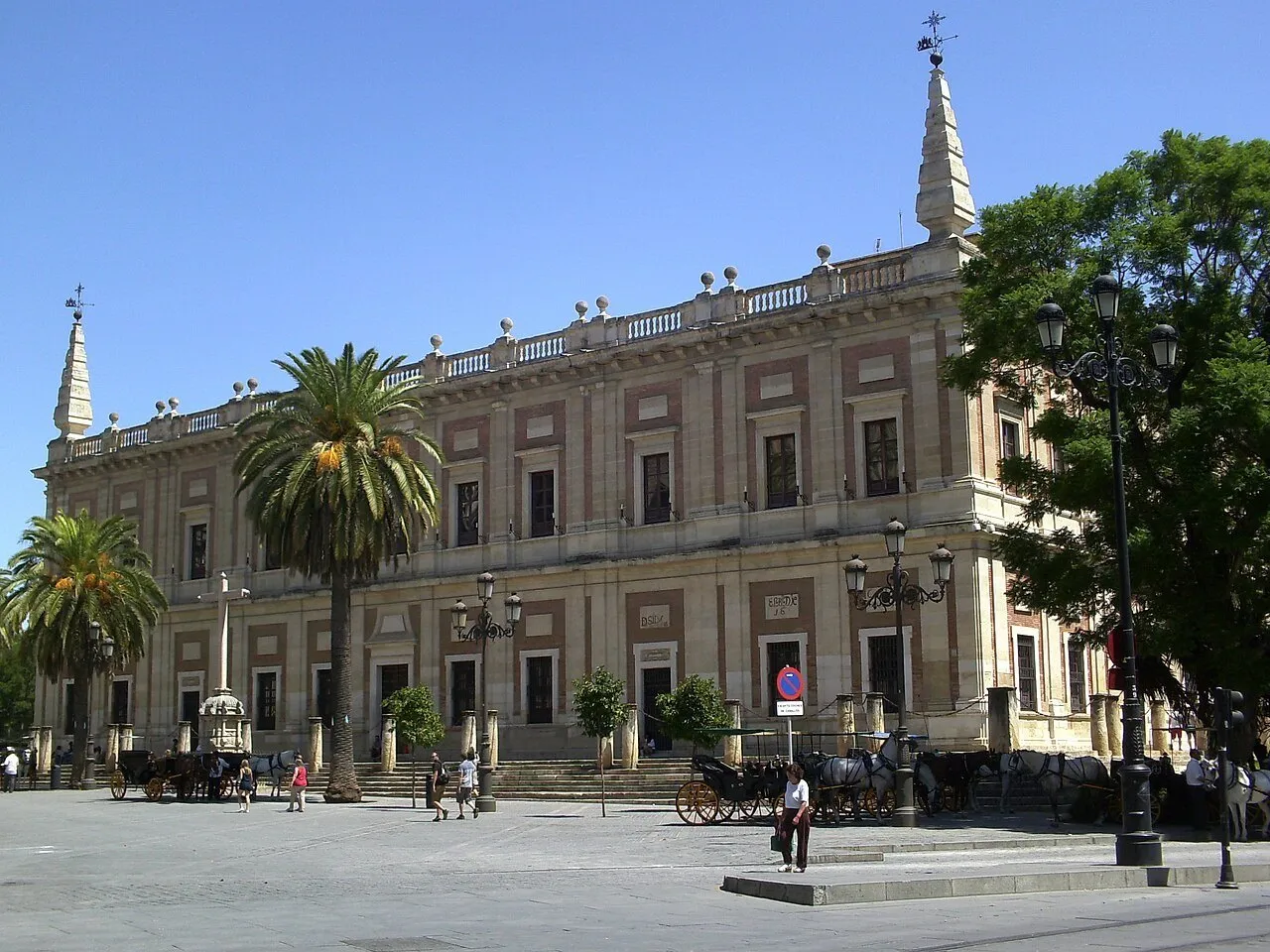 2
Between the Cathedral and the Alcázar, the former merchants' exchange holds documents about the Spanish colonial empire and offers another reading of the city's history.
View details for General Archive of the Indies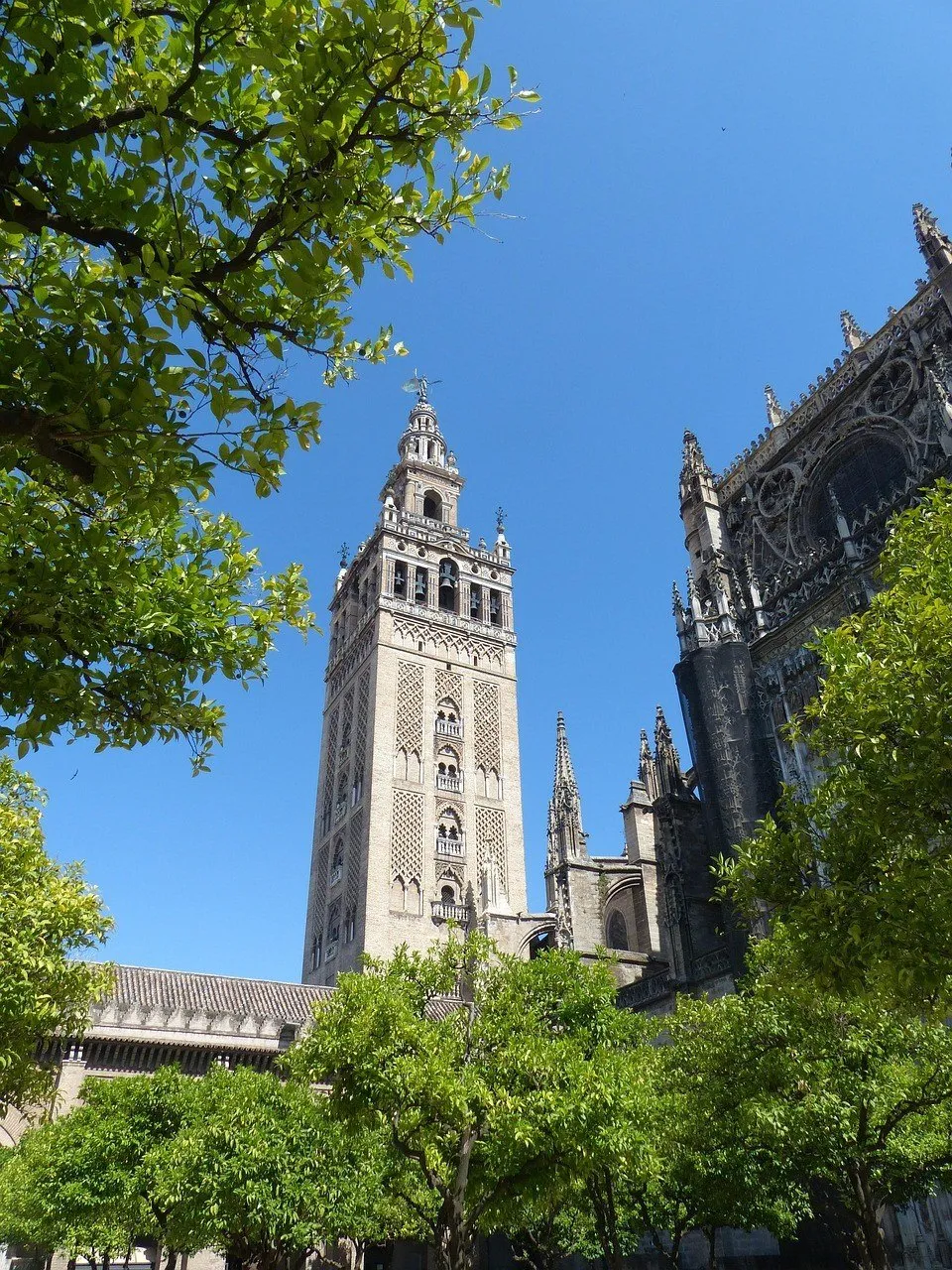 3
A vast Gothic church and a bell tower that began as a minaret: the Cathedral and the Giralda show different layers of Seville in a single visit.
View details for Seville Cathedral and Giralda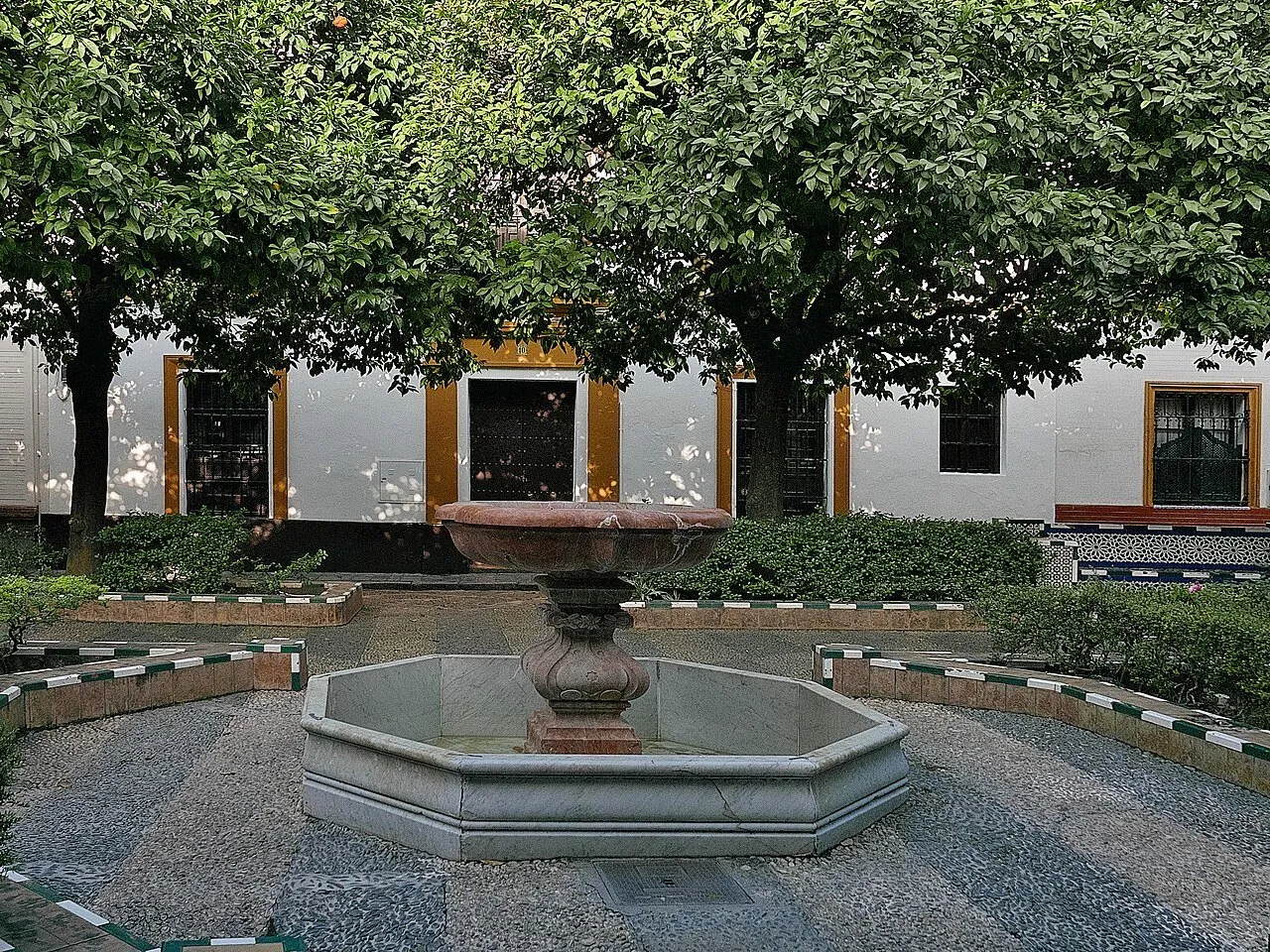 4
Lanes, courtyards and squares with orange trees fill part of Seville's former Jewish quarter, in a neighborhood to explore slowly between the center's big visits.
View details for Santa Cruz Neighborhood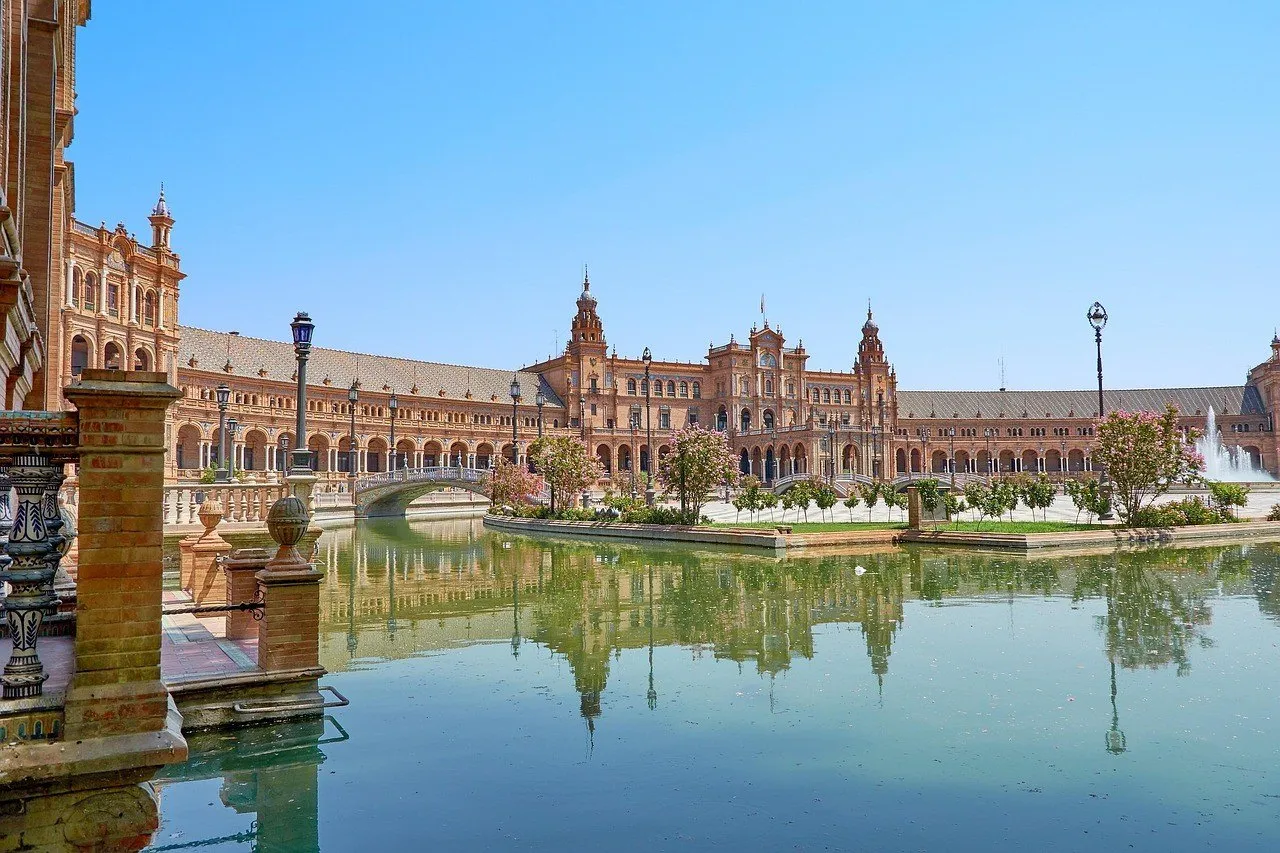 5
A semicircular building, a canal with bridges and tiled benches turn the square created for the Ibero-American Exposition into a visit full of details.
View details for Plaza de España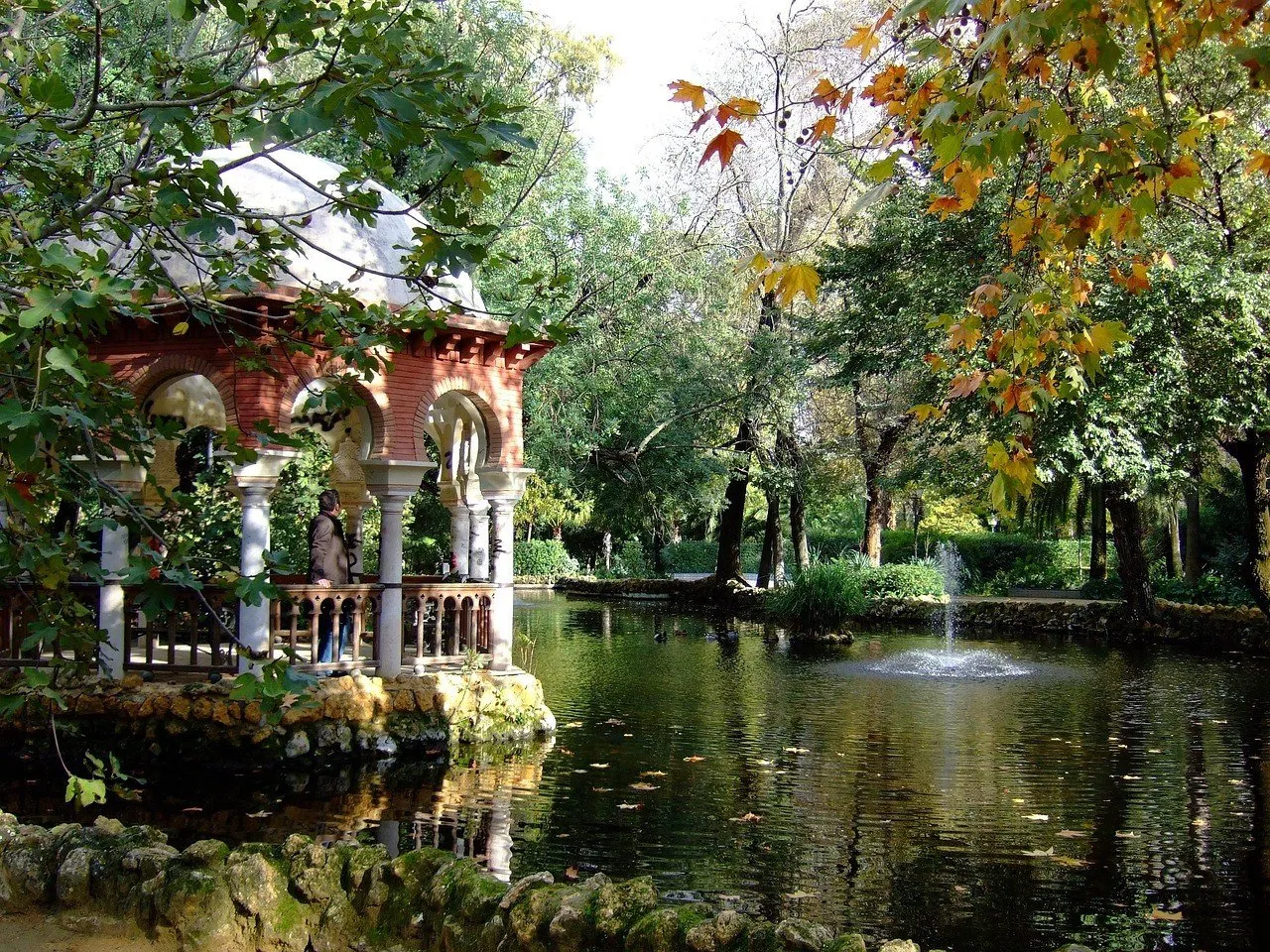 6
Former private gardens became a park of fountains, glorietas and tree-lined paths, with room to rest your eyes after the Plaza de España.
View details for María Luisa Park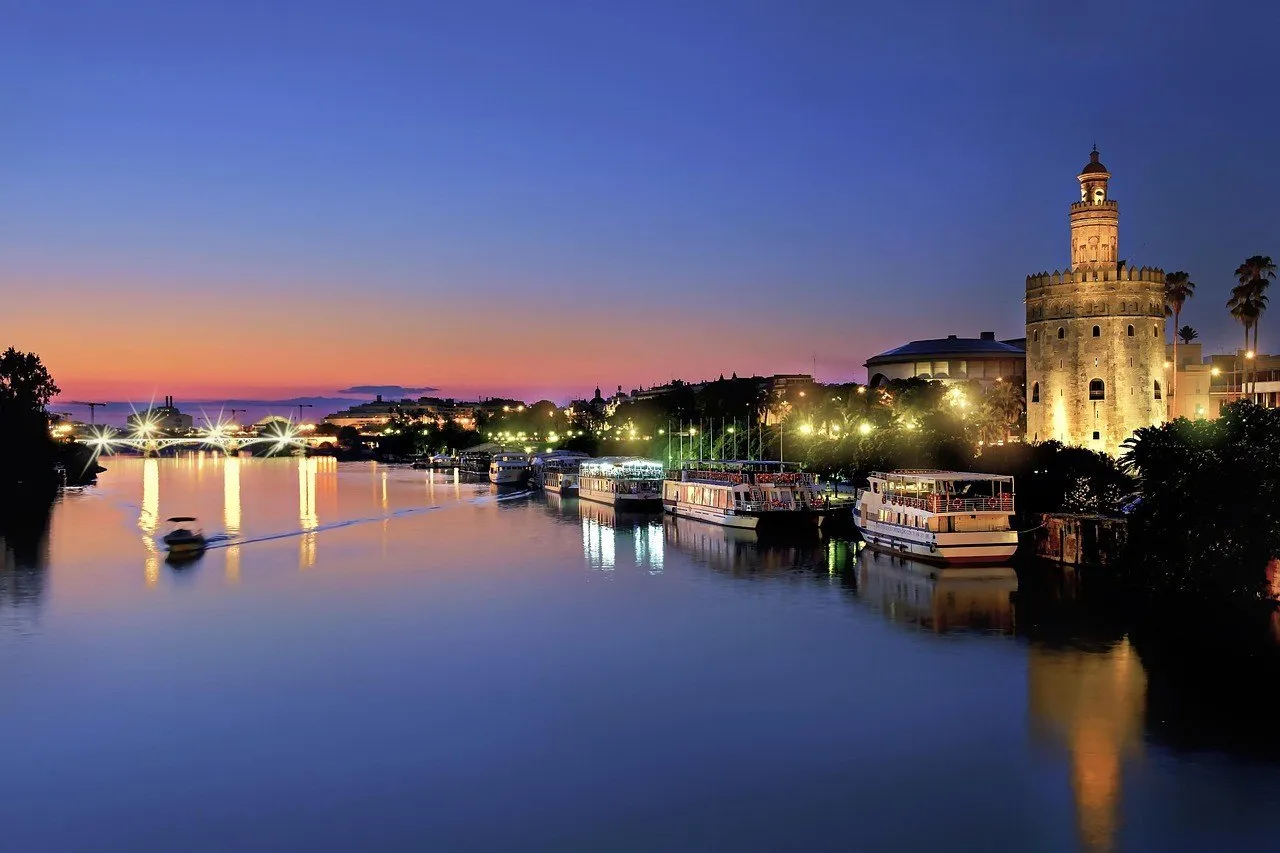 7
The defensive tower by the Guadalquivir recalls Seville's bond with the river and houses a maritime museum, making a good stop between the gardens and Triana.
View details for Torre del Oro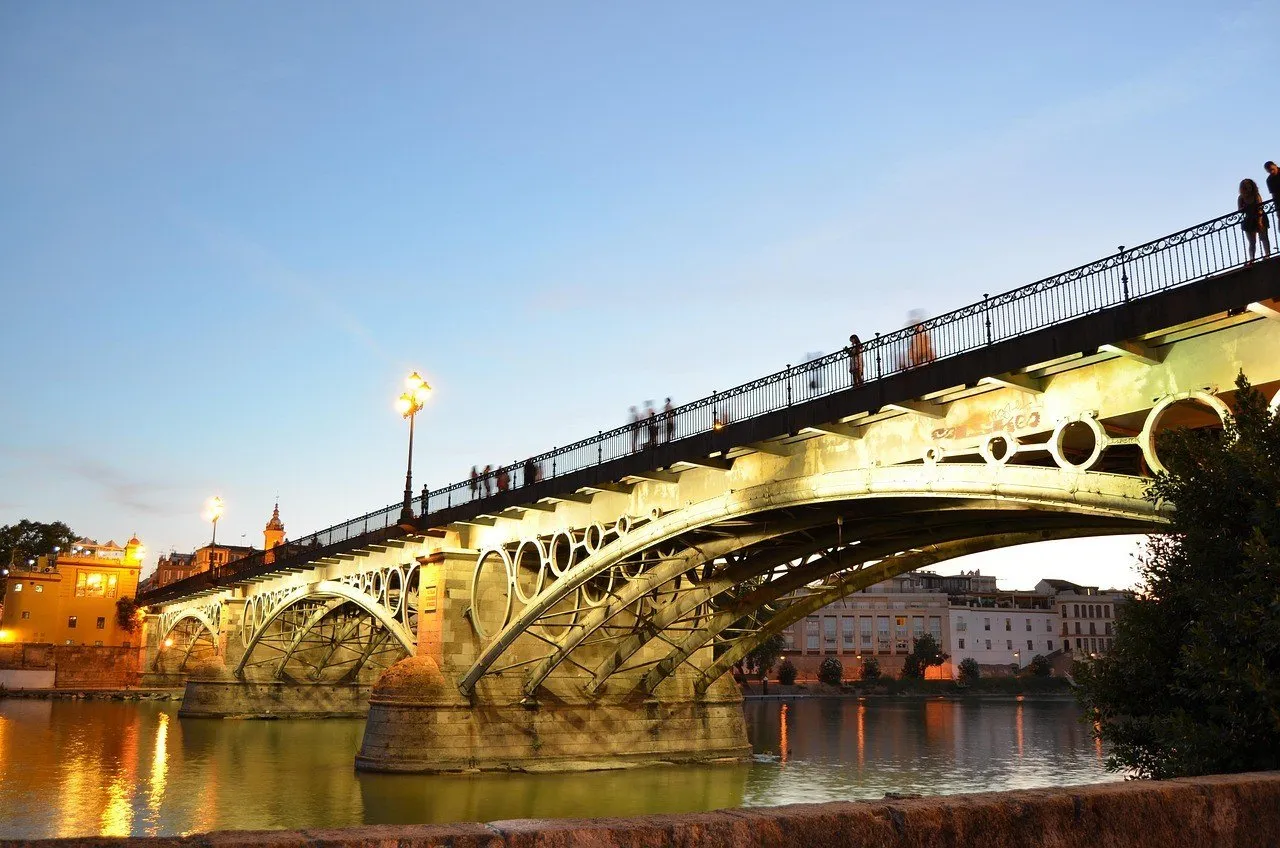 8
Across the Guadalquivir, Triana offers riverfront façades, a ceramics tradition and flamenco venues, with good reasons to extend your walk.
View details for Triana Neighborhood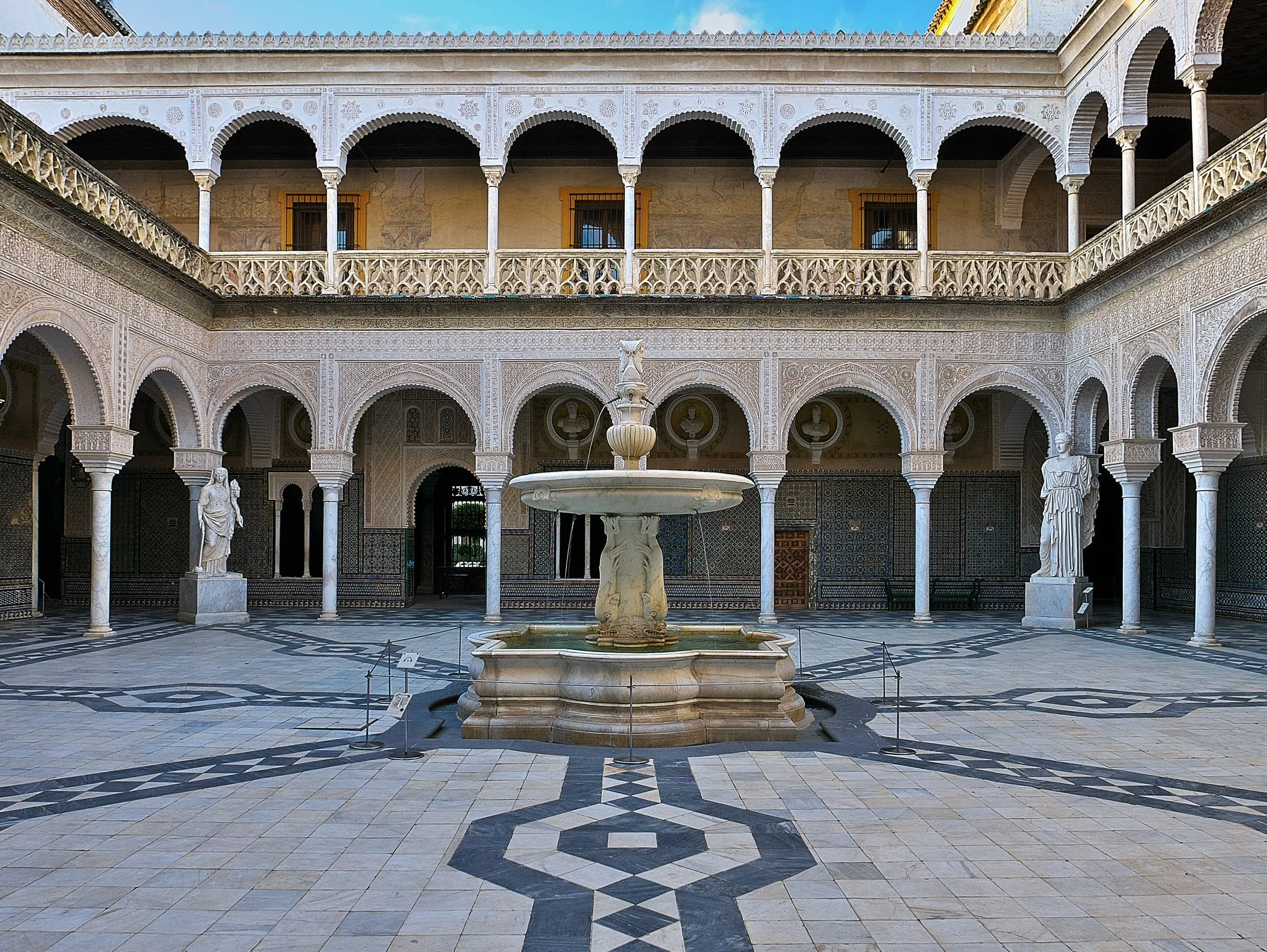 9
A palace where courtyard, tiles and plasterwork bring together Mudéjar, Gothic and Renaissance elements, shifting the focus to the aristocratic residence.
View details for Casa de Pilatos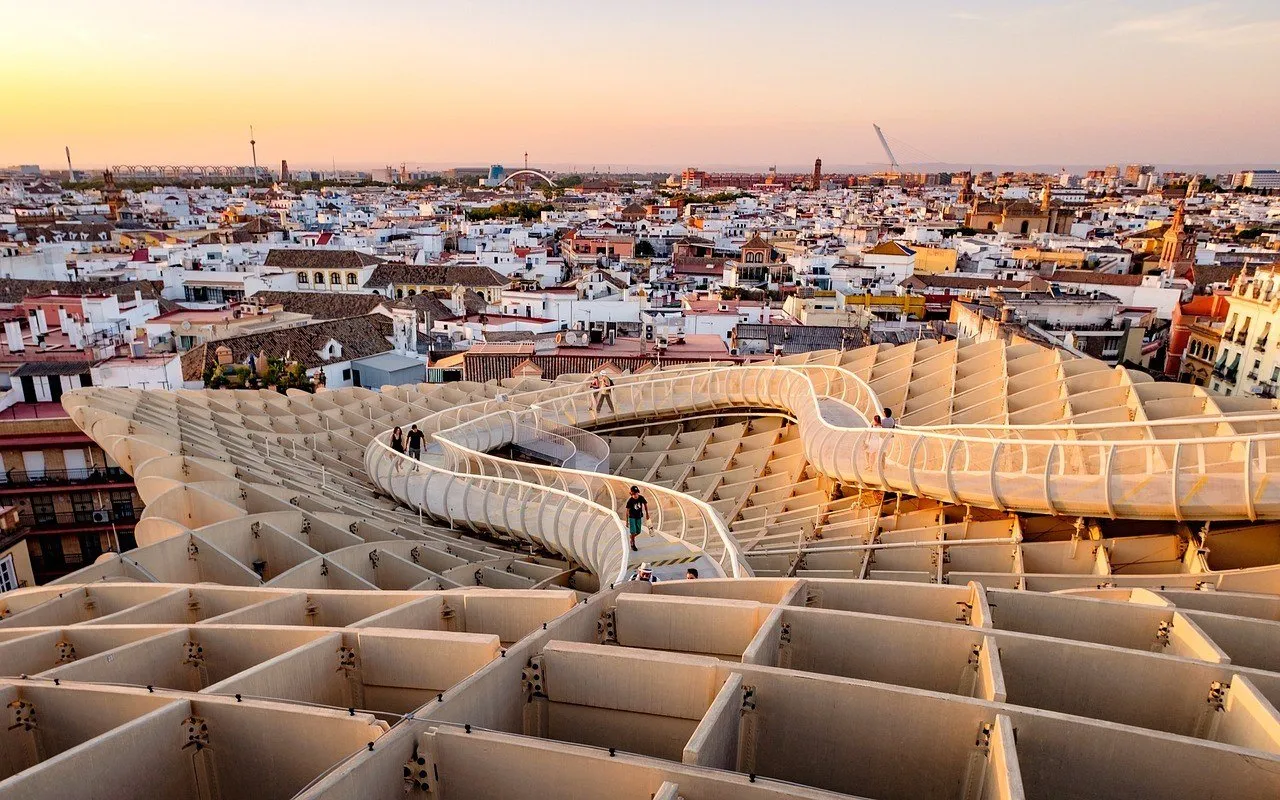 10
The undulating roof over the Plaza de la Encarnación has raised walkways and a viewpoint for watching Seville's rooftops, in a language very different from the Giralda's.
View details for Setas de Sevilla1The problem here is deciding where to look: at the tile patterns, at the plasterwork or at the reflections in the courtyards. The Alcázar brings together buildings from different periods, and its Mudéjar palace helps explain how techniques from the Islamic tradition were used under Christian rulers.
After the halls, slow down in the gardens. Avoid squeezing the visit between other commitments: the complex rewards you more when you can sit and watch. Ceremonies and official activities may affect access to certain areas.
2The name may suggest a stop only for researchers, but the Archive of the Indies also welcomes visitors interested in the building and the exhibitions. In the former merchants' exchange, the subject goes beyond the architecture of Seville and includes trade, voyages and colonial administration in the Americas.
The temporary exhibitions help give the paperwork a human scale, although the documents on display vary. Fit the visit in between the Cathedral and the Alcázar, without expecting to see the whole collection: the tourist area presents selections from this history.
3Looking up becomes the main activity inside the Cathedral: the Gothic naves make visitors forget the map on their phone for a moment. The complex holds the tomb of Christopher Columbus and incorporates the Giralda, a former Almohad minaret turned bell tower. The change of function is still visible in the tower's architecture.
The climb combines ramps and a final stretch of steps, up to a view of the rooftops. Save some breath; if you prefer to stay in the church, you can focus your visit on the chapels. Religious services may change the tourist route.
4The map looks simple until the first fork. Santa Cruz preserves part of the layout of the former Jewish quarter, with narrow streets, white houses and small squares that change the light of the walk. The Callejón del Agua and the Plaza de Doña Elvira make good reference points to start with.
Look at a fountain or a façade without the mission of finding every famous alley. The neighborhood sees heavy tourist traffic and is still a place where people live: keep your voice down and photograph private courtyards only with permission.
5From a distance, you notice the size; up close, you start to notice the tiles. Designed by Aníbal González for the Ibero-American Exposition of 1929, the Plaza de España combines brick, arcades and ceramics in a semicircular ensemble. The canal and its bridges add curves to a place that already offers plenty of walking.
Walk along the benches dedicated to the Spanish provinces and compare their scenes and maps. Combine the visit with María Luisa Park, next door. Events may change access to the square; check the schedule before you go.
6After the monumental scale of the Plaza de España, step onto the park's paths and look for the smaller details: a fountain, a bench, a bend among the trees. The land belonged to the gardens of the San Telmo Palace and was redesigned by Jean-Claude Nicolas Forestier to become a public space.
The Glorieta de Bécquer and the Fuente de las Ranas help you find your way around. Set aside a real break here, especially in the heat, with room to choose the shadiest path, without turning rest into a contest of steps.
7On the bank of the Guadalquivir, the Torre del Oro seems to pose for passersby, but its original function was far less contemplative: it was part of the city's defense system. It was connected by walls to other structures and helped protect access to the Arenal, an area tied to port activity.
Today the interior houses a maritime museum. Even if you choose only the exterior, notice the relationship between tower, riverbank and city: the river explains much of Seville's history. Combine the stop with a walk along the waterfront.
8Crossing the Guadalquivir changes the framing of Seville: from Calle Betis, the view turns to the opposite bank, with the Cathedral and the Torre del Oro on the horizon. But Triana deserves more than a look-back photo. The ceramics tradition shows up in shops, façades and spaces dedicated to the craft.
If you want to see flamenco, look up the schedules of peñas and tablaos. The visit makes more sense when you alternate the river view with the neighborhood's streets and bars, instead of heading back as soon as the photo is done.
9Tiles on the lower part of the walls, plasterwork above, arches and columns around the courtyard: the Casa de Pilatos asks you to read the building in layers. The Renaissance façade incorporates Gothic elements, while the courtyard mixes Mudéjar and Plateresque references. The result helps you see how these repertoires coexist in Sevillian architecture.
After the Alcázar, compare the aristocratic residence with the royal complex, paying attention to the details. Go with time for the courtyard and check your ticket type to know exactly which spaces you will be able to visit.
10The shape explains the nickname: seen from the square, the Setas look like enormous mushrooms, with a lattice that draws shade on the ground. Up top, the curving walkways lead visitors to look at the city from different angles. It is a deliberate change of scenery after the palaces and religious buildings.
Use the view to locate the Giralda and recognize the center you have already covered. The complex offers audiovisual experiences, depending on the type of visit. If the rooftops are your priority, choose the time by the light and check the ticket before buying.
Seville's airport is connected by the EA bus line. Check the route and the most convenient stop for your accommodation with TUSSAM; fares and schedules should be checked closer to your trip.
Seville's summer is dry and very hot. Concentrate your walks at the start and end of the day, bring water and leave a long pause in the middle; in spring and autumn, also bring a light layer for the evening.
Start with the Alcázar and Cathedral tickets. Spread the other stops around those time slots, with room for lines and lunch; reservations that are too close together turn the courtyards into a rushed walk-through.
On menus, tapa usually means a small portion and ración a larger portion to share. Check prices and sizes before ordering: trying things little by little helps you get to know Sevillian cooking without crowding the table all at once.
In Santa Cruz and Triana, keep passages clear and avoid photographing private interiors without permission. Mind the volume of your conversation at night and, in busy areas, keep your phone and documents secure.
Lunch and dinner tend to happen later than in many other countries. Ask the restaurant about kitchen hours and check the opening days of attractions; a monument with religious services or a space hosting events can change the schedule.
In Seville, the small size of the tapa helps you build a meal along different paths: a plate of spinach with chickpeas, a filled roll, something cold for the heat. Order little by little and check whether the portion is individual or for sharing. Lunch can start at the bar's tiles and end in a debate over who ordered the last tapa of pringá.
Spinach with chickpeas, a traditional combination of Sevillian cooking that puts the spoon to work between one outing and the next.
A small roll filled with the mix of meats and sausages from the stew; compact in size, not very discreet about the hunger it solves.
Potatoes served cold, dressed with olive oil, onion and vinegar, with variations depending on the bar; a good change of pace between hot dishes.