About Estoi Palace
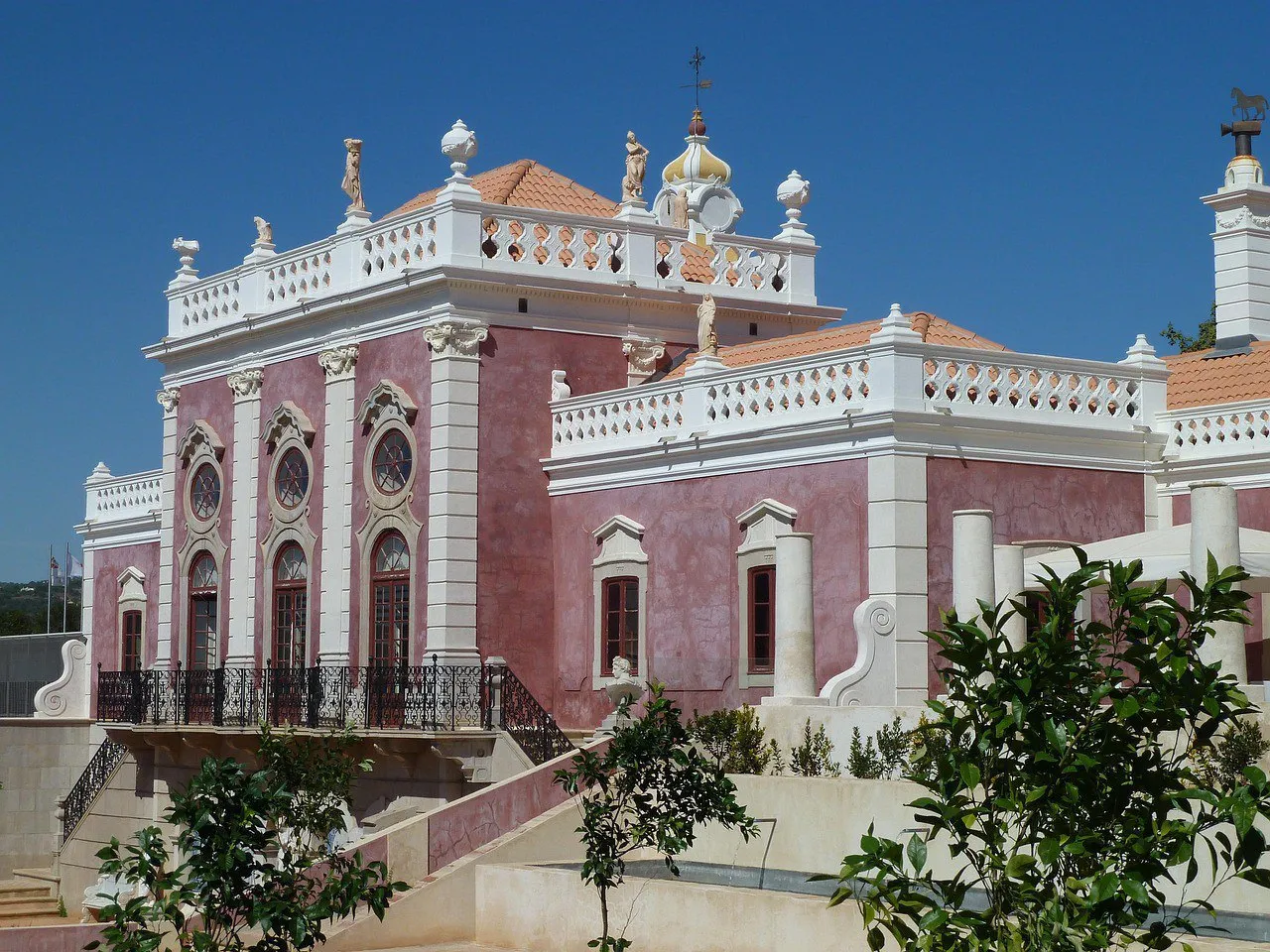
Estoi Palace took more than half a century to finish. Work began in the 1840s under Fernando de Carvalhal e Vasconcellos, who died in 1847; the property passed through other hands until it was bought in 1893 by José Francisco da Silva, who completed it in 1909. The result mixes Italian Baroque, Rococo and touches of Art Nouveau, all painted in a pink you won't forget.
The best part is outside. The gardens descend in three levels, with statues, busts, a Carrara marble fountain and tile panels in bright colors and in blue and white. Since 2009 the palace has operated as a pousada, and the visiting rules for non-guests may change.