 1
Palaces and forts
Hawa Mahal
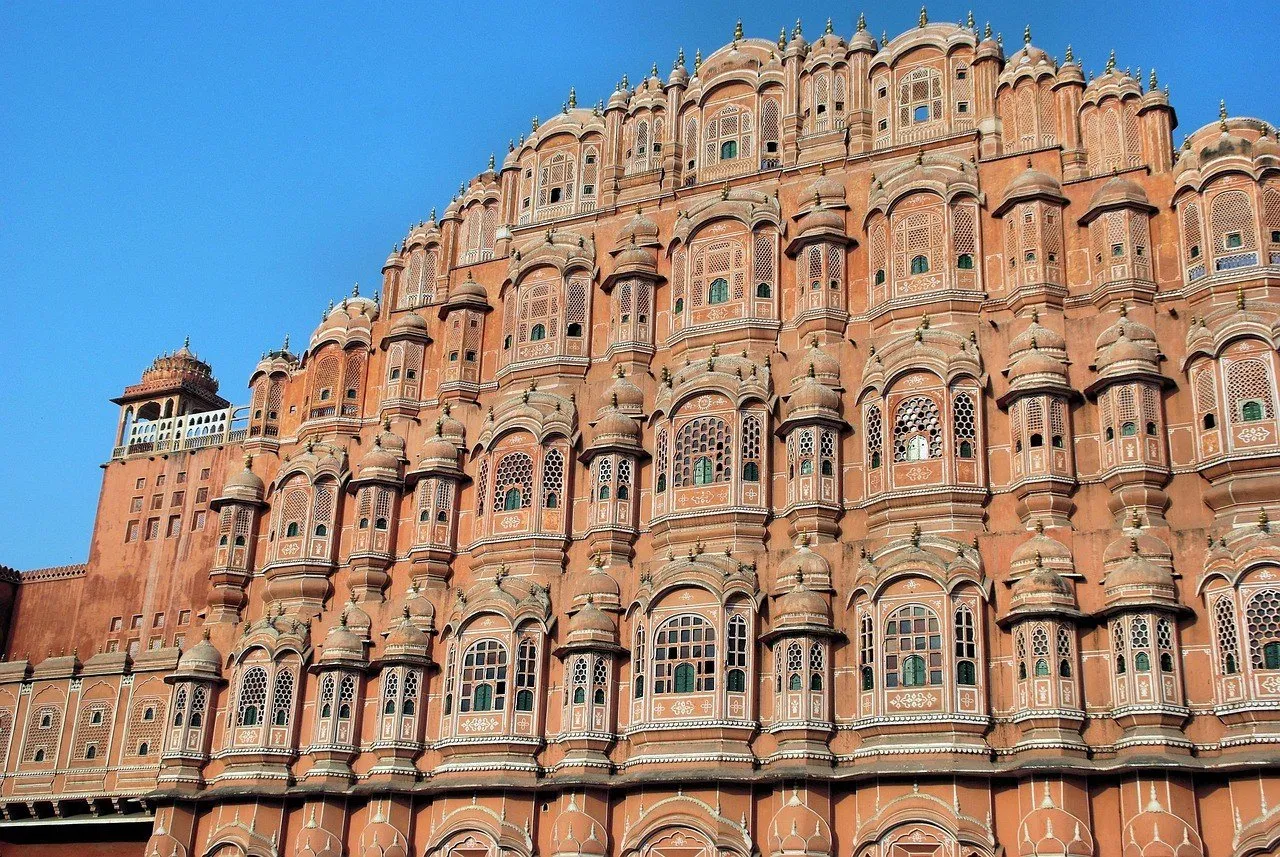
The facade of windows and lattice screens of the Palace of Winds shows how the court watched the streets; inside, the point of view is reversed.
View details for Hawa Mahal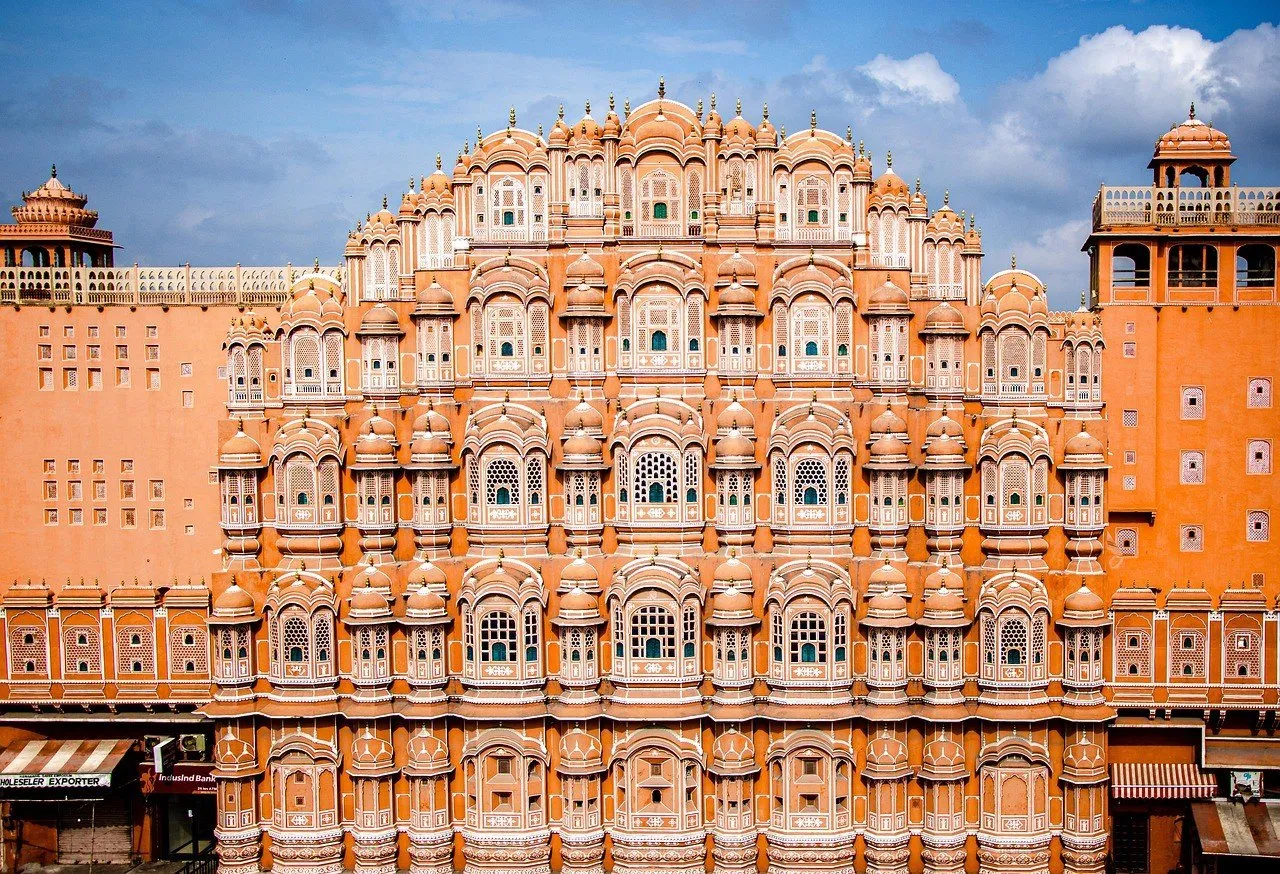
The windows of the Hawa Mahal overlook the bustle of the bazaars, and you try to fit the whole facade into your frame. In Jaipur, the fight for your attention carries on among palaces, city walls and syrup-soaked sweets.
You arrive behind the pink facades and find a city designed for trade: gridded streets, shop arcades and big intersections organize the old center. Between the jewelers of Johari Bazaar and the windows of the Hawa Mahal, looking up competes with looking sideways. The Jaipur of palaces is still a city of merchants and craftspeople; save time for both.
Split the trip into blocks: the walled center, the Amer hills and then the temple, the museum and Nahargarh. The forts sit up high, and the straight line on the map doesn't count the bends in the road. Arrange your transport before you set out and leave room for the heat. Three days make a good first visit, without turning every hall into a race against the clock.
Jaipur was planned as a commercial capital: the markets are part of the grid layout you still walk today while shopping.
At Jantar Mantar, masonry and naked-eye observation do the work of astronomy; a shadow becomes a scientific tool.
The lattice screens of the Hawa Mahal protected the privacy of the court's women while they watched the streets.
The Albert Hall has an Egyptian mummy: an unexpected stop in Egypt on a trip to Rajasthan.
1The facade of windows and lattice screens of the Palace of Winds shows how the court watched the streets; inside, the point of view is reversed.
View details for Hawa Mahal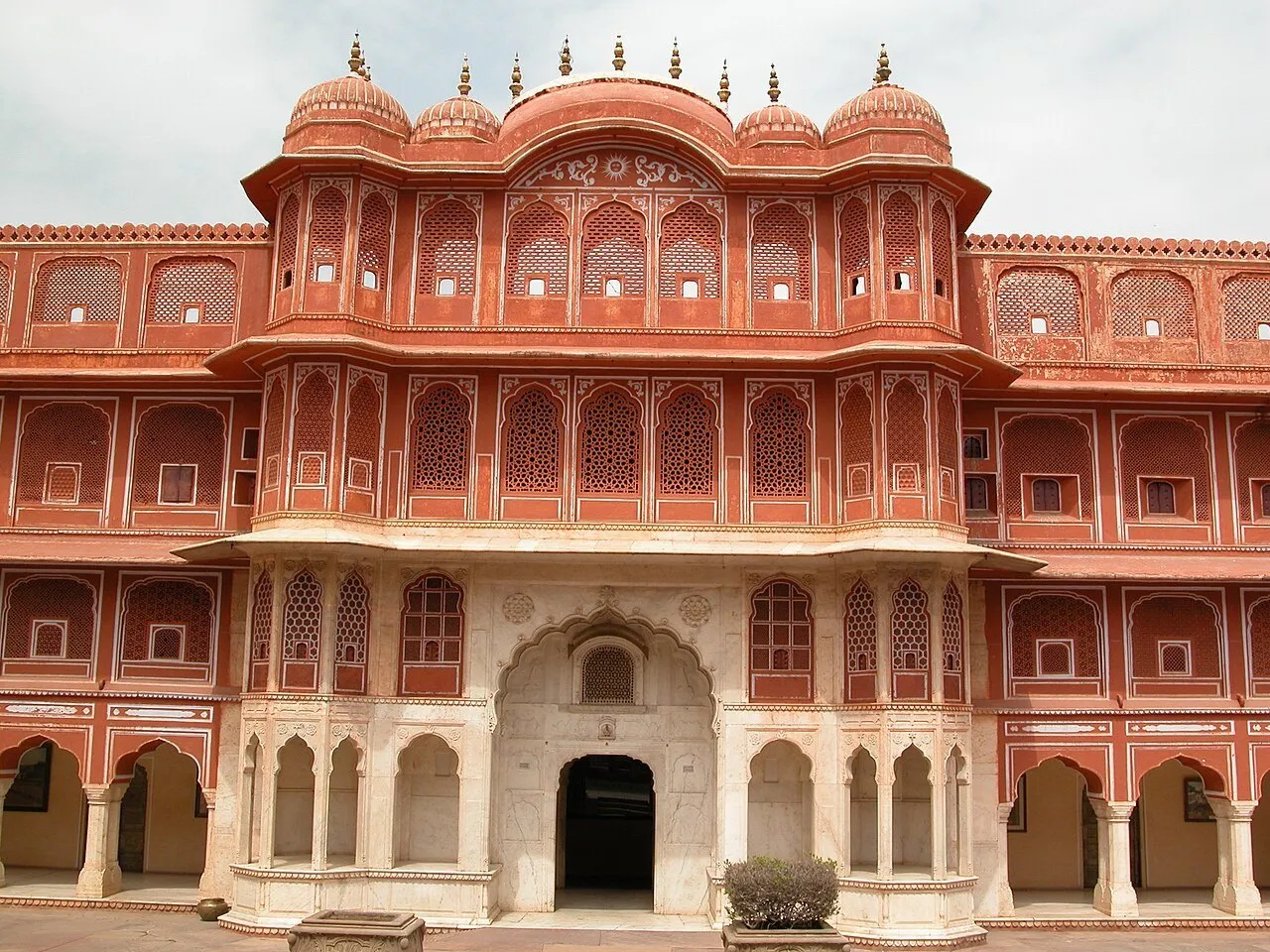 2
Courtyards and galleries reveal the life of Jaipur's court in a complex that is still partly a residence; the different ticket types give access to different areas.
View details for City Palace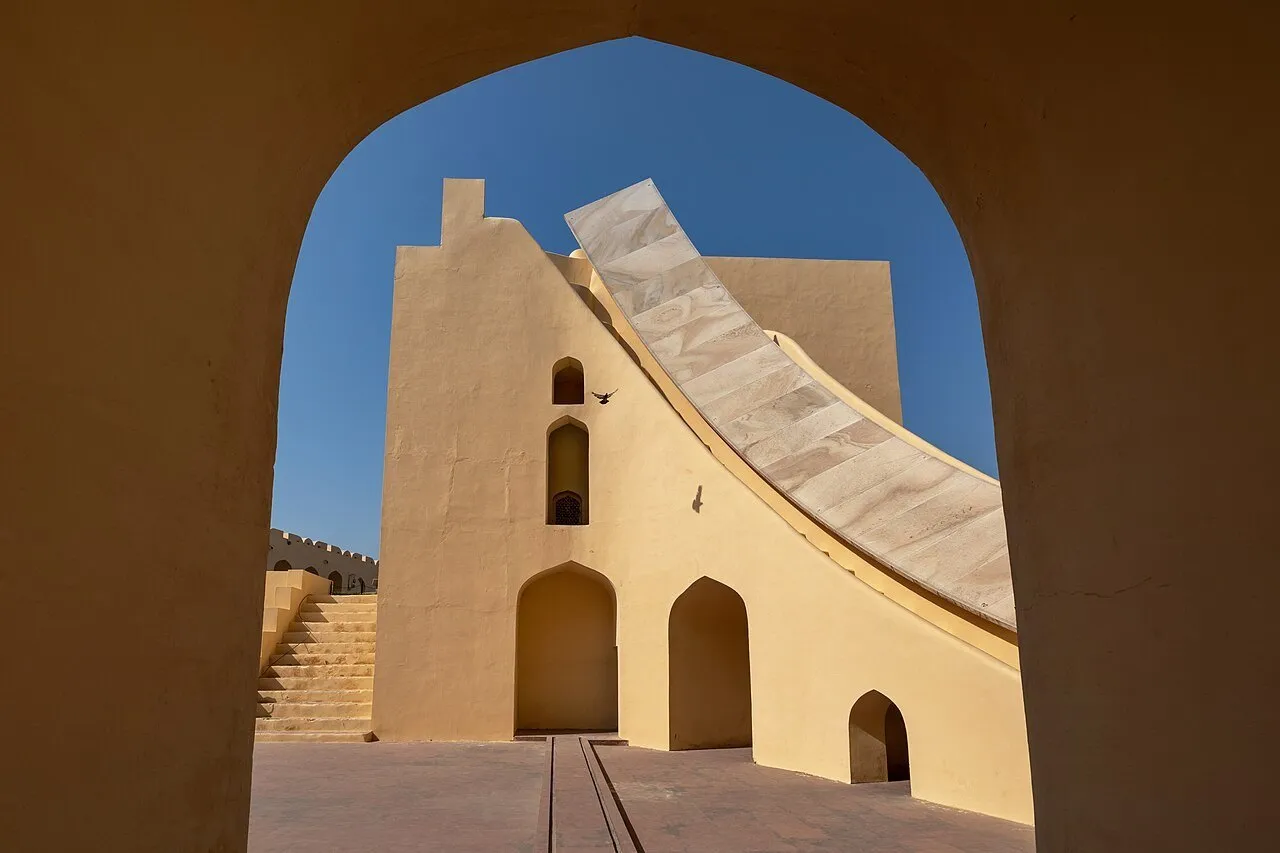 3
An open-air observatory where masonry shapes measure the sky and time; having the instruments explained changes the visit completely.
View details for Jantar Mantar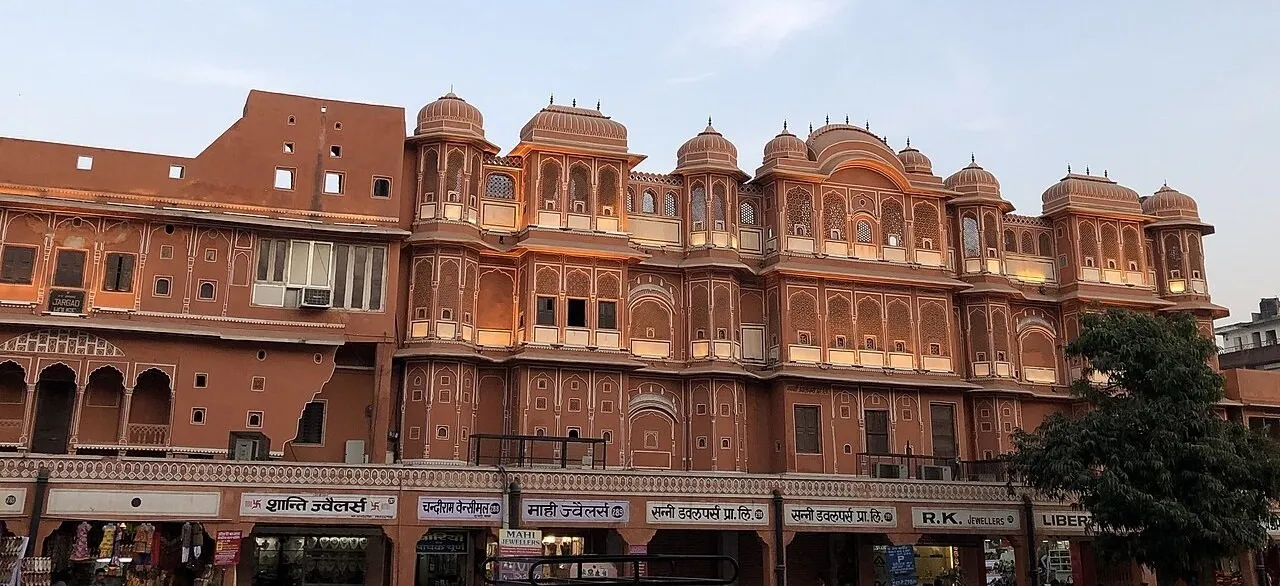 4
Jewelry and fabrics fill the shops of Johari Bazaar, among old-town facades; even if you don't buy anything, it's worth looking at the craftsmanship and comparing the displays.
View details for Johari Bazaar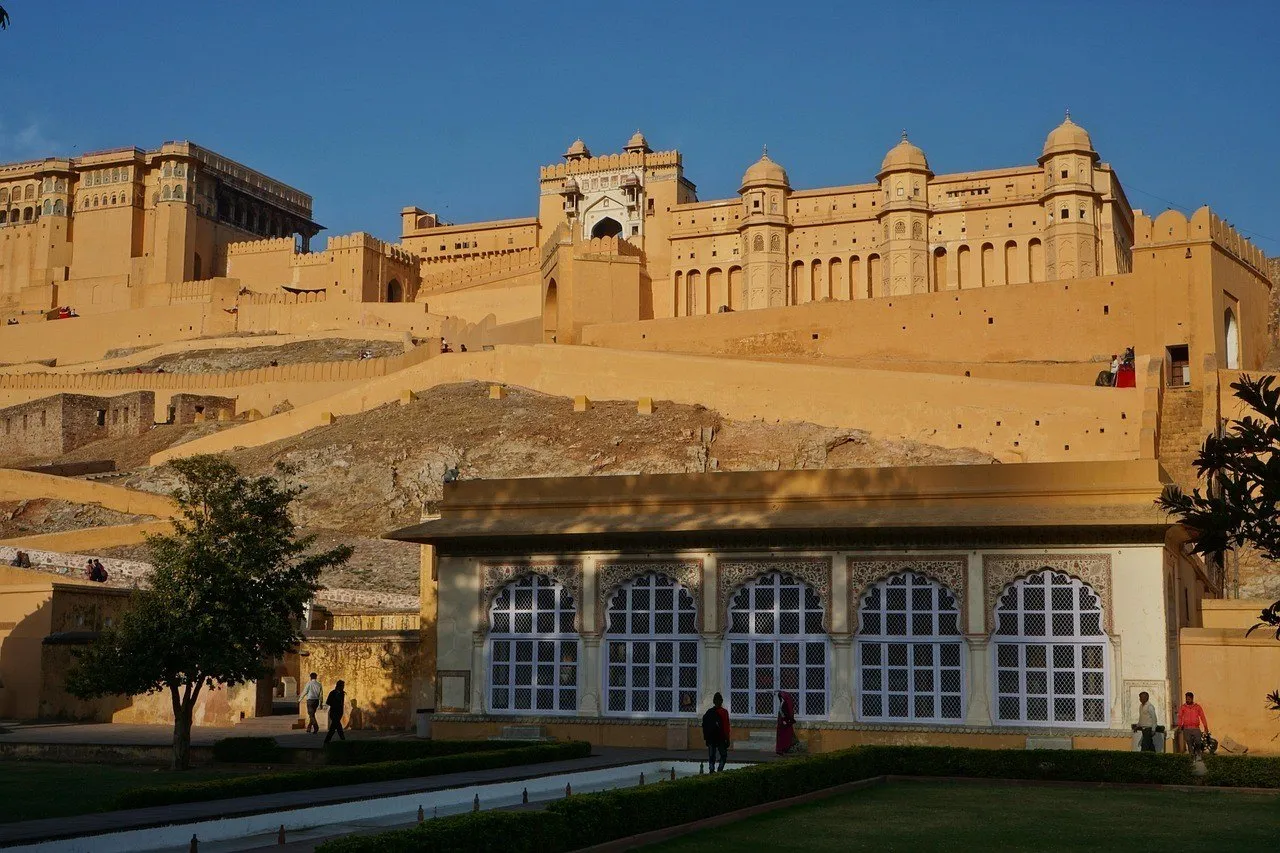 5
Above Maota Lake, Amer combines ramparts with courtyards, gardens and halls; the mirror work of the Sheesh Mahal deserves an unhurried visit.
View details for Amer Fort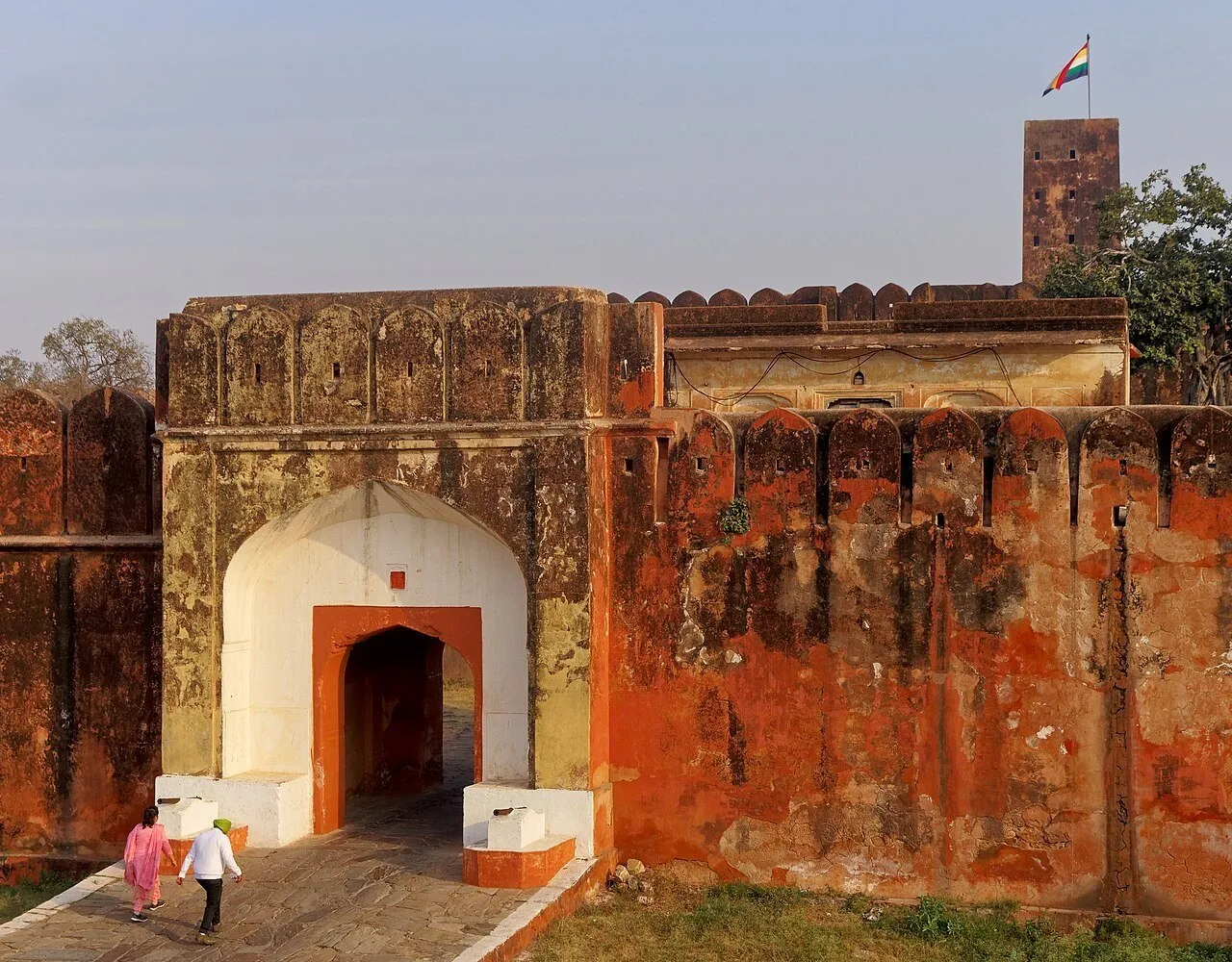 6
Ramparts and the Jaivana cannon show the military side of the Amer hills; the high position also gives a good read of the surrounding landscape.
View details for Jaigarh Fort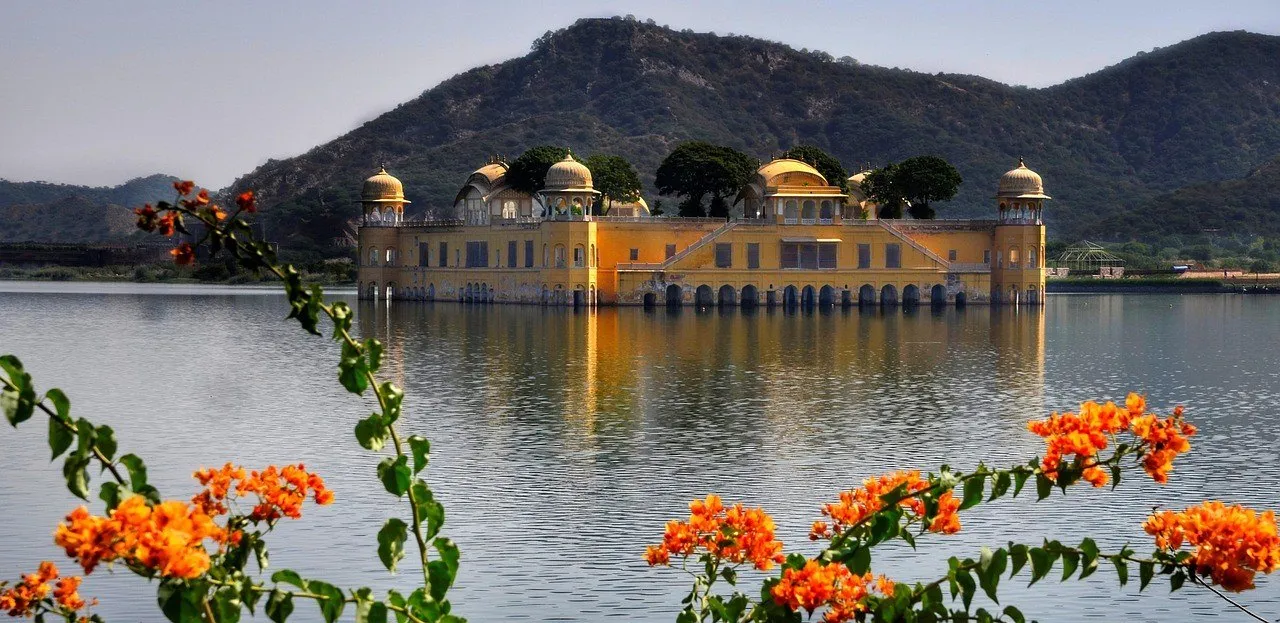 7
The palace on Man Sagar Lake is seen from the shore, with the water and hills around it; the stop fits on the way back from Amer without planning to go inside.
View details for Jal Mahal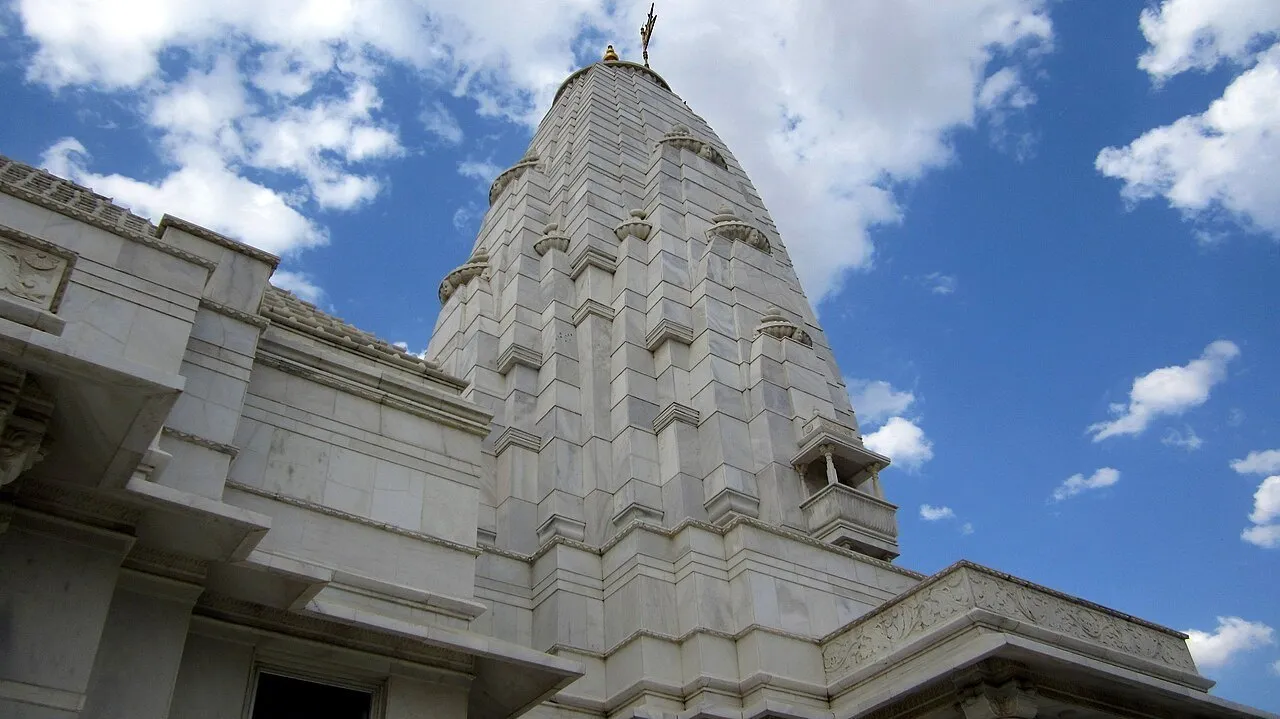 8
Dedicated to Vishnu and Lakshmi, the white marble temple offers another view of Jaipur, with carvings and a place of worship that follows its own rhythm.
View details for Birla Temple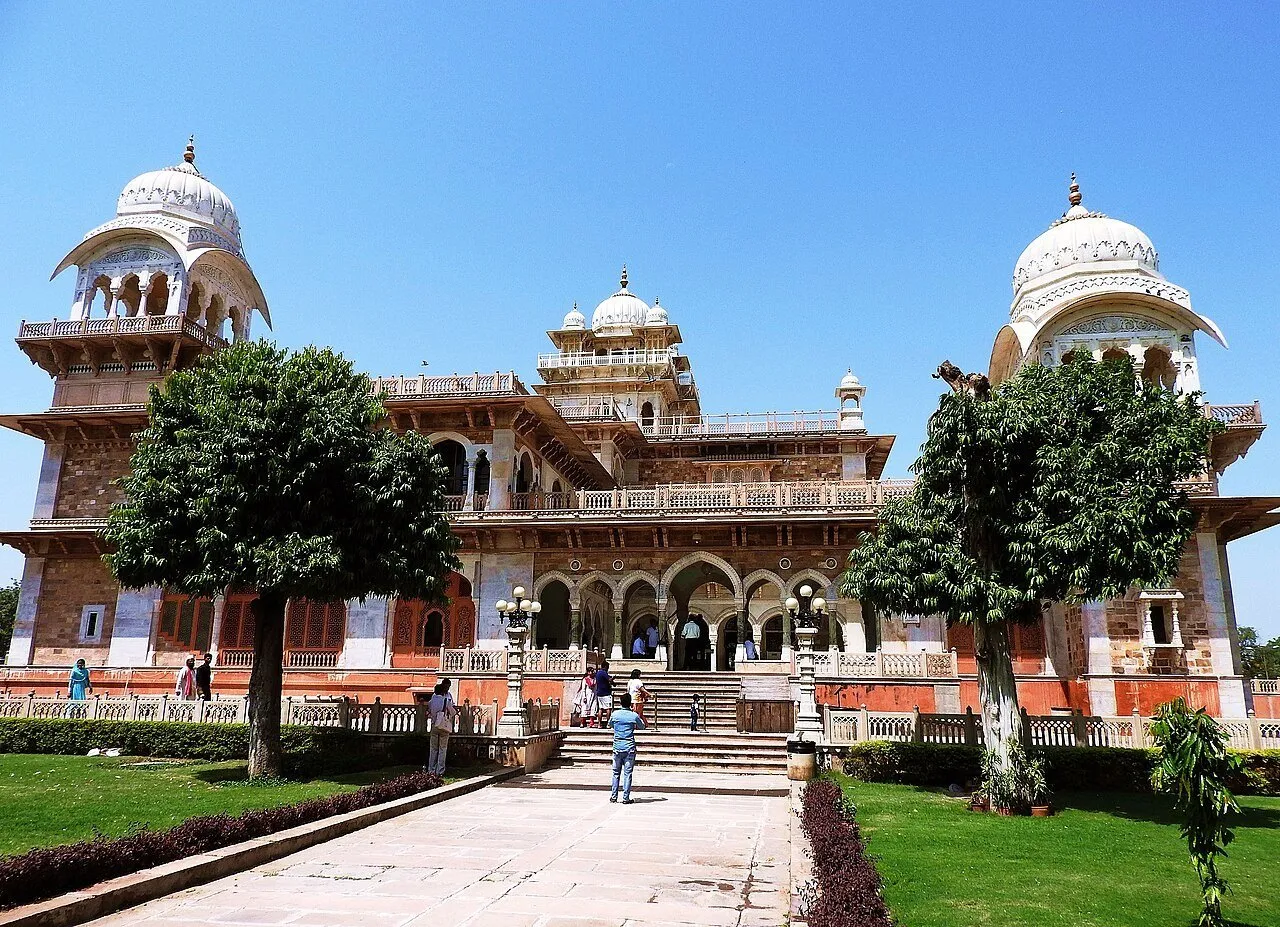 9
The domed building houses miniatures, decorative objects and an Egyptian mummy; it's worth going in after taking in the architecture from outside.
View details for Albert Hall Museum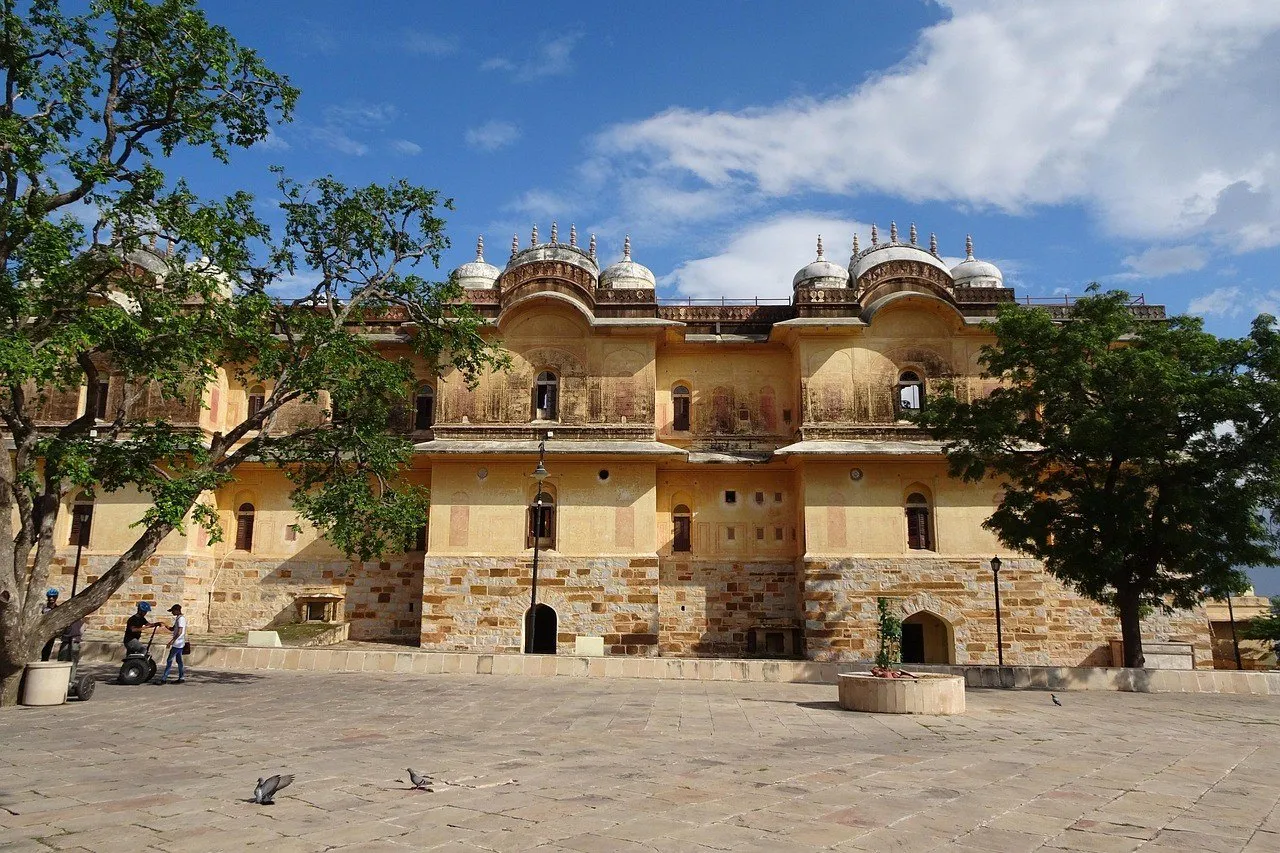 10
The fort in the hills shows Jaipur from above and holds the Madhavendra Bhawan, a palace of apartments linked by corridors; set aside time for both.
View details for Nahargarh Fort1From the opposite sidewalk, the Hawa Mahal looks like a stack of tiny balconies. The lattice screens let women of the court follow everyday life without being exposed to passersby. The name Palace of Winds fits the airflow created by the openings.
Step inside to trade the front-on photo for the view of those who looked out at the street from within. The facade is the star, but the interior shows how it worked. Look at the windows without blocking the way, and cross the street carefully.
2The City Palace asks you to slow down among its courtyards and galleries. The museum spaces help bring the court out of the realm of fantasy. The complex is still partly tied to the royal family's residence, and visiting the museum doesn't mean wandering freely through everything.
Choose your ticket by what it includes: the Royal Tour of the Chandra Mahal apartments is a separate option. The textile gallery is listed as temporarily closed; plan around the sections that are confirmed, rather than buying the promise of a whole palace.
3Triangles, arches and curved surfaces fill Jantar Mantar on a scale that seems excessive until someone explains what it's for. These are fixed instruments for astronomical observation, built to track the positions of the stars with the naked eye. Here, the wall isn't just casting a shadow.
Hire someone to explain how each shape was used. Without context, you photograph geometry; with it, you start to read the space. Bring sun protection and stay in the permitted areas around the instruments.
4After the royal courtyards, Johari Bazaar takes you back to the trade that helps explain Jaipur. Jewelers share the spotlight with fabrics and shop windows where your eyes linger longer than planned. It's a stroll through streets and shops, with no single entrance.
Look closely at materials and only buy after comparing. Tie-dyed fabrics such as bandhani give the outing a different direction if precious stones are out of budget. A sweet from a nearby stall also helps you decide without rushing.
5The ramparts make Amer look like just a fortress, but the interior reveals a palace. Light pinkish sandstone, marble, courtyards and gardens change the scenery with every passage. Look for the Sheesh Mahal: the mirror work draws you in close, within the limits set for visitors.
Set aside the morning to move through the open sections, between audience halls and court areas. Plan the climb on foot or by authorized motor transport. Jaigarh is a separate visit, with its own access and transport to arrange.
6At Jaigarh, the conversation moves from the palace mirrors to artillery. The fort holds a high position above Amer and was linked to its defense. The Jaivana cannon draws most of the photos, but share your attention with the ramparts and the hills.
The location was a military tool too. Walk the open areas without treating every edge as a viewpoint, and arrange your route by road. That the forts look close to each other doesn't merge their ticket offices into one.
7The Jal Mahal seems to rest on the Man Sagar, its sandstone facade ringed by water with hills behind. Part of the building sits below the lake level: you see a palace, but the architecture doesn't give everything away at once.
Plan a stop on the shore to look and take photos. Public access to the building is restricted; this itinerary doesn't depend on a boat or a visit inside. Late in the afternoon it can get busier, so pick a permitted stretch of the walk.
8The white marble of the Birla Mandir changes the palette after so much pink sandstone. Also called Lakshmi Narayan, the temple is dedicated to Vishnu and Lakshmi. Its reliefs bring contemporary religious architecture into an itinerary of forts and palaces.
Arrive during an opening window and follow the entry instructions. Keep the way clear for worshippers and put the camera away where required. In the morning, the visit fits in before the Albert Hall without depending on its reopening after the midday break.
9Before going into the Albert Hall, take in the domes, arches and facade details. Inside, sculptures, metalwork, ceramics and miniature paintings change the scale of the visit after the great courtyards of Amer. Pick a few collections to look at calmly.
The Egyptian mummy is a surprise in the collection, but the decorative arts deserve attention too. Check which galleries are open instead of arriving with a fixed list: exhibits and photography rules can change.
10From the top of Nahargarh, streets and rooftops put the city you've been walking into scale. The view steals the attention, but step into the Madhavendra Bhawan while it's open: apartments and corridors show that the complex wasn't only about watching over the landscape.
Arrive with time to spare: the interior sections may close before the light you imagined for your photos. Arrange your ride back with the driver and stay in the visitor areas, without climbing on ramparts to improve your shot.
Arrange a car or auto-rickshaw for the forts, with waiting time, parking and the return trip included in the price. At the airport, choose official or prebooked transport. Sort out your ride down from Nahargarh before going up.
October to March is usually best for walking. In the hotter months, go to Amer first thing and take breaks at midday. Bring water, sun protection and a layer for cooler periods.
Check the attractions and how long passes are valid. The City Palace sells its own ticket types; the Royal Tour has specific access. Buying the package with the grandest name doesn't necessarily include the ceremony.
At the Birla, wear modest clothing and follow the signs about footwear and photography. Avoid blocking worshippers and check the opening windows: the temple doesn't keep continuous hours.
In Johari Bazaar, compare pieces and ask for a description and a receipt. Avoid buying expensive stones you know nothing about. Decline detours to shops you didn't choose and keep your belongings close.
Carry rupees for small expenses and confirm how to pay. Ask about camera rules and fees at the monuments; a no-photography sign also applies to that quick shot you were mentally negotiating.
After the forts come lentils, crisp pastries, ghee and syrup-soaked sweets. In Johari Bazaar, a break can turn into lunch. Start small: your eyes may already have ordered too much dessert.
Lentils, baati dough balls and churma, a sweet crumbled mix, with different textures on the plate.
Fried savory pastry with a crisp crust, filled with spiced onion; go for one that was just made.
A porous sweet with syrup, sometimes topped with reduced cream; worth sharing before going back for more.
We use cookies and similar technologies, such as Google Analytics, in accordance with our Privacy Policy and, by continuing to browse, you agree to these terms. You can decline at any time in the policy.