About Ravenna and its mosaics
In 402, Emperor Honorius made Ravenna the seat of the Western Roman Empire, and then came the Ostrogothic king Theodoric and the Byzantines. Each left churches, and the churches left mosaics: eight buildings joined the UNESCO list together in 1996. The city lies outside Bologna, but direct regional trains make the trip in about one hour to one hour and a half.
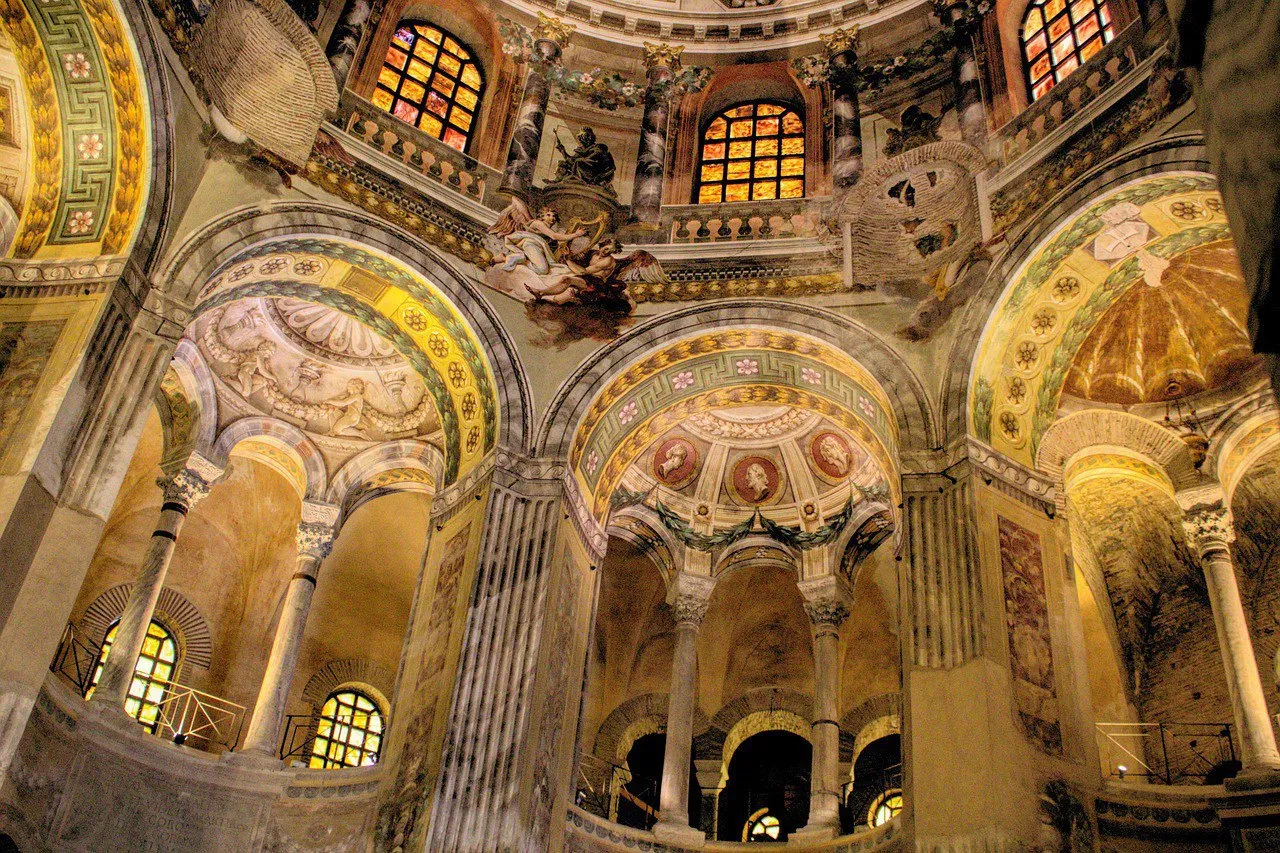
In San Vitale, consecrated in 547, Emperor Justinian and Empress Theodora appear in two mosaic panels, each surrounded by their retinue. On the same grounds stands the Mausoleum of Galla Placidia, small on the outside and covered in mosaics on the inside. Before the train back, stop by the tomb of Dante, who died in the city in 1321.